1. Introduction
In the process of industrial production, the mixing of materials is a key link that connects raw material processing and finished product forming. Whether it is the uniform mixing of pharmaceutical powders, the homogeneous blending of food additives, or the uniform dispersion of new material components, mixer machines are required to break the agglomeration of materials, realize the uniform distribution of different components, and lay a solid foundation for the subsequent production processes. With the continuous upgrading of industrial production technology and the increasing emphasis on product quality, the requirements for mixer machines are no longer limited to simple mixing functions, but tend to be efficient, precise, energy-saving, and adaptable to multiple materials.
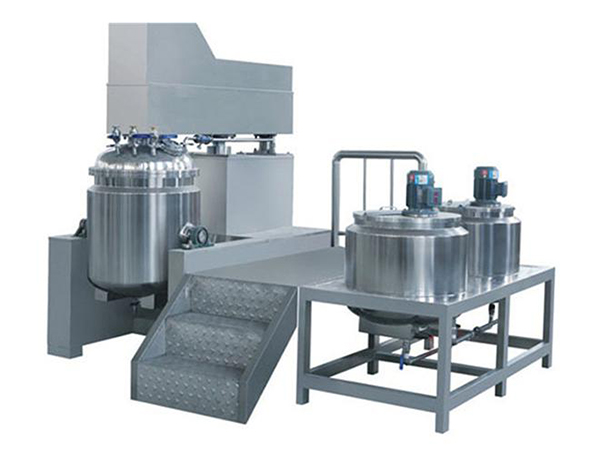
At present, there are various types of
mixer machines on the market, such as ribbon mixers, paddle mixers, cone mixers, and high-speed mixers, each with its own structural characteristics and applicable scenarios. However, many enterprises still have misunderstandings in the selection and application of mixer machines: blindly selecting equipment based on price, resulting in mismatches between the mixer and material characteristics; ignoring the influence of mixing parameters on the mixing effect, leading to uneven mixing and unqualified product quality; lacking scientific operation and maintenance, reducing the service life of the equipment and increasing production costs.
Against this background, it is of great practical significance to conduct in-depth analysis and research on mixer machines. This paper takes the core demand of ""efficient and uniform mixing"" as the starting point, systematically combs the working principle and structural characteristics of mixer machines, parses the key technical parameters affecting the mixing effect, classifies and evaluates mainstream mixer types, and combines typical industry application cases to clarify the selection and application points. It is hoped that this paper can provide valuable reference for relevant enterprises and personnel, help them better apply mixer machines, and promote the high-quality development of industrial production.
2. Core Working Principle of Mixer Machines: The Foundation of Efficient and Uniform Mixing
The core function of mixer machines is to realize the uniform distribution of two or more materials through mechanical force, and its working principle is mainly based on the comprehensive action of three mechanical movements: convection mixing, shear mixing, and diffusion mixing. These three movements work together to break the agglomeration of materials, promote the mutual penetration and uniform distribution of different components, and finally achieve the ideal mixing effect.
2.1 Convection Mixing
Convection mixing is the main form of material mixing in most mixer machines, which relies on the mechanical force of the mixer's stirring components to drive the overall movement of materials. The stirring shaft and stirring blades rotate at a certain speed, pushing the materials in the mixing chamber to move in a regular direction (such as circular, spiral, or up and down movement), so that the materials in different regions of the mixing chamber are continuously exchanged and mixed. Convection mixing has the characteristics of fast mixing speed and large mixing range, which is suitable for the preliminary mixing of large batches of materials and lays the foundation for uniform mixing.
2.2 Shear Mixing
Shear mixing is an important supplementary form of convection mixing, which mainly relies on the shear force generated by the relative movement between the stirring blades and the materials, as well as between the materials and the inner wall of the mixing chamber. The shear force can effectively break the agglomeration of materials (especially powder materials) and the adhesion between material particles, making the material particles more refined and laying a foundation for the uniform mixing of different components. For materials with high viscosity or easy agglomeration, shear mixing plays a key role in improving the mixing uniformity.
2.3 Diffusion Mixing
Diffusion mixing is a micro-mixing form that occurs on the surface of material particles, which relies on the thermal movement of material particles and the relative movement between particles to realize the mutual diffusion and penetration of different material components. This form of mixing is more obvious in the later stage of mixing, which can further improve the mixing uniformity of materials and ensure that the composition of each part of the mixed materials is consistent. Diffusion mixing is particularly important for materials that require high mixing precision (such as pharmaceutical powders, electronic materials).
In practical operation, the three mixing forms of convection, shear, and diffusion work together, and their proportion is affected by the structural design of the mixer, the rotation speed of the stirring components, the characteristics of the materials, and other factors. The rational matching of the three mixing forms is the key to realizing efficient and uniform mixing.
3. Core Technical Parameters of Mixer Machines: Key Factors Affecting Mixing Effect
The performance of mixer machines is directly determined by a series of core technical parameters, and the rational selection and adjustment of these parameters are crucial to achieving efficient and uniform mixing. The key technical parameters of mixer machines mainly include mixing volume, stirring speed, mixing time, filling rate, and power consumption.
3.1 Mixing Volume
Mixing volume refers to the effective volume of the mixing chamber of the mixer machine, which directly determines the single mixing capacity of the equipment. It is usually expressed in liters (L) or cubic meters (m³), and the selection needs to be matched with the enterprise's production scale. If the mixing volume is too small, it will reduce production efficiency and require multiple mixing operations, which may lead to uneven mixing between batches; if the mixing volume is too large, it will cause insufficient utilization of the equipment, increase energy consumption, and may also affect the mixing uniformity due to the difficulty in driving the overall movement of materials.
3.2 Stirring Speed
Stirring speed is the rotation speed of the mixer's stirring shaft and stirring blades, usually expressed in revolutions per minute (r/min). It is one of the core parameters affecting the mixing efficiency and uniformity. A higher stirring speed can generate stronger convection and shear force, accelerate the mixing speed of materials, and break the agglomeration of materials more effectively; however, an excessively high stirring speed will increase energy consumption, cause material splashing, and even damage the material particles (especially brittle materials). For different materials, the optimal stirring speed is different: for powder materials with low viscosity, a higher stirring speed can be selected; for high-viscosity or brittle materials, the stirring speed should be appropriately reduced.
3.3 Mixing Time
Mixing time refers to the time required for the materials to reach the specified mixing uniformity in the mixer machine. It is affected by the stirring speed, material characteristics, filling rate, and other factors. The mixing time is too short, which will lead to uneven mixing and failure to meet the product quality requirements; the mixing time is too long, which will increase energy consumption, reduce production efficiency, and may even cause material agglomeration or degradation (especially heat-sensitive materials). In practical production, the optimal mixing time needs to be determined through experiments according to the material characteristics and mixing requirements.
3.4 Filling Rate
Filling rate refers to the ratio of the volume of materials in the mixing chamber to the effective volume of the mixing chamber, usually expressed as a percentage (%). The filling rate has a significant impact on the mixing uniformity and efficiency. If the filling rate is too low, the materials in the mixing chamber cannot form effective convection and shear movement, resulting in uneven mixing and low mixing efficiency; if the filling rate is too high, the movement space of the materials is limited, the convection and diffusion of the materials are blocked, and the mixing uniformity and speed are also affected. The optimal filling rate of most mixer machines is 60%~80%, and the specific value needs to be adjusted according to the type of mixer and the characteristics of the materials.
3.5 Power Consumption
Power consumption refers to the energy consumed by the mixer machine during operation, which is related to the stirring speed, mixing volume, material viscosity, and filling rate. It is an important indicator to measure the energy-saving performance of the equipment. Under the premise of ensuring the mixing effect, the lower the power consumption, the better the energy-saving effect of the equipment, which can reduce the comprehensive production cost of the enterprise. When selecting a mixer machine, it is necessary to comprehensively consider the power consumption and mixing effect, and select equipment with high energy efficiency.
4. Classification and Characteristics of Mainstream Mixer Machines
According to the structural design, stirring form, and application scenarios, mixer machines can be divided into various types, each with its own unique structural characteristics, advantages, and applicable scenarios. Clarifying the classification and characteristics of mainstream mixer machines is the basis for scientific selection and rational application. The following is a detailed analysis of the mainstream mixer machine types:
4.1 Ribbon Mixer
Ribbon mixer is a kind of horizontal mixer, which is composed of a horizontal mixing chamber, a stirring shaft, and double-layer ribbon blades (inner and outer ribbons). The inner ribbon pushes the materials to move forward, and the outer ribbon pushes the materials to move backward, forming a strong convection and shear movement in the mixing chamber, realizing the uniform mixing of materials.
- Characteristics: Simple structure, stable operation, large mixing volume, uniform mixing effect, and strong adaptability to powder and granular materials. The mixing efficiency is high, and the mixing uniformity can reach more than 95%. It is easy to clean and maintain, and can be equipped with heating, cooling, and other functions according to needs.
- Applicable Scenarios: Widely used in food, pharmaceutical, chemical, and new material industries, suitable for mixing powder, granular, and low-viscosity pasty materials (such as food additives, pharmaceutical powders, plastic particles).
4.2 Paddle Mixer
Paddle mixer is also a common horizontal mixer, which is composed of a horizontal mixing chamber and a stirring shaft with paddle-shaped blades. The paddle blades rotate at a certain speed, pushing the materials to move in the mixing chamber, and generating shear force between the blades and the materials to realize mixing.
- Characteristics: Simple structure, low cost, strong adaptability to materials with high viscosity and large particles. The stirring force is large, which can effectively break the agglomeration of materials. However, the mixing uniformity is slightly lower than that of ribbon mixers, and it is suitable for preliminary mixing or mixing of materials with low uniformity requirements.
- Applicable Scenarios: Suitable for chemical, metallurgy, building materials, and other industries, used for mixing granular, powder, and high-viscosity pasty materials (such as cement, mineral powder, chemical raw materials).
4.3 Cone Mixer
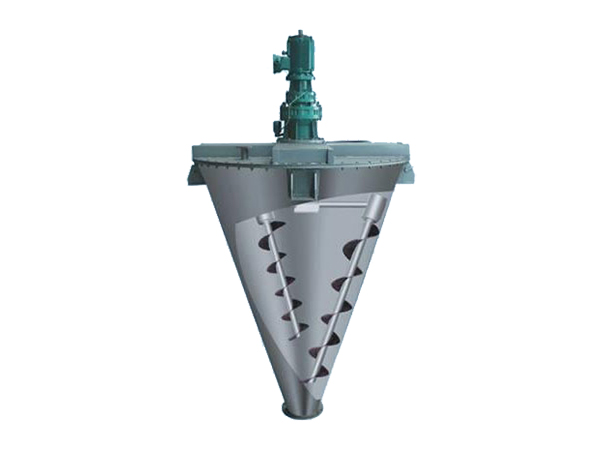
Cone mixer is a vertical mixer, which is composed of an inverted cone-shaped mixing chamber, a stirring shaft, and a spiral stirring blade. The spiral blade rotates and moves up and down at the same time, driving the materials to move in a spiral direction in the mixing chamber, realizing the full mixing of materials.
- Characteristics: Small floor space, uniform mixing effect, no dead angle in the mixing chamber, and easy to discharge. The mixing process is gentle, which can avoid the damage of material particles and is suitable for mixing fragile and heat-sensitive materials. The mixing uniformity can reach more than 98%.
- Applicable Scenarios: Widely used in pharmaceutical, food, electronic, and new material industries, suitable for mixing high-precision powder, granular, and fragile materials (such as pharmaceutical raw materials, electronic powder, rare earth materials).
4.4 High-Speed Mixer
High-speed mixer is a kind of high-efficiency mixer, which is composed of a vertical mixing chamber, a high-speed stirring shaft, and a special-shaped stirring blade. The stirring blade rotates at a high speed (usually 500~2000r/min), generating strong shear force and centrifugal force, which can quickly break the agglomeration of materials and realize the uniform mixing of materials in a short time.
- Characteristics: High mixing efficiency, short mixing time, and good mixing uniformity. It can be equipped with a heating jacket to realize the mixing and drying of materials at the same time. However, the energy consumption is relatively high, and it is not suitable for fragile materials.
- Applicable Scenarios: Suitable for plastic, rubber, food, and chemical industries, used for mixing powder, granular, and high-viscosity materials (such as plastic particles, rubber additives, food emulsions).
4.5 Other Special Mixers
- V-Type Mixer: It is composed of two V-shaped mixing chambers, which rotate around the horizontal axis to realize the mixing of materials. The mixing effect is uniform, no dead angle, suitable for small-batch high-precision mixing of powder materials (such as laboratory use, small-batch pharmaceutical production).
- Double-Cone Mixer: Similar to the cone mixer, the mixing chamber is a double-cone structure, which rotates to drive the materials to mix. It has the advantages of gentle mixing, no material accumulation, and is suitable for mixing fragile and heat-sensitive materials.
5. Core Advantages of Mixer Machines in Industrial Production
Compared with traditional manual mixing or simple mixing equipment, modern mixer machines have obvious advantages in mixing efficiency, mixing uniformity, production stability, and adaptability, which are the key to improving industrial production efficiency and product quality. The specific core advantages are as follows:
5.1 High Mixing Efficiency, Reducing Production Cost
Modern mixer machines rely on scientific structural design and powerful mechanical force to realize the rapid mixing of materials, which is far higher than manual mixing and simple mixing equipment in mixing efficiency. For example, a 1000L ribbon mixer can complete the mixing of materials in 10~20 minutes, while manual mixing of the same amount of materials takes several hours. The improvement of mixing efficiency can effectively reduce the production cycle, save labor costs, and further reduce the comprehensive production cost of the enterprise.
5.2 Uniform Mixing, Ensuring Product Quality Stability
The core advantage of mixer machines is to realize the uniform mixing of materials, ensuring that the composition of each part of the mixed materials is consistent. This is crucial for industries with high product quality requirements (such as pharmaceuticals, electronics, food). For example, in the pharmaceutical industry, the uniform mixing of pharmaceutical powders directly affects the efficacy and safety of drugs; in the electronic industry, the uniform mixing of electronic materials affects the electrical performance of electronic products. Mixer machines can effectively avoid the problem of uneven mixing caused by manual operation, ensuring the stability and consistency of product quality.
5.3 Strong Adaptability, Suitable for Multiple Materials
Modern mixer machines have a variety of types and specifications, which can adapt to the mixing needs of different types of materials (powder, granular, pasty, high-viscosity, fragile, heat-sensitive, etc.). By adjusting the stirring speed, mixing time, filling rate, and other parameters, the same mixer machine can meet the mixing requirements of different materials, improving the utilization rate of the equipment and reducing the equipment investment cost of the enterprise.
5.4 Energy Saving and Environmental Protection, Conforming to Industrial Policies
With the continuous improvement of energy-saving and environmental protection policies, modern mixer machines have adopted optimized structural design and energy-saving motors, which have lower energy consumption than traditional mixing equipment. At the same time, the closed mixing chamber design avoids material leakage and dust pollution, ensuring the environmental protection of the production process. In addition, the materials of the mixer machine (such as stainless steel, food-grade materials) are non-toxic and pollution-free, meeting the environmental protection and hygiene requirements of various industries.
5.5 Easy to Operate and Maintain, Improving Production Stability
Modern mixer machines are equipped with intelligent control systems, which can realize automatic control of mixing parameters (stirring speed, mixing time, etc.), reducing manual operation errors and improving the stability of the mixing process. At the same time, the structure of the mixer machine is simple, the wearing parts are few, and the maintenance is convenient, which can reduce the downtime caused by equipment failure and ensure the continuity of production.
6. Application of Mixer Machines in Typical Industries
With their advantages of efficient and uniform mixing, mixer machines have been widely used in various industrial fields, and their application effects are closely related to the characteristics of the industry and the requirements of materials. The following are typical application cases in key industries, providing reference for enterprises to select and apply mixer machines:
6.1 Pharmaceutical Industry
Industry Characteristics: High requirements for mixing precision and hygiene, materials are mostly powder and granular, and need to meet GMP standards; the mixing uniformity directly affects the efficacy and safety of drugs, and there is no dead angle in the mixing process to avoid material contamination.
Application Scenario: Mixing of pharmaceutical raw materials, Chinese medicine powders, pharmaceutical excipients, etc. For example, a pharmaceutical enterprise needs to mix two kinds of pharmaceutical powders with a mixing uniformity requirement of ≥98% and no metal ion contamination. The enterprise selected a pharmaceutical-grade cone mixer with a mixing volume of 500L, made of 316L stainless steel, equipped with a closed mixing chamber and an intelligent control system. By adjusting the stirring speed to 150r/min and the mixing time to 15 minutes, the mixing uniformity reached 99.2%, meeting the GMP standards and ensuring the quality of the drugs.
6.2 Food Industry
Industry Characteristics: High requirements for food safety and hygiene, materials are mostly food additives, food powders, and pasty materials (such as jam, cream), requiring non-toxic, pollution-free, and uniform mixing, meeting FDA and GB standards.
Application Scenario: Mixing of food additives (such as preservatives, sweeteners), mixing of food powders (such as flour, milk powder), and blending of pasty food. For example, a food enterprise needs to mix milk powder, sugar, and preservatives, requiring uniform mixing and no agglomeration. The enterprise selected a food-grade ribbon mixer with a mixing volume of 1000L, equipped with a heating function to prevent material moisture absorption. The mixing speed was adjusted to 120r/min, and the mixing time was 10 minutes, achieving uniform mixing of materials, no agglomeration, and meeting food safety standards.
6.3 New Material Industry
Industry Characteristics: High requirements for mixing precision and uniformity, materials are mostly high-hardness, high-purity powder (such as graphene, ceramic powder, semiconductor materials), and need to avoid material particle damage and impurity introduction.
Application Scenario: Mixing of new material components, such as the mixing of graphene and plastic particles, the mixing of ceramic powder and additives. For example, a new material enterprise needs to mix graphene and plastic particles, requiring the mixing uniformity of ≥97% and no damage to graphene particles. The enterprise selected a high-speed mixer with a mixing volume of 300L, equipped with special-shaped soft blades to avoid particle damage. The stirring speed was adjusted to 800r/min, and the mixing time was 8 minutes, achieving uniform mixing of graphene and plastic particles, ensuring the performance of the new material.
6.4 Chemical Industry
Industry Characteristics: Materials are mostly chemical raw materials, which may be corrosive, high-viscosity, or toxic, requiring good sealing performance of the mixer machine and strong adaptability to materials.
Application Scenario: Mixing of chemical raw materials, mixing of coatings, inks, and other products. For example, a chemical enterprise needs to mix corrosive chemical raw materials, requiring the mixer machine to have strong corrosion resistance and good sealing performance. The enterprise selected a paddle mixer with a mixing volume of 2000L, the mixing chamber and stirring blades are made of corrosion-resistant alloy materials, and the closed structure is adopted to avoid material leakage. The mixing speed was adjusted to 80r/min, and the mixing time was 25 minutes, achieving uniform mixing of corrosive materials and ensuring production safety.
6.5 Laboratory Use
Usage Characteristics: Small batch, high precision, flexible operation, mainly used for material formula research and mixing effect test, requiring the mixer machine to be small in size, easy to operate, and high in mixing precision.
Application Scenario: Small-batch mixing of experimental materials, such as the mixing of pharmaceutical laboratory powders, the mixing of new material experimental samples. The recommended equipment is a laboratory-grade V-type mixer or small cone mixer with a mixing volume of 5~50L, which has the advantages of small size, flexible operation, and high mixing precision, meeting the experimental needs.
7. Professional Selection and Operation Optimization of Mixer Machines
To give full play to the advantages of mixer machines in efficient and uniform mixing, it is necessary to conduct scientific selection and optimize the operation process, avoid common problems such as uneven mixing, low efficiency, and equipment damage, and improve production efficiency and product quality.
7.1 Professional Selection Guide
The selection of mixer machines needs to comprehensively consider the material characteristics, mixing requirements, production scale, and cost budget, following the principles of ""matching with materials, meeting requirements, and cost-effectiveness"". The specific selection steps are as follows:
1. Clarify Material Characteristics: Determine the type (powder, granular, pasty), viscosity, hardness, fragility, heat sensitivity, and other characteristics of the materials to be mixed, which is the basis for selecting the type of mixer machine. For example, fragile materials should select a mixer with gentle mixing (such as cone mixer); high-viscosity materials should select a mixer with strong stirring force (such as paddle mixer).
2. Clarify Mixing Requirements: Determine the mixing uniformity, mixing time, and production capacity requirements. For high-precision mixing requirements (such as pharmaceutical, electronic industries), select a mixer with high mixing uniformity (such as cone mixer, V-type mixer); for large-scale production, select a mixer with large mixing volume (such as ribbon mixer, paddle mixer).
3. Select the Type of Mixer: According to the material characteristics and mixing requirements, select the appropriate type of mixer. For example, powder materials with high precision requirements select cone mixer; large-batch powder materials select ribbon mixer; high-viscosity materials select paddle mixer.
4. Determine Key Parameters: Determine the mixing volume, stirring speed, filling rate, and other key parameters according to the production scale and mixing requirements, ensuring that the equipment can meet the production needs and achieve the ideal mixing effect.
5. Cost-Effectiveness Evaluation: Compare the purchase cost, operation cost, and maintenance cost of different brands and models of mixer machines, select the equipment with the highest cost-effectiveness, and consider the after-sales service of the manufacturer (installation, commissioning, maintenance, technical support).
7.2 Operation Optimization Strategies
- Optimize Mixing Parameters: According to the material characteristics and mixing requirements, adjust the stirring speed, mixing time, and filling rate to achieve the optimal mixing effect. For example, for powder materials with easy agglomeration, increase the stirring speed appropriately and extend the mixing time; for fragile materials, reduce the stirring speed and shorten the mixing time.
- Standardize Feeding and Discharging: The feeding should be uniform and avoid adding a large amount of materials at one time, which will affect the mixing uniformity; the discharging should be thorough to avoid material accumulation in the mixing chamber, which will cause cross-contamination between batches.
- Regular Cleaning and Maintenance: Regularly clean the mixing chamber, stirring blades, and feeding and discharging pipeline to avoid material accumulation and cross-contamination. For food, pharmaceutical, and other industries, the equipment should be sterilized after cleaning. Regularly inspect the wearing parts (seals, blades) of the equipment, and replace them in time when the wear is serious.
- Intelligent Operation and Monitoring: Make full use of the intelligent control system of the mixer machine to realize real-time monitoring and automatic adjustment of mixing parameters, reducing manual operation errors and improving the stability of the mixing process. At the same time, collect and analyze the operation data of the equipment, optimize the process parameters according to the production situation.
8. Development Trend of Mixer Machine Technology
With the continuous upgrading of industrial production technology and the increasing demand for high efficiency, precision, and intelligence, mixer machine technology is developing in the direction of intelligence, customization, integration, and energy saving. The main development trends are as follows:
- Intelligent and Digital Development: The integration of mixer machines with intelligent technologies such as Internet of Things, big data, and artificial intelligence will become the mainstream. Intelligent mixer machines can realize real-time monitoring of equipment operation status, fault early warning, remote operation and maintenance, and automatic optimization of mixing parameters. Through the collection and analysis of operation data, the equipment can automatically adjust the stirring speed, mixing time, and other parameters according to the material characteristics, realizing the optimal mixing effect.
- Customization and Personalization: According to the specific needs of different industries and enterprises, customized mixer machines will be developed. For example, for the pharmaceutical industry, a mixer with integrated cleaning, sterilization, and mixing functions will be developed; for the new material industry, a mixer with gentle mixing and no particle damage will be developed. Customized equipment can better adapt to the special needs of enterprises and improve production efficiency and product quality.
- Integration of Multiple Functions: Mixer machines will integrate multiple functions such as mixing, drying, granulating, and crushing, realizing the integration of multiple production processes. This can reduce the number of equipment, save production space, and improve production efficiency. For example, a high-speed mixer with heating and drying functions can realize the mixing and drying of materials at the same time.
- Energy Saving and Environmental Protection Upgrading: Further optimize the structural design and energy-saving technology of mixer machines, reduce energy consumption and environmental pollution. The development of energy-saving mixer machines with low energy consumption, low noise, and zero emission will meet the increasingly strict environmental protection requirements. At the same time, the use of environmentally friendly materials and closed mixing technology will further reduce the impact on the environment.
- High-Precision and High-Efficiency Development: With the increasing demand for high-precision mixing in high-end industries (such as electronics, new materials), mixer machines will develop towards higher mixing precision and efficiency. By optimizing the structural design of stirring blades, improving the precision of parameter control, and adopting new materials, the mixing uniformity and efficiency of the equipment will be further improved, meeting the higher requirements of industrial production.
9. Conclusion
As a core equipment for realizing efficient and uniform mixing of industrial materials, mixer machines play a crucial role in improving production efficiency, ensuring product quality, and reducing production costs. With the continuous development of industrial production technology, the types and performance of mixer machines are constantly upgraded, and their application scope is also continuously expanded.
This paper systematically analyzes the core working principle, key technical parameters, and classification characteristics of mixer machines, elaborates on their core advantages in industrial production, and provides typical application cases in various industries. At the same time, it gives professional guidance on the selection and operation optimization of mixer machines, and looks forward to the future development trend of mixer machine technology.
It is believed that with the continuous progress of intelligent technology, material technology, and structural design technology, mixer machines will be more intelligent, efficient, and environmentally friendly, and will play a more important role in high-end industrial production. It is hoped that this paper can help relevant enterprises and personnel fully grasp the core knowledge of mixer machines, realize scientific selection and rational application, and promote the high-quality development of related industries.


 +86 18051935350
  Current
location:Home > Mixer Machines: Core Analysis of Industrial Equipment for Efficient and Uniform Mixing
Current
location:Home > Mixer Machines: Core Analysis of Industrial Equipment for Efficient and Uniform Mixing