1. Introduction
From daily food preparation in home kitchens to large-scale material mixing in industrial production, mixers play an indispensable role. In home scenarios, mixers simplify the preparation process of ingredients, such as dough mixing, egg beating, and juice blending, improving the convenience of kitchen operations; in industrial scenarios, mixers are widely used in food processing, pharmaceuticals, chemical engineering, construction, and other fields, undertaking key links such as raw material mixing, product homogenization, and ingredient blending, directly determining the quality and efficiency of production.
However, the market is filled with a wide variety of mixers, with significant differences in types, specifications, performance, and prices. For home users, it is easy to fall into the misunderstanding of ""pursuing high power blindly"" or ""ignoring practical needs""; for industrial purchasers, factors such as production scale, material characteristics, and process requirements need to be comprehensively considered, and the selection of inappropriate mixers may lead to reduced production efficiency, increased energy consumption, and even unqualified products. Therefore, it is of great practical significance to formulate a scientific and comprehensive mixer purchasing guide, clarify the differences between mixers in different scenarios, and summarize the key purchasing criteria.
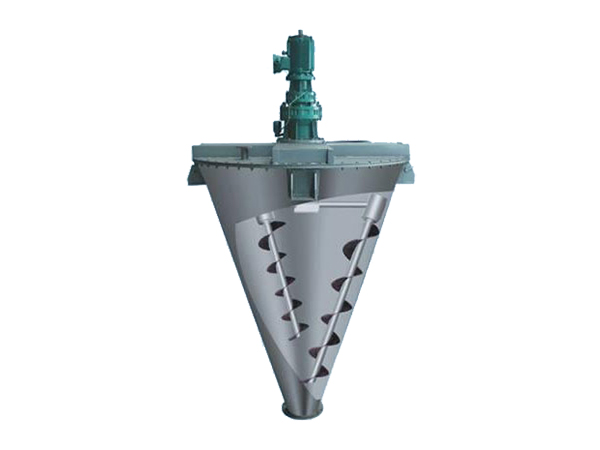
This paper takes the application scenario as the main line, divides
mixers into home and industrial categories, systematically analyzes the types, performance, and purchasing points of mixers, combines typical cases and industry standards, and provides targeted purchasing guidance for different groups of purchasers. It is expected to help purchasers avoid misunderstandings, select suitable mixer products, and maximize the value of equipment.
2. Classification of Mixers: Based on Application Scenarios
Mixers can be divided into two major categories according to the application scenario: home-use mixers and industrial mixers. The two categories have obvious differences in structural design, performance parameters, functional positioning, and price, which are designed to meet the different needs of small-scale daily use and large-scale industrial production.
2.1 Home-Use Mixers
Home-use mixers are mainly used for food preparation in family kitchens, with the characteristics of small volume, simple operation, low power, and multi-function. According to the functional positioning and structural form, they can be further divided into the following common types:
- Stand Mixers: Also known as desktop mixers, they are equipped with a fixed base and a detachable mixing head, with replaceable accessories such as dough hooks, egg beaters, and mixing paddles. They have the advantages of stable operation, uniform mixing, and multi-function, and are suitable for dough mixing, egg beating, cream whipping, and ingredient mixing. The power of home stand mixers is usually 300~1500W, and the capacity is 2~8L, which can meet the needs of family daily use and small-scale baking.
- Handheld Mixers: Lightweight and portable, they are held by hand during use, with simple structure and low price. They are mainly used for simple mixing operations such as egg beating, cream whipping, and sauce mixing. The power is usually 100~500W, and the capacity is small (usually used with independent bowls), which is suitable for users with limited kitchen space and simple mixing needs.
- Food Processors with Mixing Function: Integrated equipment with multiple functions such as mixing, chopping, slicing, and juicing. The mixing function is usually auxiliary, with moderate power (500~1000W) and capacity (3~5L). It is suitable for users who pursue multi-function and hope to save kitchen space.
- Specialized Home Mixers: Such as dough mixers for baking enthusiasts, juice mixers (blenders), and egg beaters. They are designed for specific mixing needs, with targeted performance optimization. For example, dough mixers have stronger torque and are suitable for mixing high-gluten dough; juice mixers have high-speed rotating blades, which can fully break down ingredients and retain nutrients.
The core demand of home-use mixers is convenience, multi-function, and safety. They usually adopt food-grade materials, have simple operation interfaces, and are easy to clean and store. The price range is relatively wide, from tens of dollars to hundreds of dollars, which can meet the needs of different consumption levels.
2.2 Industrial Mixers
Industrial mixers are mainly used for large-scale material mixing in industrial production, with the characteristics of large capacity, high power, strong stability, and high efficiency. They can adapt to complex material properties (such as high viscosity, high density, and multi-phase materials) and harsh working environments (such as high temperature, high pressure, and corrosion). According to the working principle and structural characteristics, they can be further divided into the following common types:
- Ribbon Mixers: The core component is a spiral ribbon agitator, which is divided into inner and outer ribbons. The inner ribbon pushes the material forward, and the outer ribbon pushes the material backward, realizing full mixing of the material. They have the advantages of uniform mixing, large capacity, and low energy consumption, and are suitable for mixing powder, granular, and paste materials in food, chemical, and pharmaceutical industries. The capacity ranges from 100L to tens of cubic meters, and the power is usually above 10kW.
- Paddle Mixers: Equipped with paddle-shaped agitators, which rotate at low speed to mix materials. They have the advantages of simple structure, strong adaptability, and easy maintenance, and are suitable for mixing materials with moderate viscosity, such as coatings, inks, and food pastes. According to the number of paddles, they can be divided into single-paddle, double-paddle, and multi-paddle mixers, which can be adjusted according to the mixing requirements.
- High-Speed Dispersers: Also known as high-speed mixers, they are equipped with high-speed rotating dispersing discs, which generate strong shear force and turbulence to disperse and mix materials. They have the advantages of high mixing efficiency, fine particle size, and good homogenization effect, and are suitable for mixing liquid-liquid, solid-liquid two-phase materials, such as cosmetics, paints, and pharmaceuticals. The rotating speed is usually 1000~10000 rpm, and the power is above 5kW.
- Planetary Mixers: The agitator moves in a planetary trajectory (rotating around its own axis while rotating around the center of the mixing barrel), which can fully contact the material and ensure uniform mixing. They have the advantages of strong mixing capacity, good adaptability to high-viscosity materials, and are suitable for mixing high-viscosity pastes, such as food fillings, adhesives, and pharmaceutical ointments. The capacity ranges from 50L to several cubic meters, and the power is usually above 7.5kW.
- Vacuum Mixers: Equipped with a vacuum system, which can mix materials in a vacuum environment to avoid air bubbles and improve product quality. They are widely used in high-end fields such as cosmetics, pharmaceuticals, and electronic materials, where the requirements for product purity and stability are high. The vacuum degree is usually above -0.08MPa, and the power is above 15kW.
The core demand of industrial mixers is efficiency, stability, and adaptability. They usually adopt high-strength materials, have strict sealing performance and safety protection measures, and can be customized according to the specific needs of production processes. The price range is relatively high, from thousands of dollars to hundreds of thousands of dollars, which is related to the capacity, power, and functional requirements of the equipment.
3. Key Performance Indicators of Mixers: Basis for Purchasing
Whether it is a home-use or industrial mixer, its performance is evaluated by a series of core indicators. Understanding these indicators is the basis for rational purchasing, which can help purchasers accurately judge whether the mixer meets their own needs.
3.1 Common Performance Indicators
- Power: It is the core indicator of the mixer's mixing capacity, which determines the mixing efficiency and the ability to handle materials. For home-use mixers, the power is usually 100~1500W; for industrial mixers, the power is usually above 5kW, and the larger the capacity and the higher the material viscosity, the higher the required power. It should be noted that high power does not mean better performance, and it is necessary to match the power according to the actual mixing needs to avoid energy waste.
- Capacity: Refers to the maximum volume or mass of materials that the mixer can handle at one time. For home-use mixers, the capacity is usually 2~8L; for industrial mixers, the capacity ranges from 50L to tens of cubic meters. The selection of capacity should be based on the actual usage amount: home users can choose according to the number of family members; industrial users should choose according to the production scale and batch size to avoid insufficient capacity or excessive waste of equipment.
- Mixing Speed: Refers to the rotating speed of the agitator, which affects the mixing efficiency and the uniformity of the material. For home-use mixers, the speed is usually adjustable (0~2000 rpm); for industrial mixers, the speed ranges from tens of rpm (low-speed mixing) to tens of thousands of rpm (high-speed dispersion). The selection of speed should be based on the material characteristics and mixing requirements: low viscosity materials can use high speed to improve efficiency; high viscosity materials should use low speed to avoid excessive energy consumption and equipment wear.
- Material of Key Components: The material of the mixing barrel, agitator, and other key components directly affects the safety and service life of the mixer. For home-use mixers, food-grade materials (such as 304 stainless steel, food-grade plastic) should be selected to ensure food safety; for industrial mixers, according to the material characteristics (corrosive, high-temperature, etc.), materials such as 316L stainless steel, Hastelloy, and titanium alloy can be selected to improve corrosion resistance and high-temperature resistance.
- Mixing Uniformity: Refers to the degree of uniform distribution of materials after mixing, which is an important indicator of mixing effect. For home-use mixers, it is mainly reflected in the uniformity of dough, egg liquid, etc.; for industrial mixers, it directly affects the quality of the final product. The mixing uniformity is related to the structure of the agitator, mixing speed, and mixing time, and can be evaluated through experimental tests.
- Stability and Durability: For home-use mixers, it is reflected in the stability of operation, no obvious noise, and long service life; for industrial mixers, it is reflected in the ability to work continuously for a long time, strong wear resistance, and low failure rate. The stability and durability are related to the structural design, material quality, and manufacturing process of the equipment.
3.2 Differences in Performance Indicators Between Home and Industrial Mixers
There are obvious differences in the focus of performance indicators between home and industrial mixers due to different application scenarios:
- Home-use mixers pay more attention to safety, convenience, and multi-function. The power and capacity are moderate, the operation is simple, the cleaning is convenient, and the noise is low. Food-grade materials are the basic requirement, and the price is relatively affordable.
- Industrial mixers pay more attention to efficiency, stability, and adaptability. The power and capacity are large, the mixing uniformity is high, the equipment can adapt to complex material properties and harsh working environments, and the service life is long. At the same time, it also pays attention to energy consumption, maintenance convenience, and safety protection measures.
4. Purchasing Guide for Mixers: Home and Industrial Scenarios
The purchasing needs of mixers in different scenarios are quite different. This section provides targeted purchasing guides for home and industrial scenarios respectively, clarifying the key purchasing criteria, selection methods, and matters needing attention.
4.1 Purchasing Guide for Home-Use Mixers
Home users purchase mixers mainly to meet the needs of daily food preparation. The key is to choose products that are practical, safe, and easy to use. The specific purchasing steps and criteria are as follows:
4.1.1 Clarify Usage Needs
First, clarify the main purpose of purchasing a mixer, which is the basis for selection:
- If you mainly use it for baking (dough mixing, cream whipping), it is recommended to choose a stand mixer with strong torque and replaceable accessories (dough hook, egg beater), with a power of 500~1500W and a capacity of 4~8L, which can meet the needs of making bread, cakes, etc.
- If you mainly use it for simple operations such as egg beating, sauce mixing, and light dough mixing, and the kitchen space is limited, a handheld mixer is a better choice, with a power of 300~500W, which is lightweight and portable, and the price is relatively low.
- If you pursue multi-function and hope to save kitchen space, you can choose a food processor with mixing function, which can realize multiple functions such as mixing, chopping, and juicing, and is suitable for users with diverse needs.
4.1.2 Key Purchasing Criteria
- Safety: Priority is given to products that meet food safety standards (such as FDA 21 CFR, GB 4706.1), and the mixing barrel, agitator, and other components are made of food-grade materials (304 stainless steel, food-grade plastic) to avoid harmful substances leaching. At the same time, check whether there are safety protection measures, such as overload protection, overheating protection, and anti-slip base.
- Practicality: Choose the power and capacity according to the number of family members and usage frequency. For a family of 3~4 people, a mixer with a capacity of 4~5L and a power of 500~800W is sufficient; for baking enthusiasts, you can choose a higher power (1000~1500W) and larger capacity (6~8L) stand mixer.
- Operability and Cleanliness: Choose products with simple operation interfaces (such as knob-type, touch-type), easy to operate; the mixing barrel and agitator are detachable, easy to clean, and avoid dead corners that are difficult to clean.
- Noise and Stability: The noise of home-use mixers should be controlled below 70dB to avoid affecting the living environment; the operation is stable, no obvious vibration, and the base has good anti-slip performance.
- Cost-Effectiveness: Do not blindly pursue high prices or high power. Choose products with reliable quality and appropriate functions within the budget. It is recommended to choose well-known brands with perfect after-sales service to ensure the quality and after-sales guarantee of the products.
4.1.3 Common Purchasing Misunderstandings
- Myth 1: The higher the power, the better. For home use, excessive power will lead to energy waste and increased noise, and the actual mixing effect is not necessarily better. It is sufficient to choose the power according to the usage needs.
- Myth 2: The more functions, the better. Too many functions may lead to reduced performance of the core mixing function, and some functions are rarely used, resulting in waste. Choose products with functions that match your own needs.
- Myth 3: Blindly pursuing imported brands. Imported brands are usually more expensive, but domestic brands have mature technology and reliable quality, and the price is more affordable, which can meet the needs of most home users.
4.2 Purchasing Guide for Industrial Mixers
Industrial mixers are high-investment equipment, and their selection directly affects production efficiency and product quality. The purchasing process needs to comprehensively consider factors such as production scale, material characteristics, process requirements, and cost-effectiveness. The specific purchasing steps and criteria are as follows:
4.2.1 Clarify Production Requirements
First, clarify the core production requirements, which is the premise of selecting industrial mixers:
- Material Characteristics: Clarify the phase (solid, liquid, solid-liquid, gas-liquid), viscosity, particle size, density, and corrosion resistance of the mixed material. For example, high-viscosity materials (such as pastes, adhesives) are suitable for planetary mixers or ribbon mixers; corrosive materials require mixers made of corrosion-resistant materials; fine powder materials are suitable for ribbon mixers or paddle mixers.
- Production Scale: Determine the processing capacity per hour or per batch, and select the mixer capacity and power accordingly. For large-scale continuous production, choose large-capacity continuous mixers (such as ribbon mixers); for small-batch multi-variety production, choose small-capacity batch mixers (such as planetary mixers).
- Process Requirements: Clarify the mixing uniformity, mixing time, whether vacuum mixing, high-speed dispersion, and other special requirements are needed. For example, products requiring no air bubbles (such as cosmetics, electronic materials) need vacuum mixers; products requiring fine particle size (such as paints, pharmaceuticals) need high-speed dispersers.
4.2.2 Key Purchasing Criteria
- Adaptability to Materials: The mixer must be able to adapt to the characteristics of the mixed material, such as handling high-viscosity materials, corrosive materials, or multi-phase materials, ensuring that the mixing effect meets the process requirements.
- Production Efficiency: The mixing speed, capacity, and continuous working capacity of the mixer should match the production scale, ensuring that the production efficiency is not affected. For large-scale production, choose mixers with large capacity and high efficiency; for small-batch production, focus on the flexibility of the mixer.
- Quality and Durability: Industrial mixers need to work continuously for a long time, so the quality and durability are crucial. Choose products with high-strength materials, reasonable structural design, and mature manufacturing process. The core components (agitator, mixing barrel, bearing) should have good wear resistance and corrosion resistance, and the service life should be more than 5 years.
- Safety and Environmental Protection: The mixer should be equipped with complete safety protection measures, such as overload protection, overheating protection, emergency stop button, and sealing device, to ensure the safety of operators and equipment. At the same time, it should meet environmental protection requirements, such as low noise, low dust, and no leakage of harmful substances.
- Cost-Effectiveness: Comprehensive consideration of equipment purchase cost, operation cost (energy consumption, maintenance), and service life. Do not blindly pursue low purchase cost, but choose products with high cost-effectiveness. For example, although high-quality mixers have a higher purchase cost, their energy consumption is low, failure rate is low, and maintenance cost is low, which can save costs in the long run.
- Standard Compliance: The selected mixer must comply with relevant international and national standards (such as ISO 9001, GB/T 30945, GMP), and meet the quality and safety requirements of the industry. For example, mixers used in the pharmaceutical industry must meet GMP standards, and mixers used in the food industry must meet food safety standards.
- After-Sales Service: Industrial mixers have high technical content and require professional maintenance and after-sales support. Choose manufacturers with perfect after-sales service, such as providing on-site installation, commissioning, maintenance, and spare parts supply, to ensure the normal operation of the equipment.
4.2.3 Typical Purchasing Cases
- Case 1: Food Processing Industry (Bakery Raw Material Mixing): A medium-sized bakery needs to mix flour, water, yeast, and other raw materials, with a batch processing capacity of 500kg, requiring uniform mixing, short mixing time, and easy cleaning. A double-ribbon mixer with a capacity of 1000L and a power of 15kW is selected. The mixer has uniform mixing, high efficiency, and a detachable mixing barrel, which is easy to clean, meeting the production needs of the bakery. After application, the mixing time is shortened by 20%, and the product quality is significantly improved.
- Case 2: Cosmetics Industry (Cream Emulsification Mixing): A cosmetic enterprise produces facial cream, requiring vacuum mixing to avoid air bubbles, and the mixing uniformity is high, with a batch capacity of 200L. A vacuum planetary mixer with a capacity of 300L, a power of 22kW, and a vacuum degree of -0.09MPa is selected. The mixer can realize vacuum mixing and high-speed dispersion, ensuring the fine texture and stability of the cream, meeting the product requirements.
- Case 3: Chemical Industry (Coating Mixing): A chemical enterprise produces water-based coatings, requiring high-speed dispersion of pigments and resins, with a processing capacity of 1000L/h, and the material is corrosive. A high-speed disperser with a power of 37kW, a rotating speed of 3000 rpm, and a mixing barrel made of 316L stainless steel is selected. The disperser has strong shear force, good dispersion effect, and corrosion resistance, which can meet the production needs of coatings.
5. Standard Compliance and Quality Inspection of Mixers
Whether it is a home-use or industrial mixer, its quality and safety must comply with relevant standards and specifications. Understanding the relevant standards and quality inspection methods can help purchasers avoid buying unqualified products and ensure the safety and reliability of the equipment.
5.1 Relevant International and National Standards
- International Standards: ISO 9001 (Quality Management System), ISO 12100 (Safety of Machinery - General Principles for Design), FDA 21 CFR (Code of Federal Regulations, for food and pharmaceutical equipment), EU CE Certification (Safety Certification for Machinery).
- National Codes: GB 4706.1 (Safety of Household and Similar Electrical Appliances - General Requirements), GB 4706.30 (Safety of Household and Similar Electrical Appliances - Particular Requirements for Mixers and Blenders), GB/T 30945-2014 (Industrial Mixers and Agitators), GB 19883-2005 (Hygienic Requirements for Food Machinery and Equipment), GMP (Good Manufacturing Practice for Pharmaceuticals).
- Industry Specifications: QB/T 4079-2010 (Household Mixers), HG/T 20639-1997 (Technical Specification for Chemical Mixing Equipment), NY/T 1644-2008 (Dairy Processing Machinery - Mixers).
5.2 Quality Inspection Methods
When purchasing mixers, purchasers can conduct simple quality inspection to judge the quality of the equipment:
- Appearance Inspection: Check whether the appearance of the mixer is intact, whether there are scratches, deformations, or rust; the surface of the mixing barrel and agitator is smooth, without burrs, and easy to clean.
- Operation Test: Turn on the mixer, check whether the operation is stable, whether there is obvious vibration or noise; the speed adjustment is smooth, and the switch and button are sensitive; the agitator rotates flexibly, without jamming.
- Material Inspection: Check the material certificate of the key components, confirm that the food-grade mixer uses food-grade materials, and the industrial mixer uses materials that meet the corrosion resistance and high-temperature resistance requirements.
- Safety Inspection: Check whether the safety protection measures are complete, such as overload protection, overheating protection, emergency stop button, and sealing device; the power cord and plug are intact, without damage.
6. Development Trend of Mixers
With the continuous development of science and technology and the upgrading of market demand, mixers are developing in the direction of intelligence, energy conservation, customization, and integration, providing more efficient and convenient solutions for home and industrial applications.
- Intelligent Development: Home-use mixers are integrating intelligent technologies such as APP control, intelligent recipe recommendation, and automatic mixing, simplifying the operation process and improving user experience; industrial mixers are equipped with intelligent monitoring systems, which can realize real-time monitoring of mixing parameters (speed, temperature, pressure), fault early warning, and intelligent adjustment, reducing the labor intensity of operators and improving production efficiency.
- Energy-Saving and Environmental Protection Development: By optimizing the structural design, improving the efficiency of the motor and agitator, and adopting energy-saving technologies, the energy consumption of mixers is reduced. At the same time, the sealing performance is improved, and the emission of noise, dust, and harmful substances is reduced, meeting the environmental protection requirements. For example, the new type of energy-saving motor can reduce energy consumption by 15%~25% under the same working conditions.
- Customization Development: With the increasingly diverse needs of users, mixers are developing in the direction of customization. For home users, customized mixers can be designed according to the size of the kitchen and usage habits; for industrial users, customized mixers can be designed according to the specific material characteristics and process requirements, improving the adaptability and mixing effect of the equipment.
- Integration Development: Home-use mixers are developing towards multi-function integration, integrating mixing, chopping, juicing, and other functions into one, saving kitchen space; industrial mixers are integrating with other equipment (such as feeding machines, discharging machines, and testing equipment) to form a complete production line, improving production efficiency and reducing production costs.
- High-Precision Development: For industrial mixers, with the increasing demand for product quality, the mixing precision is continuously improved. The agitator structure is optimized, and the mixing parameters are precisely controlled, ensuring the uniformity and stability of the mixed material, which is especially important in high-end fields such as pharmaceuticals and electronic materials.
7. Conclusion
Mixers, as essential equipment in home and industrial scenarios, have a wide variety of types and specifications, and the rational purchase is crucial for improving user experience and production efficiency. This paper takes the application scenario as the main line, divides mixers into home-use and industrial categories, systematically analyzes the types, structural characteristics, and performance indicators of mixers, and provides targeted purchasing guides for different groups of purchasers.
For home users, the key to purchasing mixers is to clarify usage needs, focus on safety, practicality, and cost-effectiveness, and avoid blind pursuit of high power and multi-function; for industrial users, it is necessary to comprehensively consider factors such as material characteristics, production scale, process requirements, and standard compliance, select mixers with strong adaptability, high efficiency, and good stability, and pay attention to after-sales service and cost-effectiveness.
With the continuous development of intelligent, energy-saving, and customized technologies, mixers will be more closely integrated with home and industrial production, providing more efficient, convenient, and environmentally friendly mixing solutions. It is hoped that this paper can provide systematic and practical guidance for the purchase of mixers, help purchasers select the most suitable products, and maximize the value of equipment.



 +86 18051935350