1. Introduction
In the context of the global industrial upgrading and the in-depth implementation of environmental protection policies, ultra-fine grinding technology, as a key link in the deep processing of products, has higher and higher requirements for equipment performance—while ensuring high grinding efficiency and precision, it must also meet the requirements of pollution-free production and low environmental impact. Traditional metal sand mills (such as steel sand mills, stainless steel sand mills) have obvious defects in the grinding process: the wear of metal components is easy to cause material contamination, which cannot meet the high-purity requirements of products in fields such as pharmaceuticals and food; the corrosion resistance is insufficient, and it is difficult to adapt to the grinding of corrosive materials; the high wear rate leads to frequent replacement of wearing parts and high maintenance costs, which restricts the improvement of production efficiency and the reduction of comprehensive costs.
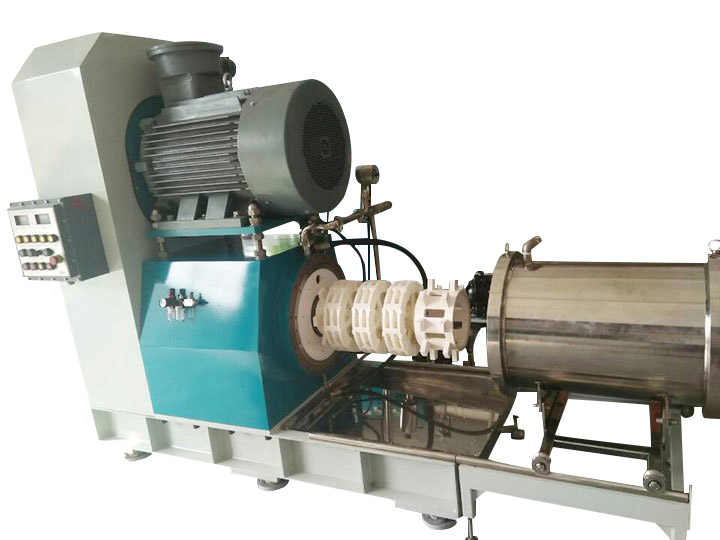
Against this background, ceramic
sand mills have emerged as the times require. By adopting high-performance ceramic materials (such as zirconia, alumina, silicon nitride) for key components such as grinding cavities, dispersers and grinding media, ceramic sand mills have inherent advantages such as high wear resistance, strong corrosion resistance, non-toxicity and pollution-free, which can effectively avoid material contamination caused by equipment wear, and at the same time reduce the frequency of wearing parts replacement and maintenance costs. At present, ceramic sand mills have been widely used in new materials (graphene, ceramic powder), pharmaceuticals (raw material grinding, Chinese medicine ultra-fine processing), food (food additives, powder processing), electronics (electronic paste, semiconductor materials) and other fields, and have become an indispensable core equipment for high-efficiency and pollution-free grinding production.
However, with the continuous diversification of application fields and the increasing strictness of product requirements, the types and specifications of ceramic sand mills are becoming more and more abundant, and the technical threshold of equipment selection, parameter adjustment and operation and maintenance is also increasing. Many enterprises still face problems such as unreasonable equipment selection, mismatched process parameters, insufficient grinding efficiency and unqualified pollution control, which restrict the exertion of the advantages of ceramic sand mills. Therefore, it is of great practical significance to conduct a comprehensive analysis of ceramic sand mill technology, clarify its core advantages, structural characteristics and application rules, and provide professional selection and operation guidance. This paper takes ceramic sand mills as the research object, systematically parses their core technologies, elaborates on their application scenarios and optimization strategies, and looks forward to their development trends, hoping to help relevant personnel fully grasp the key points of ceramic sand mills and promote the high-quality development of related industries.
2. Core Technology of Ceramic Sand Mills: Structural Characteristics and Working Principles
The core competitiveness of ceramic sand mills lies in the application of high-performance ceramic materials and optimized structural design, which enables them to achieve a balance between high-efficiency grinding and pollution-free production. To fully understand the performance and application of ceramic sand mills, it is necessary to first clarify their structural characteristics and working principles.
2.1 Core Structural Characteristics
The ceramic sand mill is mainly composed of a ceramic grinding cavity, a ceramic disperser (rotor), ceramic grinding media, a transmission system, a feeding system, a discharging system, a cooling system and an intelligent control system. The biggest difference from traditional metal sand mills is that the key components in contact with materials are made of high-performance ceramic materials, which ensures the pollution-free performance and wear resistance of the equipment. The key structural characteristics are as follows:
- Ceramic Grinding Cavity: As the core working area of the ceramic sand mill, the grinding cavity is made of high-purity ceramic materials (such as zirconia ceramic, alumina ceramic), which has the characteristics of high hardness (Mohs hardness ≥ 9), excellent wear resistance, strong corrosion resistance and non-toxic pollution-free. The inner wall of the cavity is polished with high precision, which reduces the friction resistance between materials and the cavity wall, improves the grinding efficiency, and avoids material contamination caused by cavity wall wear. The shape and volume of the grinding cavity are designed according to the production scale and grinding requirements, and the segmented grinding cavity design is usually adopted for ultra-fine grinding, which can realize multi-stage grinding and dispersion of materials, further improving the grinding precision and uniformity.
- Ceramic Disperser (Rotor): The disperser is the core component that drives the grinding media to move at high speed, and is also made of high-performance ceramic materials. The common types include ceramic disc type, ceramic pin type and ceramic turbine type. The surface of the ceramic disperser is equipped with wear-resistant ceramic teeth or grooves, which can generate strong shearing force and turbulent flow when rotating at high speed, driving the ceramic grinding media to collide, friction and shear with the materials, thereby realizing ultra-fine grinding and dispersion. Compared with metal dispersers, ceramic dispersers have better wear resistance and corrosion resistance, longer service life, and will not cause metal ion contamination to materials.
- Ceramic Grinding Media: The grinding media of ceramic sand mills are also made of ceramic materials, which are matched with the grinding cavity and disperser to ensure the pollution-free performance of the grinding process. Common ceramic grinding media include zirconia ceramic beads, alumina ceramic beads, silicon nitride ceramic beads and silicon carbide ceramic beads. The selection of grinding media is determined according to the material characteristics and product requirements: zirconia ceramic beads have high density and hardness, suitable for ultra-fine grinding of high-hardness materials; alumina ceramic beads have moderate cost and good wear resistance, suitable for general ultra-fine grinding; silicon nitride ceramic beads have excellent toughness and corrosion resistance, suitable for grinding of corrosive materials.
- Transmission System: The transmission system is composed of an energy-saving motor, a planetary reducer, a coupling and a ceramic main shaft, which provides stable power for the rotation of the ceramic disperser. The planetary reducer has the advantages of large transmission ratio, stable operation and low noise, and is equipped with a frequency conversion speed regulation device, which can adjust the rotation speed of the disperser according to the material characteristics and grinding requirements, so as to achieve the optimal grinding effect and energy saving. The ceramic main shaft has high precision and wear resistance, which ensures the stable operation of the equipment.
- Cooling System: A large amount of heat will be generated during the high-speed grinding process, which will affect the quality of heat-sensitive materials and the service life of ceramic components. Therefore, ceramic sand mills are usually equipped with a high-efficiency cooling system, which can be divided into water cooling and air cooling. The cooling system is closely attached to the outer wall of the ceramic grinding cavity, which can timely take away the heat generated during the grinding process, ensure that the equipment operates at a stable temperature (usually 25~40℃), and avoid material denaturation and ceramic component damage caused by overheating.
- Feeding and Discharging System: The feeding system is composed of a corrosion-resistant feeding pump (such as a peristaltic pump, a ceramic gear pump) and a ceramic pipeline, which can realize continuous and stable feeding of materials, and the feeding speed can be adjusted steplessly. The discharging system is equipped with a high-precision ceramic separation device (such as a ceramic sieve, a dynamic ceramic separator), which can effectively separate the ceramic grinding media from the ground materials, ensure that the discharged materials do not contain grinding media and impurities, and avoid contamination of the subsequent process. The ceramic separation device has high separation efficiency and wear resistance, and can maintain stable performance for a long time.
- Intelligent Control System: Modern ceramic sand mills are usually equipped with an intelligent control system, which can realize real-time monitoring and automatic adjustment of key parameters such as disperser rotation speed, feeding speed, cooling water flow rate and grinding temperature. The system is equipped with a fault alarm function, which can timely send an alarm when the equipment is abnormal (such as overheating, insufficient cooling, material blockage), and record the operation data, which is convenient for equipment maintenance and process optimization. Some high-end ceramic sand mills also support remote operation and monitoring, which improves the convenience of equipment management.
2.2 Working Principle
The working principle of the ceramic sand mill is based on the combined action of collision, friction and shearing between ceramic grinding media and materials, and the whole process is carried out in a closed ceramic cavity to ensure pollution-free production. The specific working process is as follows:
1. Feeding Stage: The materials to be ground (such as powder, slurry) are uniformly transported to the ceramic grinding cavity through the corrosion-resistant feeding system. The feeding speed is adjusted according to the grinding capacity of the equipment and the characteristics of the materials (viscosity, initial particle size), to ensure that the materials are fully contacted with the grinding media and avoid insufficient grinding or excessive accumulation.
2. Grinding and Dispersion Stage: The energy-saving motor drives the ceramic disperser to rotate at high speed through the transmission system. The high-speed rotating ceramic disperser generates strong shearing force and turbulent flow in the ceramic grinding cavity, driving the ceramic grinding media in the cavity to move at high speed (linear speed up to 10~20m/s). The materials entering the grinding cavity are continuously collided, rubbed and sheared by the high-speed moving ceramic grinding media, and the large particles are gradually crushed into ultra-fine particles, and the agglomerated particles are fully dispersed to form a uniform dispersion system. During the whole process, the ceramic components (grinding cavity, disperser, grinding media) do not wear or wear extremely little, and will not introduce metal ions or other impurities into the materials, ensuring the purity of the products.
3. Separation and Discharging Stage: The ground materials and ceramic grinding media are transported to the ceramic separation device of the discharging system together. The separation device separates the ceramic grinding media from the materials (the grinding media remain in the grinding cavity for continuous use, and the materials are discharged through the ceramic pipeline). The discharged materials are ultra-fine dispersed products that meet the requirements of particle size and purity. The entire process is continuous, which can realize large-scale continuous production and avoid material pollution caused by intermittent production.
It should be noted that the grinding effect and pollution-free performance of ceramic sand mills are affected by many factors, including the rotation speed of the ceramic disperser, the type and particle size of ceramic grinding media, the filling rate of grinding media, the feeding speed, the viscosity of materials and the grinding time. By adjusting these parameters reasonably, the optimal balance between high-efficiency grinding and pollution-free production can be achieved.
2.3 Key Technical Parameters
The key technical parameters of ceramic sand mills determine their grinding efficiency, precision and application scope. When selecting and using ceramic sand mills, it is necessary to focus on the following key parameters, which are also the core differences from traditional metal sand mills:
- Grinding Cavity Volume: It is an important indicator of the production capacity of ceramic sand mills, usually ranging from 0.1L (laboratory type) to 500L (industrial large-scale type). The selection of the grinding cavity volume should be matched with the production scale of the enterprise. For small-batch high-precision production (such as pharmaceutical raw materials), a small-volume ceramic sand mill (0.1~5L) is selected; for large-scale continuous production (such as new materials), a large-volume ceramic sand mill (100~500L) is selected.
- Disperser Rotation Speed: It directly affects the grinding efficiency and particle size distribution of materials. The rotation speed is usually 1500~6000r/min, and the adjustable range is determined by the frequency conversion speed regulation device. Higher rotation speed can generate stronger shearing force and improve grinding efficiency, but it will also increase energy consumption and wear of ceramic components (to a lesser extent than metal components). The optimal rotation speed should be determined according to the material characteristics and target particle size.
- Ceramic Grinding Media Parameters: Including the type, particle size and filling rate of grinding media. The particle size of ceramic grinding media is usually 0.1~2.0mm: the smaller the particle size, the finer the particle size of the ground materials, but the lower the grinding efficiency. The filling rate of grinding media is usually 65%~85%, which is slightly higher than that of traditional metal sand mills, because ceramic grinding media have better wear resistance and can maintain stable grinding effect at higher filling rates.
- Maximum Feeding Viscosity: It refers to the maximum viscosity of materials that the ceramic sand mill can handle, usually ranging from 500~15000mPa·s. Ceramic sand mills have better adaptability to high-viscosity materials than traditional metal sand mills, because the smooth inner wall of the ceramic grinding cavity can reduce the friction resistance of materials.
- Cooling Capacity: It is used to ensure that the equipment operates at a stable temperature, usually expressed by the cooling area or cooling water flow rate. For heat-sensitive materials (such as pharmaceuticals, food), it is necessary to select a ceramic sand mill with sufficient cooling capacity to avoid material denaturation. The cooling capacity of ceramic sand mills is usually 1.5~2 times that of traditional metal sand mills, because ceramic materials have poor thermal conductivity and need stronger cooling capacity to take away heat.
- Purity Guarantee Level: It is a unique parameter of ceramic sand mills, usually expressed by the impurity content of the ground materials (metal ion content ≤ 1ppm, particle impurity content ≤ 0.1%). For fields with high purity requirements (such as pharmaceuticals, electronic materials), it is necessary to select a ceramic sand mill with a high purity guarantee level, and the key components should be made of high-purity ceramic materials (purity ≥ 99.9%).
3. Classification of Ceramic Sand Mills: Based on Structure, Materials and Applications
With the continuous development of ceramic sand mill technology, there are various types of ceramic sand mills on the market, which can be classified according to different standards. Understanding the classification of ceramic sand mills is helpful for enterprises to select suitable equipment according to their own needs. The common classification methods are as follows:
3.1 Classification by Structural Type
According to the structural design of the grinding cavity and disperser, ceramic sand mills can be divided into the following types, which are suitable for different production scenarios:
- Horizontal Ceramic Sand Mill: The grinding cavity is horizontal, and the ceramic disperser is installed horizontally in the cavity. It has the advantages of large grinding cavity volume, high production capacity, uniform grinding effect and easy maintenance. It is suitable for large-scale continuous production, such as new materials, coatings and other fields. According to the structure of the ceramic disperser, it can be divided into horizontal ceramic disc type sand mill and horizontal ceramic pin type sand mill. The pin type has stronger shearing force, suitable for ultra-fine grinding of high-hardness materials; the disc type has stable operation, suitable for general ultra-fine grinding and dispersion.
- Vertical Ceramic Sand Mill: The grinding cavity is vertical, and the ceramic disperser is installed vertically in the cavity. It has the advantages of small floor space, simple structure and low cost. It is suitable for small-batch production and laboratory use, such as pharmaceutical laboratory, food additive research and development. The vertical ceramic sand mill is usually equipped with a bottom feeding and top discharging structure, which can avoid material accumulation and ensure uniform grinding. However, its production capacity is relatively small, which is not suitable for large-scale continuous production.
- Ceramic Bead Mill (Circular Ceramic Sand Mill): It is a high-efficiency ceramic sand mill with a circular grinding cavity. The materials and ceramic grinding media circulate in the grinding cavity under the action of the ceramic disperser and the pump, which can realize multiple grinding of materials and improve the grinding precision and uniformity. It has the advantages of high grinding efficiency, narrow particle size distribution and good dispersion effect, and is suitable for ultra-fine grinding of high-precision products, such as electronic paste, pharmaceutical powders and other fields.
- Inline Ceramic Sand Mill: It can be directly connected to the automatic production line, realizing the integration of grinding and production. The materials are directly fed into the ceramic grinding cavity from the production line, and the ground materials are directly discharged to the next process, which improves production efficiency and avoids material pollution caused by intermediate transfer. It is suitable for continuous production lines in various industries, such as food processing, electronic materials and other fields.
3.2 Classification by Ceramic Material Type
The performance of ceramic sand mills is closely related to the type of ceramic materials used in key components. According to the type of ceramic materials, ceramic sand mills can be divided into the following types:
- Zirconia Ceramic Sand Mill: The key components (grinding cavity, disperser, grinding media) are made of zirconia ceramic (ZrO₂), which has the characteristics of high hardness (Mohs hardness 9.5), excellent wear resistance, strong corrosion resistance and good toughness. It is suitable for ultra-fine grinding of high-hardness, high-purity materials, such as graphene, ceramic powder, pharmaceutical raw materials and other fields. The zirconia ceramic sand mill has the highest cost, but its service life and grinding precision are also the best.
- Alumina Ceramic Sand Mill: The key components are made of alumina ceramic (Al₂O₃), which has the characteristics of high hardness (Mohs hardness 9), good wear resistance, moderate cost and strong corrosion resistance. It is suitable for general ultra-fine grinding of medium-hardness materials, such as food additives, pigments, dyes and other fields. It is a ceramic sand mill with high cost performance, which is widely used in various industries.
- Silicon Nitride Ceramic Sand Mill: The key components are made of silicon nitride ceramic (Si₃N₄), which has excellent toughness, corrosion resistance and high temperature resistance. It is suitable for grinding of corrosive materials and high-temperature materials, such as chemical raw materials, high-temperature ceramic powder and other fields. Its cost is between zirconia and alumina ceramic sand mills.
- Silicon Carbide Ceramic Sand Mill: The key components are made of silicon carbide ceramic (SiC), which has high hardness, good wear resistance and strong thermal conductivity. It is suitable for grinding of high-hardness metal materials and mineral materials, such as metal powder, mineral processing and other fields. It has a lower cost than zirconia and silicon nitride ceramic sand mills, but its toughness is poor, and it is not suitable for grinding of brittle materials.
3.3 Classification by Application Scenarios
According to the application fields and product requirements, ceramic sand mills can be divided into the following types, which are customized according to the characteristics of different industries:
- Pharmaceutical-Grade Ceramic Sand Mill: It meets the GMP standards, with strict hygiene requirements, no dead angle in the ceramic grinding cavity, easy cleaning and sterilization. The key components are made of high-purity zirconia or alumina ceramic, which ensures that the materials are free from pollution. It is suitable for ultra-fine grinding of pharmaceutical raw materials, Chinese medicine powders, pharmaceutical excipients and other materials, ensuring the purity and fineness of the products.
- Food-Grade Ceramic Sand Mill: It meets the food safety standards (such as FDA, GB standards), the ceramic components are non-toxic, odorless and pollution-free, and the inner wall of the grinding cavity is smooth and easy to clean. It is suitable for grinding of food additives, food powders, fruit and vegetable slurries and other materials, ensuring food safety and quality.
- New Material-Grade Ceramic Sand Mill: It is suitable for ultra-fine grinding of new materials (such as graphene, carbon nanotubes, ceramic powder, semiconductor materials), with high grinding precision and purity guarantee. The key components are made of high-purity zirconia ceramic, which can avoid material contamination and ensure the performance of new materials. It is usually equipped with an intelligent control system to realize precise control of process parameters.
- Electronic-Grade Ceramic Sand Mill: It is specially designed for the electronic industry, with high precision and low impurity content. It is suitable for grinding of electronic paste, semiconductor materials, electronic powder and other materials, ensuring the electrical performance of electronic products. The key components are made of high-purity ceramic materials, and the grinding media are selected with ultra-high precision to avoid impurity introduction.
- Laboratory-Grade Ceramic Sand Mill: It is small in size, flexible in operation and accurate in grinding. It is suitable for small-scale grinding experiments in laboratories, such as material formula research, grinding effect test and other fields. The grinding cavity volume is usually 0.1~5L, and the ceramic components are made of high-purity materials to ensure the accuracy of experimental results.
4. Core Advantages of Ceramic Sand Mills: High-Efficiency Grinding and Pollution-Free Production
Compared with traditional metal sand mills and other grinding equipment, ceramic sand mills have obvious advantages in high-efficiency grinding, pollution-free production, wear resistance and corrosion resistance, which are the core reasons for their wide application in high-end industries. The specific advantages are as follows:
4.1 High-Efficiency Grinding Performance
Ceramic sand mills have higher grinding efficiency and precision than traditional metal sand mills, mainly reflected in the following aspects: First, the ceramic disperser and grinding media have high hardness and smooth surface, which can generate stronger shearing force and collision force during high-speed movement, and the grinding efficiency is 30%~50% higher than that of traditional metal sand mills. Second, the segmented grinding cavity design and high-precision ceramic separation device can realize multi-stage grinding and dispersion of materials, making the particle size distribution of the finished product narrower (particle size distribution index ≤ 0.8) and the dispersion uniformity better. Third, the frequency conversion speed regulation device can adjust the rotation speed of the disperser according to the material characteristics, realizing the optimal grinding effect and avoiding energy waste caused by excessive rotation speed. Fourth, the smooth inner wall of the ceramic grinding cavity reduces the friction resistance of materials, improves the flow rate of materials in the cavity, and further improves the grinding efficiency.
4.2 Pollution-Free Production Guarantee
Pollution-free production is the most prominent advantage of ceramic sand mills, which is irreplaceable by traditional metal sand mills. First, the key components in contact with materials (grinding cavity, disperser, grinding media) are made of high-purity ceramic materials, which are non-toxic, pollution-free and do not react with materials, avoiding metal ion contamination and particle contamination caused by metal component wear. The impurity content of the ground materials can be controlled below 1ppm, which meets the high-purity requirements of pharmaceuticals, food and electronic materials. Second, the closed grinding cavity and ceramic pipeline avoid material leakage and environmental pollution, and the whole grinding process is green and environmentally friendly. Third, the ceramic components have good corrosion resistance, and can be used for grinding of corrosive materials (such as acids, alkalis) without equipment corrosion and material contamination.
4.3 Excellent Wear Resistance and Long Service Life
Ceramic materials have extremely high hardness and wear resistance, which makes the service life of ceramic sand mills much longer than that of traditional metal sand mills. The service life of ceramic grinding cavity and disperser is 3~5 times that of metal components, and the service life of ceramic grinding media is 5~10 times that of metal grinding media. This not only reduces the frequency of wearing parts replacement, but also reduces the maintenance cost and downtime, improving the continuity and stability of production. For example, the zirconia ceramic disperser can maintain stable performance for more than 2 years under normal operation, while the metal disperser needs to be replaced every 3~6 months.
4.4 Strong Corrosion Resistance and Wide Adaptability
Ceramic materials have strong corrosion resistance to acids, alkalis, salts and other corrosive media, which makes ceramic sand mills suitable for grinding of various corrosive materials, such as chemical raw materials, pharmaceutical intermediates and other fields. Traditional metal sand mills are easy to corrode when grinding corrosive materials, leading to equipment damage and material contamination, while ceramic sand mills can maintain stable performance for a long time. In addition, ceramic sand mills have good adaptability to materials of different viscosities and hardness, and can be used for grinding of powder, slurry and other materials, with a wide application range.
4.5 Energy Saving and Environmental Protection
Ceramic sand mills adopt energy-saving motors and optimized structural design, which have lower energy consumption than traditional metal sand mills. The energy consumption per ton of materials is reduced by 20%~30%, which conforms to the energy-saving and environmental protection policies. At the same time, the closed grinding process avoids dust leakage and noise pollution (noise ≤ 70dB), and the ceramic components are non-toxic and recyclable, which reduces environmental impact. In addition, the reduction of wearing parts replacement also reduces the generation of solid waste, realizing green production.



 +86 18051935350