1. Introduction
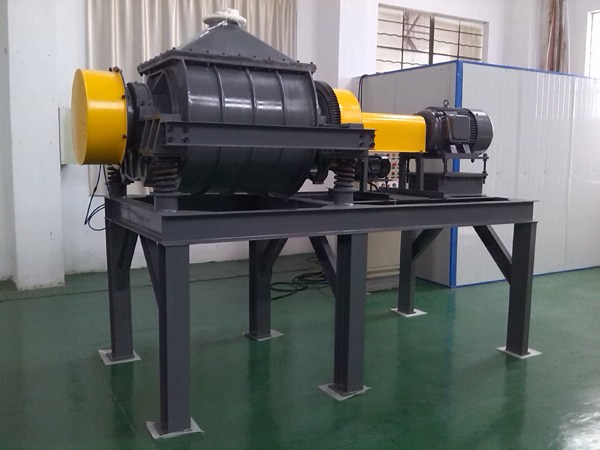
In modern industrial production, the classification, grading, and purification of bulk materials are essential links, which directly affect the subsequent processing efficiency, product quality, and economic benefits of the enterprise. Vibrating screens, as efficient material separation equipment, rely on the periodic vibration generated by the vibration exciter to make the materials on the screen surface move in a specific trajectory, thereby realizing the separation of materials with different particle sizes, shapes, or densities. Compared with traditional screening equipment, vibrating screens have the advantages of high screening efficiency, large processing capacity, uniform product size, simple structure, and easy maintenance, making them an indispensable key equipment in the material processing industry.
With the continuous development of industrial technology, the requirements for material processing precision, efficiency, and environmental protection are increasingly strict, which promotes the continuous upgrading and improvement of vibrating screen technology. At present, vibrating screens have formed a variety of types and specifications to adapt to different material characteristics and industrial needs. However, in practical applications, there are still problems such as unreasonable equipment selection, insufficient understanding of working principles, and improper operation, which lead to reduced screening efficiency, increased energy consumption, and shortened equipment service life. Therefore, a comprehensive analysis of the working principles, types, and applications of vibrating screens is of great significance for improving the application level of vibrating screens, reducing production costs, and promoting the high-quality development of related industries. This paper systematically combs the core knowledge of vibrating screens, providing a reference for the rational selection, operation, and maintenance of vibrating screens in industrial production.
2. Working Principles of Vibrating Screens
The working principle of
vibrating screens is based on the combination of mechanical vibration and material movement, relying on the periodic vibration generated by the vibration exciter to apply force to the materials on the screen surface, making the materials produce directional movement and realize separation. The core of the working principle lies in the generation of vibration, the transmission of vibration force, and the movement law of materials on the screen surface.
2.1 Generation of Vibration
The vibration of vibrating screens is mainly generated by vibration exciters, which are the core components of vibrating screens. Common vibration exciters include eccentric block vibration exciters, electromagnetic vibration exciters, and hydraulic vibration exciters, among which eccentric block vibration exciters are the most widely used due to their simple structure, stable performance, and adjustable vibration parameters.
For eccentric block vibration exciters, the vibration is generated by the centrifugal force formed by the rotation of the eccentric block. When the motor drives the eccentric block to rotate at a high speed, the eccentric block produces a periodic centrifugal force (F = mω²r, where m is the mass of the eccentric block, ω is the angular velocity of rotation, and r is the eccentricity). This centrifugal force acts on the screen box, making the screen box perform periodic reciprocating vibration. The frequency, amplitude, and vibration direction of the screen box can be adjusted by changing the mass of the eccentric block, the eccentricity, and the rotation speed of the motor, so as to adapt to different material screening requirements.
Electromagnetic vibration exciters generate vibration through the periodic change of electromagnetic force, which has the advantages of stepless adjustment of vibration parameters and low noise, and is suitable for occasions with high precision requirements. Hydraulic vibration exciters generate vibration through the periodic change of hydraulic pressure, which has large vibration force and strong load capacity, and is suitable for large-scale vibrating screens in heavy industry fields.
2.2 Transmission of Vibration Force
The vibration force generated by the vibration exciter is transmitted to the screen box through the connecting component (such as the vibration shaft, bearing, and support spring), and then transmitted to the screen surface by the screen box. The support spring plays a key role in the vibration transmission process, which not only supports the screen box and reduces the vibration impact on the foundation but also ensures the stable transmission of vibration force. Common support springs include spiral springs, rubber springs, and leaf springs. Spiral springs have good elasticity and fatigue resistance, and are widely used in general vibrating screens; rubber springs have good shock absorption performance and noise reduction effect, and are suitable for occasions with high vibration intensity; leaf springs have high stiffness and load capacity, and are suitable for large-scale vibrating screens.
During the vibration transmission process, it is necessary to ensure that the vibration force is evenly transmitted to each part of the screen box and the screen surface, avoiding local vibration unevenness, which may lead to screen surface damage and reduced screening efficiency. At the same time, the vibration direction angle (the angle between the vibration direction and the horizontal direction) is an important parameter affecting the material movement. Generally, the vibration direction angle is set between 30° and 60°, which can make the materials on the screen surface move forward while jumping, ensuring the full contact between the materials and the screen surface.
2.3 Material Separation Mechanism
When the vibrating screen is working, the materials are evenly fed to the screen surface through the feeding device. Under the action of vibration force, the materials on the screen surface produce a combination of jumping and forward movement. During this process, the materials with particle size smaller than the screen hole fall through the screen hole into the lower receiving hopper, which are called undersize products; the materials with particle size larger than the screen hole are retained on the screen surface and move forward along the screen surface to the discharge port, which are called oversize products. Thus, the separation of materials with different particle sizes is realized.
The separation efficiency of materials is affected by many factors, including vibration parameters (frequency, amplitude, vibration direction angle), screen surface parameters (screen hole size, screen surface inclination angle, screen surface material), and material characteristics (particle size distribution, density, humidity). Reasonable adjustment of these parameters can improve the screening efficiency and ensure the quality of screened products. For example, increasing the vibration frequency can enhance the jumping intensity of materials, reduce the blockage of screen holes; adjusting the screen surface inclination angle can change the forward speed of materials, ensuring that the materials have sufficient screening time on the screen surface.
3. Classification of Vibrating Screens
Vibrating screens have a variety of classification methods, which can be divided into different types according to structural characteristics, vibration forms, screening layers, and application scenarios. Each type of vibrating screen has its own unique structural characteristics and applicable ranges, which can meet the different needs of industrial production.
3.1 Classification by Structural Characteristics
According to the structural characteristics, vibrating screens can be divided into linear vibrating screens, circular vibrating screens, elliptical vibrating screens, and high-frequency vibrating screens, which are the most common classification methods.
- Linear Vibrating Screen: The screen box of the linear vibrating screen performs linear reciprocating vibration under the action of the vibration exciter. The vibration direction is parallel to the screen surface, and the materials move forward in a linear trajectory on the screen surface. It has the advantages of uniform feeding, high screening efficiency, and easy adjustment of screening accuracy. It is widely used in the classification of granular materials in mining, metallurgy, construction, and other industries. The screen surface can be single-layer or multi-layer, and the screen hole size can be adjusted according to the needs.
- Circular Vibrating Screen: The screen box of the circular vibrating screen performs circular motion under the action of the eccentric block vibration exciter. The vibration direction is perpendicular to the screen surface, and the materials on the screen surface move in a circular trajectory, which can realize the full contact between the materials and the screen surface. It has the advantages of large processing capacity, strong adaptability to materials, and simple structure. It is suitable for the preliminary screening and classification of large-scale bulk materials in mining, coal, and other industries.
- Elliptical Vibrating Screen: The elliptical vibrating screen is a new type of vibrating screen developed on the basis of linear and circular vibrating screens. The screen box performs elliptical motion, which combines the advantages of linear and circular vibration. The materials on the screen surface move in an elliptical trajectory, which not only has a high forward speed but also has sufficient jumping intensity, avoiding screen hole blockage and improving screening efficiency. It is suitable for the fine screening of materials in metallurgy, chemical engineering, and other industries.
- High-Frequency Vibrating Screen: The high-frequency vibrating screen adopts a high-frequency vibration exciter, with a vibration frequency of 30~50 Hz, which is much higher than that of ordinary vibrating screens. The high-frequency vibration makes the materials on the screen surface produce intense micro-vibration, which can effectively separate fine-grained materials and prevent screen hole blockage. It has the advantages of high screening accuracy, good separation effect, and small volume. It is widely used in the fine screening of minerals, chemicals, and food processing industries.
3.2 Classification by Vibration Form
According to the vibration form, vibrating screens can be divided into forced vibration screens and self-synchronizing vibration screens.
- Forced Vibration Screen: The vibration of the forced vibration screen is generated by the external force of the vibration exciter, and the vibration frequency is determined by the rotation speed of the motor, which is not affected by the load. It has the advantages of stable vibration, adjustable parameters, and strong adaptability. Most of the common vibrating screens (such as linear, circular, and high-frequency vibrating screens) belong to forced vibration screens.
- Self-Synchronizing Vibration Screen: The self-synchronizing vibration screen does not need a special vibration exciter, but relies on the self-synchronization of two eccentric rotors to generate vibration. It has the advantages of simple structure, low energy consumption, and easy maintenance. It is suitable for small and medium-sized material screening occasions, such as food processing and light industry.
3.3 Classification by Screening Layers
According to the number of screening layers, vibrating screens can be divided into single-layer vibrating screens, double-layer vibrating screens, and multi-layer vibrating screens.
- Single-Layer Vibrating Screen: It has only one screen surface, which can realize the separation of two grades of materials (undersize and oversize). It is simple in structure, small in volume, and suitable for occasions with simple screening requirements, such as the preliminary screening of bulk materials.
- Double-Layer Vibrating Screen: It has two screen surfaces with different screen hole sizes, which can realize the separation of three grades of materials. It has the advantages of compact structure and high space utilization, and is widely used in the classification of granular materials in mining, construction, and other industries.
- Multi-Layer Vibrating Screen: It has three or more screen surfaces, which can realize the separation of multiple grades of materials at one time. It has the advantages of high screening efficiency and large processing capacity, and is suitable for large-scale industrial production occasions that require multi-grade classification, such as metallurgy and chemical engineering.
3.4 Classification by Application Scenarios
According to the application scenarios, vibrating screens can be divided into mining vibrating screens, metallurgical vibrating screens, chemical vibrating screens, food vibrating screens, and construction vibrating screens.
- Mining Vibrating Screens: It is mainly used for the screening and classification of mineral materials (such as coal, iron ore, copper ore). It has the characteristics of large processing capacity, strong wear resistance, and high reliability. Common types include circular vibrating screens and linear vibrating screens.
- Metallurgical Vibrating Screens: It is used for the screening and purification of metallurgical raw materials and products (such as iron concentrate, steel slag). It has high screening accuracy and strong adaptability to high-temperature materials. High-frequency vibrating screens and elliptical vibrating screens are widely used.
- Chemical Vibrating Screens: It is used for the screening and classification of chemical raw materials and products (such as chemical powders, granules). It has the characteristics of corrosion resistance, good sealing performance, and low noise. Stainless steel vibrating screens are commonly used.
- Food Vibrating Screens: It is used for the screening and purification of food raw materials and products (such as grains, flour, food additives). It has the characteristics of non-toxic, tasteless, easy to clean, and meets food safety standards. High-frequency vibrating screens and linear vibrating screens are widely used.
- Construction Vibrating Screens: It is used for the screening and grading of construction materials (such as sand, gravel, cement). It has the characteristics of large processing capacity, strong wear resistance, and simple maintenance. Circular vibrating screens and double-layer vibrating screens are commonly used.
4. Industrial Applications of Vibrating Screens
Vibrating screens, with their excellent screening performance and wide adaptability, are widely used in various industrial fields. They play an important role in material classification, grading, purification, and dehydration, and promote the improvement of production efficiency and product quality in related industries. This section details the application of vibrating screens in major industries, combined with typical engineering cases.
4.1 Application in Mining Industry
The mining industry is the largest application field of vibrating screens, which are widely used in the screening and classification of mineral raw materials in the whole process of mining, crushing, and beneficiation. In the mining process, vibrating screens are used for the preliminary screening of raw ore to remove large impurities and separate ore and gangue; in the crushing process, vibrating screens are used for the closed-circuit screening of crushed materials to ensure the particle size of the crushed products; in the beneficiation process, vibrating screens are used for the grading of ore pulp and the purification of concentrate, improving the beneficiation efficiency.
Typical Case: A large iron ore mine in China adopts a circular vibrating screen for the preliminary screening of raw ore, with a processing capacity of 1200 t/h, a screen hole size of 150 mm, and a screening efficiency of 92%. The linear vibrating screen is used for the closed-circuit screening of crushed ore, with a processing capacity of 800 t/h, a screen hole size of 20 mm, and a screening accuracy of 95%. The application of vibrating screens has significantly improved the crushing and beneficiation efficiency of the mine, reduced the energy consumption of the equipment, and increased the output of iron concentrate by 8%.
4.2 Application in Metallurgical Industry
In the metallurgical industry, vibrating screens are mainly used for the screening and purification of metallurgical raw materials (such as iron ore, steel scrap) and products (such as steel slag, iron concentrate). In the steelmaking process, vibrating screens are used for the screening of steel scrap to remove impurities and ensure the quality of steelmaking; in the ironmaking process, vibrating screens are used for the grading of iron concentrate to ensure the particle size of the concentrate and improve the ironmaking efficiency; in the processing of steel slag, vibrating screens are used for the classification of steel slag to realize the recycling of steel slag.
Typical Case: A large steel plant adopts a high-frequency vibrating screen for the purification of iron concentrate, with a processing capacity of 500 t/h, a screen hole size of 0.15 mm, and a screening efficiency of 98%. The elliptical vibrating screen is used for the classification of steel slag, with a processing capacity of 600 t/h, and the steel slag can be divided into three grades (0~5 mm, 5~10 mm, 10~20 mm), which are used for road construction and building materials respectively. The application of vibrating screens has not only improved the quality of metallurgical products but also realized the resource utilization of steel slag, reducing environmental pollution.
4.3 Application in Chemical Industry
In the chemical industry, vibrating screens are used for the screening and classification of chemical raw materials and products, such as chemical powders, granules, and catalysts. Due to the characteristics of corrosion resistance, high temperature resistance, and good sealing performance, chemical vibrating screens can adapt to the harsh working environment of the chemical industry, ensuring the purity and particle size of chemical products.
Typical Case: A chemical enterprise adopts a stainless steel linear vibrating screen for the screening of chemical powder, with a processing capacity of 100 t/h, a screen hole size of 0.08 mm, and a screening accuracy of 99%. The vibrating screen is equipped with a closed cover to prevent the leakage of chemical powder, ensuring the safety of the production environment and the health of operators. The application of vibrating screens has improved the purity of chemical products, reduced the waste of raw materials, and increased the economic benefits of the enterprise.
4.4 Application in Food Processing Industry
In the food processing industry, vibrating screens are mainly used for the screening and purification of food raw materials and products, such as grains, flour, food additives, and fruits and vegetables. Food vibrating screens are made of food-grade materials (such as stainless steel), which are non-toxic, tasteless, easy to clean, and meet food safety standards. They can effectively remove impurities and unqualified products, ensuring the quality and safety of food.
Typical Case: A grain processing enterprise adopts a high-frequency vibrating screen for the screening of wheat, with a processing capacity of 150 t/h, a screen hole size of 1.5 mm, and a screening efficiency of 97%. The vibrating screen can remove impurities such as stones, soil, and broken grains in wheat, ensuring the purity of wheat. The application of vibrating screens has improved the quality of grain products, reduced the labor intensity of workers, and improved production efficiency.
4.5 Application in Construction Industry
In the construction industry, vibrating screens are used for the screening and grading of construction materials, such as sand, gravel, cement, and concrete aggregates. They can separate construction materials with different particle sizes, ensuring the quality of construction projects. Construction vibrating screens have the characteristics of large processing capacity, strong wear resistance, and simple maintenance, which are suitable for outdoor construction sites.
Typical Case: A construction site adopts a double-layer circular vibrating screen for the screening of gravel, with a processing capacity of 300 t/h. The upper screen surface has a screen hole size of 50 mm, and the lower screen surface has a screen hole size of 20 mm, which can separate gravel into three grades (0~20 mm, 20~50 mm, >50 mm). The screened gravel is used for concrete mixing and road construction respectively, ensuring the quality of the construction project. The application of vibrating screens has improved the utilization rate of construction materials and reduced the cost of construction materials.
5. Key Technical Indicators and Standard Compliance
The performance of vibrating screens is evaluated by a series of technical indicators, which are the basis for the selection, design, and operation of vibrating screens. At the same time, the design, production, and application of vibrating screens must comply with relevant international and national standards to ensure the quality and safety of the equipment.
5.1 Key Technical Indicators
- Screening Efficiency: It refers to the ratio of the mass of undersize products that meet the requirements to the mass of materials that should be undersize in the feed, which is an important indicator reflecting the screening effect. The screening efficiency of general vibrating screens is 85%~98%, and the high-frequency vibrating screen can reach more than 98%.
- Processing Capacity: It refers to the mass of materials processed by the vibrating screen per unit time, which is related to the size of the screen surface, vibration parameters, and material characteristics. The processing capacity of vibrating screens ranges from several tons per hour to thousands of tons per hour, which can be selected according to the production needs.
- Screening Accuracy: It refers to the consistency between the particle size of the screened products and the design requirements, which is affected by the screen hole size, vibration parameters, and material characteristics. The screening accuracy of high-frequency vibrating screens is higher, which can reach ±0.01 mm.
- Vibration Parameters: Including vibration frequency, amplitude, and vibration direction angle. These parameters directly affect the movement of materials and the screening effect. The vibration frequency of ordinary vibrating screens is 15~30 Hz, and the amplitude is 3~10 mm; the vibration frequency of high-frequency vibrating screens is 30~50 Hz, and the amplitude is 1~5 mm.
- Service Life: It refers to the effective working time of the vibrating screen, which is related to the material of the screen surface, the quality of the vibration exciter, and the maintenance level. The service life of ordinary vibrating screens is 5~8 years, and the service life of high-quality vibrating screens can reach more than 10 years.
5.2 Compliance with Relevant Standards and Codes
The design, production, and application of vibrating screens must comply with relevant international standards, national codes, and industry specifications to ensure the performance and safety of the equipment. The main relevant standards and codes are as follows:
- International Standards: ISO 5351 (Screening Machines - Method for Measuring Screening Efficiency), ISO 14890 (Mechanical Vibrations - Specification for Industrial Screens), ASTM E11 (Standard Test Methods for Sieve Analysis of Fine and Coarse Aggregates), BS 7733 (Specification for Vibrating Screens for the Mining Industry).
- National Codes: GB/T 11270-2019 (Vibrating Screens), GB/T 25706-2010 (High-Frequency Vibrating Screens), GB/T 10865-2008 (Test Methods for Performance of Vibrating Screens), JB/T 9035-2013 (Circular Vibrating Screens), JB/T 8071-2013 (Linear Vibrating Screens).
- Industry Specifications: MT/T 1004-2019 (Vibrating Screens for Coal Preparation), YB/T 4478-2015 (Vibrating Screens for Metallurgical Industry), HG/T 20646-2011 (Technical Specification for Chemical Vibrating Screens), JC/T 587-2012 (Vibrating Screens for Building Materials).
In the actual production and application, it is necessary to strictly implement the requirements of the above standards and codes, select vibrating screens that meet the standards, and conduct regular inspection and maintenance to ensure the stable operation of the equipment.
6. Development Trend of Vibrating Screens
With the continuous development of industrial technology, especially the integration of intelligent technology, green technology, and mechanical technology, vibrating screens are developing in the direction of intelligence, high efficiency, energy conservation, and environmental protection. The main development trends are as follows:
- Intelligent Development: The integration of intelligent technologies such as Internet of Things, big data, and artificial intelligence into vibrating screens can realize real-time monitoring of equipment operation parameters (vibration frequency, amplitude, temperature, etc.), fault early warning, and intelligent adjustment. For example, through the sensor installed on the vibrating screen, the operation status of the equipment is collected in real time, and the data is analyzed through the cloud platform to realize the intelligent adjustment of vibration parameters and the early warning of equipment faults, reducing the labor intensity of operators and improving the reliability of equipment operation.
- High-Efficiency and Energy-Saving Development: By optimizing the structure of the vibrating screen, improving the vibration exciter technology, and adopting energy-saving motors, the screening efficiency of the vibrating screen is improved, and the energy consumption is reduced. For example, the new type of eccentric block vibration exciter can reduce energy consumption by 15%~20% under the same processing capacity; the high-frequency vibrating screen with optimized structure can improve the screening efficiency by 10%~15%.
- Environmental Protection Development: By improving the sealing performance of the vibrating screen, installing dust removal devices, and adopting low-noise vibration exciters, the pollution of dust and noise generated during the operation of the vibrating screen is reduced, meeting the environmental protection requirements. For example, the closed vibrating screen with a dust cover can effectively prevent dust leakage; the rubber spring and damping device can reduce the noise generated by vibration.
- Specialization and Customization Development: With the increasingly diverse needs of industrial production, vibrating screens will develop in the direction of specialization and customization. According to the specific characteristics of materials and production requirements, customized vibrating screens are designed to improve the adaptability and screening effect of the equipment. For example, for the screening of high-temperature, corrosive, and fine-grained materials, special vibrating screens with corresponding performance are developed.
7. Conclusion
Vibrating screens, as core equipment in material processing, play an irreplaceable role in various industrial fields. This paper conducts a comprehensive analysis of vibrating screens from three aspects: working principles, classification, and industrial applications. It is pointed out that the working principle of vibrating screens is based on the combination of mechanical vibration and material movement, and the vibration exciter, support spring, and screen surface are the key components affecting the screening effect. According to different classification methods, vibrating screens can be divided into various types, each of which has its own unique structural characteristics and applicable ranges.
In industrial applications, vibrating screens are widely used in mining, metallurgy, chemical engineering, food processing, and construction industries, improving production efficiency and product quality, and reducing production costs. The performance of vibrating screens is evaluated by key technical indicators such as screening efficiency, processing capacity, and screening accuracy, and must comply with relevant international and national standards. With the continuous development of industrial technology, vibrating screens are developing in the direction of intelligence, high efficiency, energy conservation, and environmental protection.
It is hoped that this paper can provide systematic technical guidance for the rational selection, operation, and maintenance of vibrating screens in industrial production, promote the technological progress of vibrating screens, and further improve the level of material processing in various industries. In the future, with the continuous innovation of technology, vibrating screens will play a more important role in the green and high-quality development of the industrial industry.


 +86 18051935350
  Current
location:Home > Comprehensive Analysis of Vibrating Screens: Working Principles, Classification, and Industrial Applications
Current
location:Home > Comprehensive Analysis of Vibrating Screens: Working Principles, Classification, and Industrial Applications