1. Introduction
In modern industrial production, powder mixing is a critical unit operation that directly determines the uniformity of material components, the stability of product performance, and the yield of subsequent processes. With the diversification of powder materials (e.g., fine powders, cohesive powders, ultrafine powders) and the upgrading of processing requirements (e.g., short mixing cycles, strict uniformity standards, integration of mixing and crushing), traditional mixing equipment has gradually exposed limitations such as low mixing efficiency, poor uniformity, and weak adaptability to special materials.
High-efficiency plow mixers, developed based on the principle of dynamic fluidization mixing, have emerged as the preferred equipment for high-end powder mixing due to their innovative structural design. The core advantage of plow mixers lies in their ability to transform the ""static stacking"" state of materials into a ""dynamic fluidization"" state through the high-speed rotation of plow blades, achieving rapid homogenization of materials in a short time. Meanwhile, the configuration of high-speed choppers effectively solves the problem of agglomeration in cohesive powder mixing, realizing the integration of ""mixing, crushing, and dispersion"" in a single machine.
Currently, high-efficiency plow mixers have formed a complete product system, including horizontal plow mixers, vertical plow mixers, and vacuum plow mixers, adapting to different production scales and process requirements. However, the improper selection of equipment specifications, incorrect setting of operating parameters, and inadequate maintenance often lead to problems such as substandard mixing uniformity and equipment wear. Therefore, a comprehensive analysis of the technical system and application rules of plow mixers is of great significance for promoting the standardized and efficient development of the powder processing industry.
2. Structural Composition and Working Principle of High-Efficiency Plow Mixers
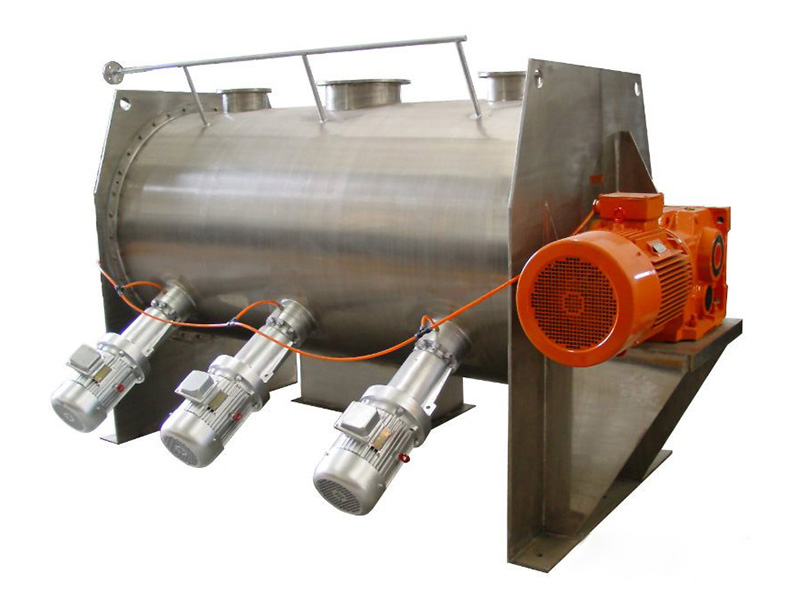
The high mixing efficiency and multifunctional performance of plow mixers are supported by a sophisticated mechanical structure and a scientific mixing mechanism. The equipment is mainly composed of a host machine, a transmission system, a plow blade agitation system, a high-speed chopper system, a feeding/discharging system, and a control system. Each component collaborates closely to realize the integrated operation of material mixing, agglomerate crushing, and uniform dispersion.
2.1 Core Structural Composition
2.1.1 Host Machine (Mixing Chamber)
The mixing chamber is the core working space of the plow mixer, typically designed as a horizontal cylindrical structure (the most common type) or a vertical conical structure. For horizontal models, the inner wall is made of high-quality stainless steel (304 or 316L) with precision polishing, which not only ensures corrosion resistance and hygiene (meeting food and pharmaceutical industry standards) but also reduces material adhesion and friction resistance.
The inner wall of the mixing chamber is equipped with wear-resistant liners (e.g., polyurethane, ceramic) for processing abrasive materials (e.g., cement, mineral powders), effectively extending the service life of the equipment. Some high-end models adopt a jacketed structure for the mixing chamber, which can realize heating or cooling of materials through thermal oil or cooling water, adapting to processes that require temperature control (e.g., pharmaceutical powder granulation, chemical material reaction mixing).
2.1.2 Transmission System
The transmission system provides power for the operation of the plow blade shaft and the chopper, mainly consisting of a motor, a reducer, a coupling, and a bearing seat. For the plow blade shaft, a variable frequency speed-regulating motor is usually configured to realize stepless adjustment of the mixing speed (50–300 r/min), adapting to the mixing requirements of different materials. The reducer adopts a hard tooth surface gear structure with high transmission efficiency and strong load-bearing capacity, ensuring stable operation under heavy load conditions.
The high-speed chopper is equipped with an independent high-power motor (3,000–6,000 r/min), which is independently controlled from the plow blade shaft to realize flexible switching of the chopping function according to process needs.
2.1.3 Plow Blade Agitation System
The plow blade system is the ""core actuator"" of material mixing, composed of a main shaft and multiple groups of plow blades. The plow blades are usually made of high-strength stainless steel or alloy steel, with a plow share-shaped design that imitates the working principle of agricultural plows.
The plow blades are installed on the main shaft in a spiral staggered arrangement (single-row or double-row), ensuring full coverage of the mixing chamber without blind spots. The number and angle of the plow blades can be customized according to the volume of the mixing chamber and material characteristics—for example, increasing the number of plow blades for fine powder mixing to enhance fluidization intensity; adjusting the blade angle for cohesive materials to reduce material adhesion.
2.1.4 High-Speed Chopper System
The high-speed chopper is an auxiliary functional component, usually installed on the side wall of the mixing chamber (single or multiple units), with its cutting head extending into the mixing chamber. The chopper is composed of a motor, a rotating shaft, and tungsten carbide cutting blades (wear-resistant and high-strength).
The chopper works independently of the plow blade system: when the plow blades drive the materials to flow, the chopper rotates at high speed to impact and shear the agglomerates in the material, realizing the synchronous completion of ""mixing and crushing"". For processes that do not require agglomerate crushing (e.g., homogeneous mixing of non-cohesive powders), the chopper can be shut down independently to save energy.
2.1.5 Feeding and Discharging System
- Feeding System: Configured according to material characteristics, common forms include vacuum feeding machines (for dust-free feeding of fine powders), screw feeders (for quantitative feeding), and manual feeding hoppers (for small-batch production). Vacuum feeding is the preferred solution for high-end industries (pharmaceuticals, food) as it avoids dust leakage and ensures production hygiene.
- Discharging System: The mainstream design is a pneumatic butterfly valve or slide valve installed at the bottom of the mixing chamber, realizing rapid and complete discharging. The valve core is designed with a ""flush structure"" to avoid material residue, ensuring no cross-contamination between batches. For large-scale production, a screw conveyor can be connected to the discharge port to realize continuous material transportation.
2.1.6 Control System
The control system adopts a PLC (Programmable Logic Controller) + touch screen integrated design, realizing intelligent control of the mixing process. The core functions include: setting mixing time, plow blade speed, chopper speed, and feeding/discharging sequence; real-time monitoring of equipment operating parameters (motor current, temperature, vibration); and fault alarm and automatic shutdown protection (overload, overheating, power failure).
High-end models can be equipped with a SCADA (Supervisory Control and Data Acquisition) system, realizing data recording, traceability, and remote monitoring, meeting the requirements of Industry 4.0 intelligent production.
2.2 Core Working Principle
The working principle of high-efficiency plow mixers is based on the ""dynamic fluidization + forced mixing"" mechanism, which can be divided into three stages: material fluidization, agglomerate crushing, and uniform homogenization.
1. Material Fluidization Stage: When the equipment is started, the plow blade shaft drives the plow blades to rotate at a set speed. The plow blades cut and lift the materials in the mixing chamber, throwing the materials radially and axially along the inner wall of the mixing chamber. Under the continuous action of multiple groups of staggered plow blades, the materials form a ""toroidal fluidized bed"" in the mixing chamber—breaking away from the static stacking state and entering a continuous dynamic movement state, with no dead zones for material accumulation.
2. Agglomerate Crushing Stage (for cohesive materials): During the fluidization process, the agglomerated materials are concentrated in the high-speed shearing zone of the chopper under the driving of the material flow. The high-speed rotating chopper blades impact, shear, and crush the agglomerates, breaking large agglomerates into fine particles, which are then quickly dispersed into the material flow. This stage realizes the integration of ""mixing and crushing"", solving the key problem of poor mixing uniformity caused by agglomeration.
3. Uniform Homogenization Stage: Under the combined action of plow blade fluidization and chopper dispersion, the materials undergo micro-scale mixing at the particle level. The rapid movement and mutual collision of materials realize the uniform distribution of different components in a short time. For powder-liquid mixing processes (e.g., adding binders to pharmaceutical powders), the plow blades drive the liquid to form fine droplets in the material flow, and the chopper further enhances the dispersion of the liquid, realizing uniform wetting of the powder.
The entire mixing process is completed in a short time (usually 3–10 minutes), with a mixing uniformity coefficient of up to 99.9%, far exceeding that of traditional mixing equipment.
3. Performance Characteristics and Functional Advantages
Compared with ribbon mixers, tumble mixers, and paddle mixers, high-efficiency plow mixers have unique performance characteristics and functional advantages, making them suitable for a wider range of powder processing scenarios. The core advantages are summarized as follows:
3.1 Ultra-High Mixing Efficiency and Uniformity
Thanks to the dynamic fluidization mixing mechanism, plow mixers can realize rapid homogenization of materials in a short time. For non-cohesive dry powder mixing, the mixing cycle is only 3–5 minutes; even for cohesive powder or powder-liquid mixing, the cycle is no more than 10 minutes—3–5 times higher than that of ribbon mixers.
The mixing uniformity is extremely high: the coefficient of variation (CV) of component content is ≤ 1% (meeting the strict standards of the pharmaceutical and food industries), and there is no segregation of materials (a common problem in tumble mixers) during the mixing process.
3.2 Strong Material Adaptability (Multifunctional)
Plow mixers are known as ""universal powder mixers"" and can handle almost all types of powder materials, including:
- Non-cohesive powders: Chemical raw materials, building materials, mineral powders;
- Cohesive powders: Pharmaceutical excipients, food additives, detergent powders;
- Ultrafine powders: Nano-materials, battery cathode materials, cosmetic powders;
- Powder-liquid mixtures: Adhesive-added pharmaceutical powders, paint powders, ceramic slurries;
- Particle-coating mixtures: Coating of fertilizer particles, pharmaceutical pellets, and catalyst carriers.
The independent control of the chopper and the stepless speed regulation of the plow blades enable the equipment to flexibly adapt to the processing requirements of different materials, realizing ""one machine for multiple uses"" and reducing equipment investment costs.
3.3 Minimal Material Residue and Good Hygiene
The inner wall of the mixing chamber is precision polished, and the discharge valve adopts a flush structure, with no dead corners for material accumulation. The material residue rate is ≤ 0.05%, which is crucial for industries with strict requirements for cross-contamination (e.g., pharmaceuticals, food).
The equipment can be configured with a CIP (Clean-in-Place) cleaning system, realizing automatic cleaning of the mixing chamber, plow blades, and choppers without disassembly—meeting the GMP (Good Manufacturing Practice) standards of the pharmaceutical and food industries.
3.4 Stable Operation and Low Energy Consumption
The plow blade shaft adopts a heavy-duty bearing seat and a balanced design, ensuring stable operation of the equipment with low vibration (vibration acceleration ≤ 0.5 g) and low noise (≤ 75 dB). The variable frequency speed-regulating motor realizes energy-saving operation: for light-load mixing, the speed can be reduced to save energy; for heavy-load mixing, the speed can be increased to ensure efficiency.
Compared with traditional mixing equipment of the same specification, plow mixers can save 20–30% of energy consumption under the condition of the same mixing effect.
3.5 Scalable and Customizable Performance
Plow mixers have a wide range of specifications, with effective volumes ranging from 0.01 m³ (laboratory scale) to 60 m³ (industrial large-scale). According to process requirements, the equipment can be customized with multiple functional modules:
- Jacketed heating/cooling module: For temperature-controlled mixing processes;
- Explosion-proof module: For mixing flammable and explosive materials (e.g., chemical powders, battery materials);
- Vacuum module: For vacuum mixing (avoiding material oxidation and moisture absorption);
- Weighing module: For quantitative feeding and mixing, realizing automatic control of material ratio.
4. Key Technical Parameters and Equipment Selection Guide
The selection of high-efficiency plow mixers must be based on material characteristics, process requirements, and production scale. Key technical parameters and selection principles are as follows:
4.1 Core Technical Parameters
| Parameter Category | Key Indicators | Selection Reference |
|--------------------|----------------|---------------------|
| Basic Specifications | Effective volume (V), total volume (V_total) | V = Production batch size / Material bulk density / Filling coefficient (0.4–0.7) |
| Mixing Performance | Plow blade speed (n), mixing time (t), uniformity CV value | n: 50–300 r/min (adjustable); t: 3–10 min; CV ≤ 1% |
| Chopper Performance | Chopper speed (n_c), power (P_c) | n_c: 3,000–6,000 r/min; P_c: 1.5–75 kW (determined by material cohesiveness) |
| Material Compatibility | Material bulk density (ρ), particle size (d), cohesiveness | For ρ > 1.5 t/m³: increase motor power; for d < 10 μm: configure vacuum feeding |
| Hygiene Standards | Inner wall material, polishing grade | Pharmaceutical/food: 316L stainless steel, Ra ≤ 0.8 μm; Chemical: 304 stainless steel |
4.2 Equipment Selection Principles
4.2.1 Determine the Equipment Specification Based on Production Scale
First, calculate the effective volume of the mixer according to the production batch size and material bulk density. The filling coefficient of plow mixers is usually 0.4–0.7 (too high will reduce fluidization effect; too low will waste energy). For example, if the production batch size is 500 kg and the material bulk density is 0.8 t/m³, the required effective volume is V = 0.5 / 0.8 / 0.6 ≈ 1.04 m³—selecting a mixer with an effective volume of 1 m³ is appropriate.
For laboratory research, select small-scale mixers (0.01–0.1 m³); for continuous large-scale production, select large-volume mixers (10–60 m³) and configure an automatic feeding/discharging system.
4.2.2 Match the Configuration According to Material Characteristics
- Non-cohesive dry powders (e.g., cement, salt): Basic configuration (no chopper required, ordinary feeding/discharging);
- Cohesive powders (e.g., pharmaceutical excipients, starch): Configure 1–2 high-speed choppers to prevent agglomeration;
- Ultrafine powders (e.g., nano-silica): Configure vacuum feeding and dust removal systems to avoid dust leakage and material flying;
- Flammable and explosive materials (e.g., gunpowder, lithium battery materials): Configure explosion-proof motors, explosion-proof control systems, and nitrogen-filled inert gas protection;
- Temperature-sensitive materials (e.g., enzymes, vitamins): Configure a jacketed cooling system and low-speed mixing.
4.2.3 Comply with Industry Hygiene and Safety Standards
- Pharmaceutical/Food Industry: Must select 316L stainless steel inner walls, precision polishing, CIP cleaning systems, and meet GMP certification;
- Chemical Industry: For corrosive materials, select acid and alkali-resistant liners (e.g., PTFE); for abrasive materials, select wear-resistant ceramic liners;
- Dust Hazard Industry: Configure a bag dust collector or a cyclone dust collector to meet occupational health and safety standards.
5. Typical Industrial Application Scenarios
High-efficiency plow mixers are widely used in various industries due to their multifunctional performance, covering from high-end precision manufacturing to traditional bulk processing. Typical application scenarios are as follows:
5.1 Pharmaceutical Industry
The pharmaceutical industry has the strictest requirements for mixing uniformity and hygiene, and plow mixers are the core equipment for solid preparation production.
- API (Active Pharmaceutical Ingredient) and Excipient Mixing: Mixing APIs (e.g., aspirin) with excipients (e.g., lactose, starch) to ensure uniform drug content;
- Powder-Liquid Mixing for Granulation: Adding binders (e.g., PVP solution) to pharmaceutical powders for wet granulation, realizing uniform wetting of powders;
- Herbal Powder Mixing: Mixing multiple herbal powders to ensure the stability of traditional Chinese medicine preparations.
All equipment for pharmaceutical applications must meet GMP standards, with 316L stainless steel inner walls, CIP cleaning systems, and no dead corners for material accumulation.
5.2 Food Processing Industry
In the food industry, plow mixers are used for the mixing of food additives, seasonings, and functional food powders.
- Seasoning Mixing: Mixing salt, monosodium glutamate, spices, and other ingredients to produce compound seasonings (e.g., chicken essence, hot pot base powder);
- Functional Food Mixing: Mixing protein powder, vitamin powder, and dietary fiber to produce nutritional supplements;
- Baking Powder Mixing: Mixing baking soda, tartaric acid, and starch to ensure the leavening effect of baking powder.
The equipment adopts food-grade 304/316L stainless steel, with a sealed structure to avoid contamination by dust and microorganisms.
5.3 Chemical Engineering Industry
The chemical industry has diverse material characteristics, and plow mixers adapt to the mixing of various chemical powders and powder-liquid systems.
- Fine Chemical Raw Material Mixing: Mixing pigments, dyes, and auxiliaries to produce coating powders and printing inks;
- Fertilizer Mixing: Mixing nitrogen, phosphorus, potassium fertilizers, and trace elements to produce compound fertilizers;
- Adhesive Mixing: Mixing epoxy resin powder, curing agents, and fillers to produce structural adhesives.
For corrosive or flammable chemical materials, the equipment is configured with anti-corrosion liners and explosion-proof systems.
5.4 Building Materials and New Material Industry
In the field of building materials and new materials, plow mixers are used for the mixing of bulk powders and high-precision new material powders.
- Building Materials Mixing: Mixing cement, sand, fly ash, and additives to produce dry-mixed mortar and concrete admixtures;
- Battery Material Mixing: Mixing lithium iron phosphate, conductive agents, and binders to produce lithium battery cathode materials (requiring ultra-high uniformity);
- Ceramic Material Mixing: Mixing ceramic powders, fluxes, and pigments to ensure the consistency of ceramic product color and performance.
For abrasive materials such as cement and sand, the equipment is equipped with wear-resistant liners to extend service life.
5.5 Other Industries
- Cosmetics Industry: Mixing talcum powder, foundation powder, and cosmetic pigments to produce powder cosmetics;
- Plastic Industry: Mixing plastic particles, fillers (e.g., calcium carbonate), and additives (e.g., antioxidants) to modify plastics;
- Environmental Protection Industry: Mixing solid waste, catalysts, and binders to realize the resource utilization of waste.
6. Operation Optimization and Daily Maintenance Guidelines
To ensure the long-term stable operation of high-efficiency plow mixers and maintain high mixing quality, scientific operation and regular maintenance are essential. The key guidelines are as follows:
6.1 Operation Optimization Tips
1. Feeding Sequence Optimization: Add large-particle materials first, then fine-particle materials; add non-cohesive materials first, then cohesive materials; for powder-liquid mixing, add the liquid slowly after the powder is fluidized to avoid agglomeration.
2. Parameter Setting Optimization: For fine powders, reduce the plow blade speed (50–100 r/min) to avoid material segregation; for cohesive powders, increase the chopper speed (4,000–6,000 r/min) and extend the mixing time appropriately.
3. Avoid Overloading: Strictly control the filling amount within the range of 40–70% of the effective volume; overloading will reduce the fluidization effect and even cause motor burnout.
4. Discharging Timing: Stop the plow blades and choppers before discharging to avoid material flying during discharging; ensure the material is completely discharged before cleaning the equipment.
6.2 Daily Maintenance Guidelines
6.2.1 Routine Maintenance (After Each Shift)
- Cleaning: Wipe the inner wall of the mixing chamber, plow blades, and choppers with a clean cloth; for food and pharmaceutical industries, use purified water or cleaning agents for CIP cleaning to avoid cross-contamination.
- Inspection: Check whether the fasteners (bolts, nuts) of the plow blades and choppers are loose; check whether the sealing ring of the discharge valve is intact.
- Lubrication: Add lubricating oil to the bearing seats of the plow blade shaft (once per shift) to ensure smooth rotation.
6.2.2 Regular Maintenance (Monthly/Quarterly)
- Wearing Parts Inspection: Check the wear degree of plow blades, chopper blades, and inner wall liners; replace worn parts in a timely manner (the service life of chopper blades is usually 3–6 months).
- Transmission System Maintenance: Check the oil level and oil quality of the reducer; replace the lubricating oil every 3 months (use gear oil that meets the manufacturer's specifications).
- Electrical System Maintenance: Check the tightness of the motor and control cabinet wiring; clean the dust inside the control cabinet to avoid short circuits.
6.2.3 Annual Maintenance
- Comprehensive Overhaul: Disassemble the plow blade shaft, chopper, and bearing seats for cleaning and maintenance; replace worn bearings and seals.
- Calibration: Calibrate the control system (speed, time, temperature) to ensure the accuracy of operating parameters.
- Corrosion Inspection: Check the corrosion status of the inner wall and jacket; repair or replace corroded parts in a timely manner.
6.3 Common Faults and Troubleshooting
| Common Fault | Main Causes | Troubleshooting Methods |
|--------------|-------------|-------------------------|
| Low mixing uniformity | Insufficient mixing time; chopper not working; uneven feeding | Extend mixing time; start the chopper; adjust the feeding speed to ensure uniform feeding |
| Material agglomeration | Low chopper speed; excessive liquid addition speed; plow blade wear | Increase chopper speed; reduce liquid addition speed; replace worn plow blades |
| Motor overload | Overloading; material blockage; bearing wear | Reduce feeding amount; clean the blocked material; replace worn bearings |
| Material leakage | Damaged sealing ring; loose discharge valve; poor feeding seal | Replace the sealing ring; tighten the discharge valve; repair the feeding system seal |
| Abnormal noise/vibration | Unbalanced plow blade shaft; loose fasteners; worn bearings | Re-balance the plow blade shaft; tighten fasteners; replace worn bearings |
7. Development Trends of High-Efficiency Plow Mixer Technology
With the rapid development of intelligent manufacturing, green production, and high-precision processing, the technology of high-efficiency plow mixers is developing in the direction of intelligence, precision, energy saving, and integration. The main development trends are as follows:
7.1 Intelligent Upgrading
The integration of AI (Artificial Intelligence) and big data technology will realize the ""self-optimization"" of the mixing process. The equipment can automatically identify material characteristics (bulk density, particle size, cohesiveness) through sensors, and intelligently adjust plow blade speed, chopper speed, and mixing time to achieve the optimal mixing effect.
The application of digital twin technology will realize the virtual simulation of the mixing process, predicting mixing uniformity and optimizing process parameters before actual production, reducing trial production costs and time.
7.2 Precision and High Efficiency Enhancement
The optimization of the plow blade structure (e.g., adopting bionic design) and the development of high-performance choppers (e.g., ultrasonic-assisted crushing) will further improve mixing efficiency and uniformity, meeting the mixing requirements of ultra-fine powders and nano-materials (mixing uniformity CV ≤ 0.5%).
The development of high-speed plow mixers (plow blade speed up to 500 r/min) will shorten the mixing cycle to 1–3 minutes, further improving production efficiency.
7.3 Green and Low-Carbon Development
The adoption of permanent magnet synchronous motors and energy recovery technology will reduce the energy consumption of the equipment by 30–40% compared with traditional motors. The development of dry mixing technology without dust leakage and zero-emission discharge systems will meet the increasingly strict environmental protection standards.
For the pharmaceutical and food industries, the development of aseptic mixing technology (fully closed, sterile feeding/discharging) will further ensure product hygiene and safety.
7.4 Process Integration
Plow mixers will realize deeper integration with other unit operations, forming integrated processing equipment such as ""mixing-granulation-drying"" and ""mixing-coating-cooling"". This integration will reduce the number of equipment, shorten the production process, and reduce material loss and cross-contamination.
7.5 Customization and Specialization
With the diversification of market demand, plow mixers will develop towards customization and specialization. Manufacturers will design special mixers for specific industries and materials—for example, ultra-low temperature plow mixers for biological materials, high-pressure plow mixers for chemical reaction mixing, and miniaturized intelligent plow mixers for laboratory research.
8. Conclusion
High-efficiency plow mixers, as a representative of modern multifunctional powder mixing equipment, have become the core equipment in the powder processing industry due to their unique dynamic fluidization mixing mechanism, ultra-high mixing efficiency, strong material adaptability, and good hygiene performance. The collaborative work of the plow blade agitation system and the high-speed chopper system realizes the integrated operation of material mixing, agglomerate crushing, and uniform dispersion, solving the key technical problems of low efficiency and poor uniformity in traditional powder mixing.
This paper systematically expounds the core structural composition and working principle of high-efficiency plow mixers, clarifies their performance characteristics and functional advantages compared with conventional mixing equipment; provides a detailed equipment selection guide based on key technical parameters and material characteristics; details typical industrial application scenarios covering pharmaceuticals, food, chemicals, and new materials; and puts forward practical operation optimization and daily maintenance guidelines. Finally, the development trends of intelligence, precision, greenization, and integration of plow mixer technology are prospected.
In the context of the continuous upgrading of the manufacturing industry, high-efficiency plow mixers will continue to play an important role in promoting the high-quality development of the powder processing industry. It is expected that relevant practitioners can fully grasp the technical characteristics and application rules of this equipment, and through scientific selection, standardized operation, and regular maintenance, give full play to the advantages of plow mixers, and realize the improvement of production efficiency and product quality. With the continuous innovation of technology, plow mixers will be further upgraded and optimized, contributing more to the development of modern intelligent manufacturing and green production.



 +86 18051935350