1. Introduction
In industrial production, the grinding of materials is a key link that determines the quality and performance of finished products. Ball mills, as a kind of high-efficiency and versatile grinding equipment, have been widely used in various fields due to their simple structure, strong adaptability, stable operation, and good grinding effect. From the crushing of ore in the mining industry to the grinding of raw materials in the pharmaceutical industry, from the homogenization of cement in the building materials industry to the refinement of food in the food processing industry, ball mills play a vital role in material deep processing.
However, due to the complexity of the ball mill's working mechanism and the diversity of application scenarios, many enterprises and operators still have insufficient understanding of the working principles of ball mills, resulting in unreasonable equipment selection, improper operational parameter adjustment, and inadequate maintenance. These problems not only reduce the grinding efficiency and product quality but also increase energy consumption and equipment failure rate, affecting the normal progress of production. Therefore, it is of great practical significance to conduct an in-depth analysis of the working principles of ball mills, sort out their application rules, and formulate a comprehensive application guide.
This paper takes ball mills as the research object, starts with the core working principles, deeply explores the mechanical mechanisms and influencing factors of the grinding process, classifies and introduces different types of ball mills, and provides targeted guidance for equipment selection, operation, maintenance, and fault handling. It is expected to help relevant personnel fully grasp the key technologies of ball mills, realize efficient and stable operation of equipment, and promote the technological progress of related industries.
2. Deep Analysis of Ball Mill Working Principles
The core working principle of a ball mill is to convert the mechanical energy of the motor into the kinetic energy of the grinding media and the cylinder, and then grind the material into the required particle size through the combined action of impact, friction, and extrusion between the grinding media and the material, as well as between the material and the cylinder wall. The entire grinding process is a complex physical process involving multiple mechanical actions, which can be divided into three stages: material feeding, grinding, and product discharging. The key to understanding the working principle of ball mills lies in mastering the movement law of grinding media and the mechanical mechanism of the grinding process.
2.1 Movement Law of Grinding Media
The grinding media (such as steel balls) in the ball mill cylinder move with the rotation of the cylinder, and their movement state directly determines the grinding effect. According to the rotation speed of the cylinder, the movement state of the grinding media can be divided into three types: cascading movement, projectile movement, and centrifugal movement.
- Cascading Movement: When the rotation speed of the cylinder is relatively low, the grinding media are lifted to a certain height by the friction between the cylinder wall and the media, and then slide down along the inner wall of the cylinder under the action of gravity. In this movement state, the grinding media mainly exert friction and extrusion forces on the material, which is suitable for fine grinding of materials. The grinding efficiency is relatively low, but the product particle size is uniform.
- Projectile Movement: When the rotation speed of the cylinder is moderate (the optimal rotation speed), the grinding media are lifted to a higher height by the centrifugal force and friction force, and then thrown out in a parabolic trajectory. When the grinding media fall, they collide with the material and other grinding media with great impact force, which can effectively break down large particles. This movement state combines impact, friction, and extrusion forces, and has the highest grinding efficiency, which is the ideal movement state of ball mills in most industrial applications.
- Centrifugal Movement: When the rotation speed of the cylinder is too high, the centrifugal force acting on the grinding media exceeds the gravity, and the grinding media are tightly attached to the inner wall of the cylinder and rotate synchronously with the cylinder, without falling or throwing. At this time, the grinding media cannot exert effective grinding force on the material, and the grinding process almost stops. Therefore, the rotation speed of the ball mill must be controlled within a reasonable range to avoid centrifugal movement.
The optimal rotation speed of the ball mill is usually 70%~80% of the critical rotation speed (the rotation speed at which the grinding media just start to centrifugal movement). The critical rotation speed is related to the inner diameter of the cylinder, and its calculation formula is: $$n_c = 42.3/\sqrt{D}$$, where $$n_c$$ is the critical rotation speed (r/min), and $$D$$ is the inner diameter of the cylinder (m).
2.2 Core Mechanical Mechanisms of Grinding Process
The grinding process of ball mills is mainly realized through the combined action of three mechanical mechanisms: impact, friction, and extrusion. These mechanisms work together to break down the material into smaller particles and achieve homogenization.
- Impact Mechanism: This is the main mechanism for coarse grinding of materials. When the grinding media move in a projectile state, they are thrown out at a high speed and collide with the material and other grinding media. The impact force generated by the collision can break down large material particles into smaller ones. The magnitude of the impact force is related to the mass of the grinding media, the rotation speed of the cylinder, and the height of the media being lifted. The larger the mass of the grinding media, the higher the rotation speed, and the greater the impact force.
- Friction Mechanism: This is the main mechanism for fine grinding of materials. When the grinding media move in a cascading state or slide along the cylinder wall, there is relative movement between the grinding media and the material, as well as between the grinding media and the cylinder wall. The friction force generated by the relative movement can scrape and grind the surface of the material particles, making the particles finer and more uniform. The friction force is related to the roughness of the grinding media and the cylinder wall, the pressure between the media, and the viscosity of the material.
- Extrusion Mechanism: When the grinding media are closely packed in the cylinder, the material is squeezed between the grinding media and the cylinder wall, and between the grinding media. The extrusion force can break down the material particles that are difficult to break by impact and friction, especially for brittle materials. The extrusion force is related to the filling rate of the grinding media, the rotation speed of the cylinder, and the density of the material.
In the actual grinding process, the three mechanisms work synergistically. In the early stage of grinding, the impact mechanism plays a leading role, breaking down large particles into medium particles; in the later stage, the friction and extrusion mechanisms play a leading role, realizing fine grinding of the material. The proportion of each mechanism can be adjusted by changing the rotation speed of the cylinder, the type and size of the grinding media, and the filling rate.
2.3 Key Factors Affecting Grinding Efficiency
The grinding efficiency of ball mills is affected by many factors, including equipment parameters, material characteristics, and operational parameters. Understanding these factors can help optimize the operation of ball mills and improve grinding efficiency.
- Equipment Parameters:
- Cylinder Size: The inner diameter and length of the cylinder directly affect the grinding volume and the contact time between the material and the grinding media. The larger the inner diameter, the higher the grinding efficiency; the longer the length, the more sufficient the grinding, and the finer the product particle size.
- Grinding Media: The type, size, and filling rate of the grinding media have a significant impact on the grinding effect. Steel balls have high density and strong impact force, which are suitable for coarse grinding; ceramic balls have good corrosion resistance and are suitable for grinding materials that are not allowed to be contaminated by metal. The size of the grinding media should be matched with the particle size of the material: large media are suitable for coarse grinding, and small media are suitable for fine grinding. The filling rate of the grinding media is usually 30%~50%; too high or too low a filling rate will reduce the grinding efficiency.
- Liner Structure: The liner is installed on the inner wall of the cylinder, which can protect the cylinder and improve the lifting effect of the grinding media. The liner with different structures (such as wave-shaped, corrugated, and grid-shaped) has different lifting effects on the grinding media, which affects the grinding efficiency. For example, wave-shaped liners are suitable for coarse grinding, and corrugated liners are suitable for fine grinding.
- Material Characteristics:
- Hardness and Brittleness: The harder the material, the more difficult it is to grind, and the lower the grinding efficiency; the more brittle the material, the easier it is to break under impact, and the higher the grinding efficiency.
- Particle Size of Raw Material: The larger the particle size of the raw material, the longer the grinding time required, and the lower the grinding efficiency. Therefore, it is usually necessary to crush the raw material to a certain particle size before feeding it into the ball mill.
- Moisture Content: The moisture content of the material affects the fluidity of the material and the adhesion between particles. If the moisture content is too high, the material will adhere to the cylinder wall and the grinding media, affecting the grinding effect; if the moisture content is too low, dust will be generated, which is not conducive to environmental protection and equipment operation. The optimal moisture content of the material is usually 3%~8%.
- Operational Parameters:
- Rotation Speed: As mentioned earlier, the rotation speed of the cylinder directly affects the movement state of the grinding media. The optimal rotation speed is 70%~80% of the critical rotation speed. Too high or too low a rotation speed will reduce the grinding efficiency.
- Feeding Rate: The feeding rate should be matched with the grinding capacity of the ball mill. If the feeding rate is too high, the material cannot be fully ground, resulting in coarse product particle size; if the feeding rate is too low, the grinding media will collide with each other, increasing energy consumption and reducing grinding efficiency.
- Grinding Time: The grinding time affects the product particle size and grinding efficiency. With the extension of grinding time, the product particle size becomes finer, but the grinding efficiency gradually decreases. Therefore, it is necessary to determine the optimal grinding time according to the product requirements.
3. Classification of Ball Mills: Based on Structural and Application Characteristics
Ball mills can be divided into different types according to structural characteristics, grinding media, grinding methods, and application scenarios. Each type of ball mill has its own unique structural features, working advantages, and applicable fields. Understanding the classification of ball mills is the basis for rational selection and application.
3.1 Classification by Structural Characteristics
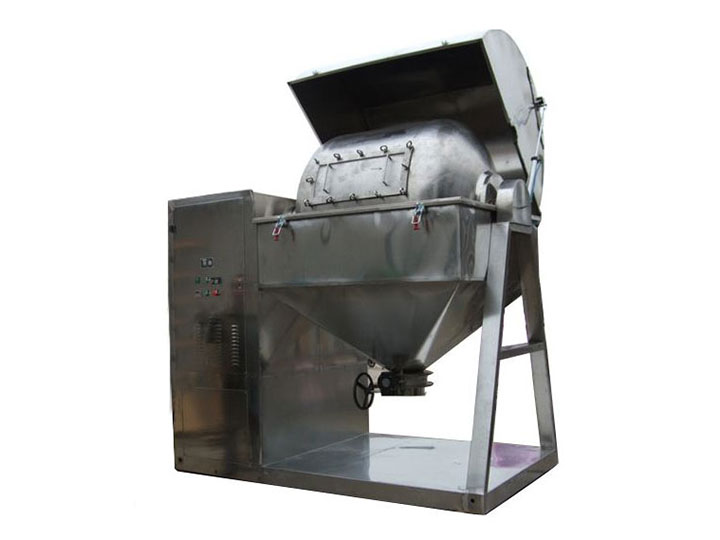
- Tube Ball Mill: This is the most common type of ball mill, with a long cylindrical cylinder, which is divided into one or more compartments by partition boards. Each compartment is filled with grinding media of different sizes: the first compartment is filled with large media for coarse grinding, and the subsequent compartments are filled with small media for fine grinding. Tube ball mills have the advantages of large processing capacity, uniform product particle size, and strong adaptability, and are widely used in mining, metallurgy, building materials, and other industries. According to the number of compartments, they can be divided into single-compartment, double-compartment, and multi-compartment tube ball mills.
- Overflow Ball Mill: The discharge port of the overflow ball mill is lower than the center line of the cylinder, and the material is discharged by overflow. It has a simple structure, easy operation, and large processing capacity, but the product particle size is relatively coarse. It is suitable for coarse grinding and medium grinding of materials, such as the grinding of ore in the mining industry.
- Grid Ball Mill: The discharge port of the grid ball mill is equipped with a grid plate, which can control the discharge particle size and prevent the grinding media from being discharged with the material. It has the advantages of fine product particle size and high grinding efficiency, and is suitable for fine grinding of materials, such as the grinding of cement clinker in the building materials industry.
- Conical Ball Mill: The cylinder of the conical ball mill is conical, with a large diameter at the feeding end and a small diameter at the discharging end. The grinding media move from the feeding end to the discharging end under the action of gravity and centrifugal force, and the grinding intensity gradually increases. It has the advantages of compact structure, small floor space, and high grinding efficiency, and is suitable for small-scale production and laboratory use.
3.2 Classification by Grinding Media
-
Steel Ball Mill: The grinding media are steel balls (carbon steel balls, alloy steel balls). Steel balls have high density, strong impact force, and good wear resistance, which are suitable for grinding hard materials (such as ore, cement clinker). They are widely used in mining, metallurgy, and building materials industries. However, steel balls are easy to rust and may contaminate the material, so they are not suitable for grinding materials that are sensitive to metal contamination (such as pharmaceuticals, food).
- Ceramic Ball Mill: The grinding media are ceramic balls (alumina ceramic balls, zirconia ceramic balls). Ceramic balls have good corrosion resistance, high hardness, and no metal contamination, which are suitable for grinding materials that are sensitive to metal contamination (such as pharmaceuticals, food, electronic materials). They are also suitable for grinding corrosive materials (such as chemicals). However, ceramic balls have low density and weak impact force, which are not suitable for grinding very hard materials.
- Other Media Ball Mills: Such as glass ball mills (grinding media are glass balls, suitable for laboratory use and fine grinding of non-abrasive materials), and plastic ball mills (grinding media are plastic balls, suitable for grinding materials that are not allowed to be scratched).
3.3 Classification by Application Scenarios
- Mining and Metallurgy Ball Mills: Mainly used for grinding ore (such as iron ore, copper ore, gold ore) and metallurgical slag. They usually have large capacity and high power, and are suitable for large-scale continuous production. Common types include tube ball mills, overflow ball mills, and grid ball mills.
- Building Materials Ball Mills: Mainly used for grinding cement clinker, limestone, gypsum, and other raw materials in the cement industry, as well as grinding sand, stone powder, and other materials in the construction industry. They have high grinding efficiency and uniform product particle size, and are key equipment in the building materials industry.
- Chemical and Pharmaceutical Ball Mills: Used for grinding chemical raw materials (such as pigments, dyes, catalysts) and pharmaceutical raw materials (such as Chinese medicine, powder). They require high corrosion resistance and no contamination, so ceramic ball mills or stainless steel ball mills are usually used.
- Food Processing Ball Mills: Used for grinding food raw materials (such as grain, beans, spices) into powder or paste. They require food-grade materials and strict hygiene standards, so ceramic ball mills or food-grade stainless steel ball mills are used.
- Laboratory Ball Mills: Small in size, simple in structure, and suitable for small-scale grinding experiments in laboratories. Common types include conical ball mills, planetary ball mills, and small tube ball mills.
4. Comprehensive Application Guide of Ball Mills
The rational application of ball mills requires comprehensive consideration of equipment selection, operational parameter adjustment, daily maintenance, and common fault handling. This section provides a systematic application guide to help operators and managers improve the efficiency and stability of ball mills.
4.1 Equipment Selection Guide
The selection of ball mills should be based on material characteristics, product requirements, production scale, and cost-effectiveness. The specific selection steps and criteria are as follows:
1. Clarify Requirements: First, clarify the material characteristics (hardness, brittleness, particle size, moisture content), product requirements (particle size, uniformity), and production scale (processing capacity per hour or per batch). This is the basis for equipment selection.
2. Preliminary Screening: According to the clarified requirements, screen out the types of ball mills that meet the basic conditions. For example, for hard materials (such as ore), steel ball mills are preferred; for materials sensitive to metal contamination (such as pharmaceuticals), ceramic ball mills are preferred; for large-scale continuous production, tube ball mills or overflow ball mills are preferred; for fine grinding, grid ball mills are preferred.
3. Parameter Determination: Determine the key parameters of the ball mill, such as cylinder size, grinding media type and size, filling rate, and rotation speed. The cylinder size is determined according to the production scale; the grinding media type and size are determined according to the material characteristics and product requirements; the filling rate and rotation speed are determined according to the grinding efficiency and product quality.
4. Cost-Effectiveness Evaluation: Comprehensive consideration of equipment purchase cost, operation cost (energy consumption, maintenance), and service life. Choose products with high cost-effectiveness. For example, although high-capacity ball mills have a higher purchase cost, they can improve production efficiency and reduce unit energy consumption in large-scale production.
5. Standard Compliance: The selected ball mill must comply with relevant international and national standards (such as ISO 9001, GB/T 17499), and meet the quality and safety requirements of the industry. For example, ball mills used in the pharmaceutical and food industries must meet GMP and food safety standards.
4.2 Operational Parameter Adjustment Guide
The adjustment of operational parameters directly affects the grinding efficiency and product quality. The key operational parameters and adjustment methods are as follows:
- Rotation Speed Adjustment: The optimal rotation speed is 70%~80% of the critical rotation speed. If the product particle size is too coarse, the rotation speed can be appropriately increased (but not exceeding the critical rotation speed); if the energy consumption is too high or the grinding media are worn too fast, the rotation speed can be appropriately reduced.
- Feeding Rate Adjustment: The feeding rate should be matched with the grinding capacity of the ball mill. It can be adjusted according to the product particle size and grinding efficiency: if the product particle size is too coarse, the feeding rate can be reduced; if the grinding efficiency is low, the feeding rate can be appropriately increased (but not exceeding the maximum grinding capacity).
- Grinding Media Adjustment: The type, size, and filling rate of the grinding media should be adjusted according to the material characteristics and product requirements. For coarse grinding, large-sized grinding media and high filling rate are used; for fine grinding, small-sized grinding media and low filling rate are used. The grinding media should be regularly checked and replaced to ensure the grinding effect.
- Material Moisture Adjustment: The moisture content of the material should be controlled within 3%~8%. If the moisture content is too high, the material can be dried before feeding; if the moisture content is too low, a small amount of water can be added to improve the grinding effect and reduce dust.
4.3 Daily Maintenance Guide
Daily maintenance is crucial for ensuring the stable operation of ball mills and extending their service life. The main maintenance contents are as follows:
- Regular Inspection: Check the operation status of the ball mill every day, including the rotation of the cylinder, the vibration and noise of the equipment, the temperature of the bearing and motor, and the tightness of the fasteners. If any abnormal situation is found, it should be handled in time.
- Lubrication Maintenance: The bearing, gear, and other moving parts of the ball mill should be regularly lubricated with lubricating oil or grease to reduce friction and wear. The lubricating oil should be replaced regularly according to the operation time and oil quality.
- Grinding Media Maintenance: Regularly check the wear degree of the grinding media. If the wear is excessive, the grinding media should be replaced in time to ensure the grinding effect. At the same time, the grinding media should be cleaned regularly to remove impurities and attachments.
- Liner Maintenance: Regularly check the wear degree of the liner. If the liner is worn too much, it should be replaced in time to protect the cylinder and ensure the lifting effect of the grinding media. The liner should be cleaned regularly to remove material attachments.
- Cleaning Maintenance: After the ball mill stops working, the cylinder, discharge port, and other parts should be cleaned to remove residual materials, avoid material caking and corrosion, and ensure the hygiene and normal operation of the equipment.
4.4 Common Fault Handling Guide
Ball mills may encounter various faults during operation. Timely and correct fault handling can avoid equipment damage and production interruption. The common faults, causes, and handling methods are as follows:
- Fault 1: Excessive Vibration and Noise
- Causes: The foundation is not firm; the fasteners are loose; the grinding media are unevenly distributed; the bearing is worn or damaged; the liner is loose.
- Handling Methods: Reinforce the foundation; tighten the fasteners; stop the machine and rearrange the grinding media; replace the worn or damaged bearing; fasten the liner.
- Fault 2: Low Grinding Efficiency
- Causes: The rotation speed is too low or too high; the feeding rate is improper; the grinding media are worn or the filling rate is inappropriate; the material particle size is too large; the material moisture content is too high or too low.
- Handling Methods: Adjust the rotation speed to the optimal range; adjust the feeding rate; replace the grinding media or adjust the filling rate; crush the raw material to a suitable particle size; adjust the material moisture content.
- Fault 3: Coarse Product Particle Size
- Causes: The rotation speed is too low; the feeding rate is too high; the grinding media are too small or worn; the grinding time is too short; the liner is worn.
- Handling Methods: Increase the rotation speed; reduce the feeding rate; replace the grinding media with larger sizes or new ones; extend the grinding time; replace the liner.
- Fault 4: Bearing Overheating
- Causes: Insufficient lubrication; excessive lubrication; the bearing is worn or damaged; the alignment is incorrect; the cooling system fails.
- Handling Methods: Add an appropriate amount of lubricating oil; drain the excess lubricating oil; replace the worn or damaged bearing; adjust the alignment; check and repair the cooling system.
- Fault 5: Material Leakage
- Causes: The sealing device is worn or damaged; the gap between the cylinder and the end cover is too large; the feeding or discharging port is loose.
- Handling Methods: Replace the worn or damaged sealing device; adjust the gap between the cylinder and the end cover; tighten the feeding or discharging port.
4.5 Typical Application Cases
- Case 1: Mining Industry (Iron Ore Grinding): A large iron ore concentrator needs to grind iron ore with a hardness of 6~7 Mohs, a raw material particle size of 0~30mm, and a product particle size requirement of -200 mesh (74μm) accounting for 80%. A double-compartment tube ball mill with a cylinder diameter of 4.2m and a length of 13m is selected, with steel balls as the grinding media (filling rate 40%), and the rotation speed is 18r/min. After application, the grinding efficiency reaches 280t/h, the product particle size meets the requirements, and the unit energy consumption is reduced by 12% compared with the original equipment.
- Case 2: Building Materials Industry (Cement Clinker Grinding): A cement plant needs to grind cement clinker with a hardness of 5~6 Mohs, a raw material particle size of 0~20mm, and a product particle size requirement of 320 mesh (45μm) accounting for 90%. A grid ball mill with a cylinder diameter of 3.8m and a length of 12m is selected, with steel balls as the grinding media (filling rate 45%), and the rotation speed is 19r/min. The grinding efficiency is 220t/h, the product quality is stable, and the cement strength meets the national standard.
- Case 3: Pharmaceutical Industry (Chinese Medicine Grinding): A pharmaceutical enterprise needs to grind Chinese medicine raw materials into fine powder with a particle size of 100~200 mesh, requiring no metal contamination. A ceramic ball mill with a cylinder diameter of 1.2m and a length of 2.5m is selected, with alumina ceramic balls as the grinding media (filling rate 35%), and the rotation speed is 45r/min. The grinding efficiency is 800kg/h, the product is free of metal contamination, and the fineness meets the pharmaceutical standard.
- Case 4: Laboratory (Material Grinding Experiment): A university laboratory needs to grind a small amount of ceramic powder (hardness 7~8 Mohs) into nano-scale powder for experimental research. A small planetary ball mill with a cylinder volume of 500ml is selected, with zirconia ceramic balls as the grinding media, and the rotation speed is 300r/min. The grinding time is 4 hours, and the particle size of the product reaches 50nm, meeting the experimental requirements.
5. Standard Compliance and Quality Control of Ball Mills
The design, production, operation, and maintenance of ball mills must comply with relevant international and national standards to ensure the quality, safety, and efficiency of the equipment. At the same time, strict quality control measures should be taken to ensure the stability of the grinding effect and product quality.
5.1 Relevant International and National Standards
- International Standards: ISO 9001 (Quality Management System), ISO 12100 (Safety of Machinery - General Principles for Design), ASTM E112 (Standard Test Methods for Determining Average Grain Size), ISO 3274 (Milling Machines - Testing of Accuracy).
- National Codes: GB/T 17499-2019 (Ball Mills), GB 10055-2014 (Safety Requirements for Hoisting Machinery and Accessories), GB/T 30945-2014 (Industrial Mixers and Agitators), GB 19883-2005 (Hygienic Requirements for Food Machinery and Equipment), GMP (Good Manufacturing Practice for Pharmaceuticals).
- Industry Specifications: JB/T 9047-2013 (Ball Mills for Mining), JC/T 413-2013 (Cement Ball Mills), YB/T 090-2015 (Ball Mills for Metallurgy).
5.2 Quality Control Measures
- Raw Material Quality Control: Strictly control the quality of raw materials, including particle size, moisture content, and purity, to ensure that the raw materials meet the grinding requirements and avoid affecting the grinding effect and product quality.
- Operational Quality Control: Establish a standardized operation process, strictly implement the operational parameter requirements, and regularly check the operational status of the equipment to ensure that the grinding process is stable and controllable.
- Product Quality Inspection: Regularly inspect the product particle size, uniformity, and purity, and adjust the operational parameters in time according to the inspection results to ensure that the product meets the requirements.
- Equipment Quality Control: Regularly inspect and maintain the equipment, replace worn parts in time, and ensure that the equipment is in good working condition. At the same time, conduct regular calibration of the equipment to ensure the accuracy of the operational parameters.
6. Development Trend of Ball Mills
With the continuous development of science and technology and the upgrading of industrial production requirements, ball mills are developing in the direction of intelligence, energy conservation, high efficiency, and customization, providing more efficient and environmentally friendly solutions for material grinding.
- Intelligent Development: Ball mills are integrating intelligent technologies such as Internet of Things, big data, and artificial intelligence. Intelligent monitoring systems can realize real-time monitoring of operational parameters (rotation speed, temperature, pressure, grinding efficiency), fault early warning, and intelligent adjustment of parameters. Intelligent control systems can automatically adjust the feeding rate, rotation speed, and grinding media filling rate according to the product requirements, reducing the labor intensity of operators and improving production efficiency.
- Energy-Saving and Environmental Protection Development: By optimizing the structural design (such as improving the liner structure, optimizing the movement law of grinding media), adopting energy-saving motors and frequency conversion technology, the energy consumption of ball mills is reduced. At the same time, dust collection and noise reduction devices are installed to reduce environmental pollution. For example, the new type of energy-saving ball mill can reduce energy consumption by 15%~30% compared with traditional ball mills.
- High-Efficiency and Fine Grinding Development: With the increasing demand for fine powder materials in various industries, ball mills are developing towards high efficiency and fine grinding. By improving the grinding media, optimizing the liner structure, and adopting new grinding technologies (such as ultra-fine grinding, wet grinding), the grinding efficiency is improved, and the product particle size is further refined. Ultra-fine ball mills can grind materials into nano-scale powder, meeting the needs of high-end fields such as electronic materials and new energy.
- Customization Development: With the increasingly diverse needs of different industries and enterprises, ball mills are developing towards customization. Manufacturers can design and produce ball mills with specific structures, parameters, and functions according to the actual needs of users, such as special materials, special grinding media, and special discharge methods, improving the adaptability of the equipment.
- Integration Development: Ball mills are integrating with other equipment (such as crushers, classifiers, conveyors) to form a complete material processing production line. The integration of the production line can realize the continuous processing of materials, improve production efficiency, and reduce production costs. At the same time, the integration of intelligent control systems can realize the overall control and optimization of the production line.


 +86 18051935350
 Current
location:Home > Deep Analysis of Ball Mill Working Principles and Comprehensive Application Guide
Current
location:Home > Deep Analysis of Ball Mill Working Principles and Comprehensive Application Guide