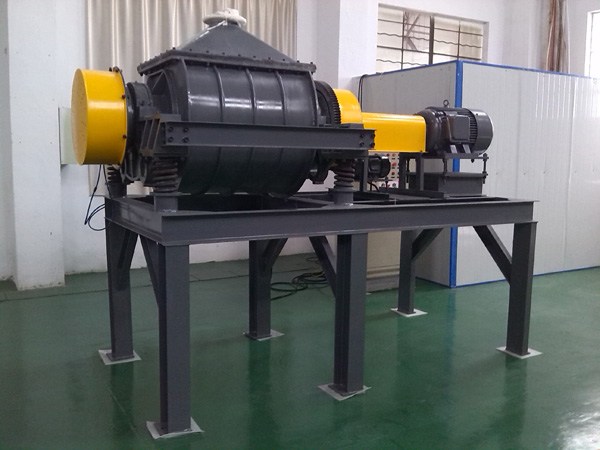
Overview and Professional Advantages of Laboratory Ceramic Nano Ball Mill
Release time:2026-08-24 Visits:1366
1. Introduction
The
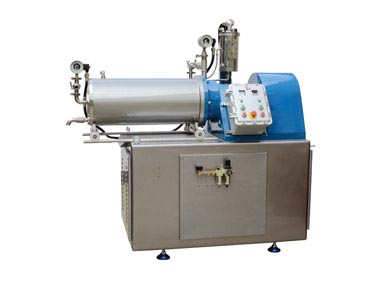
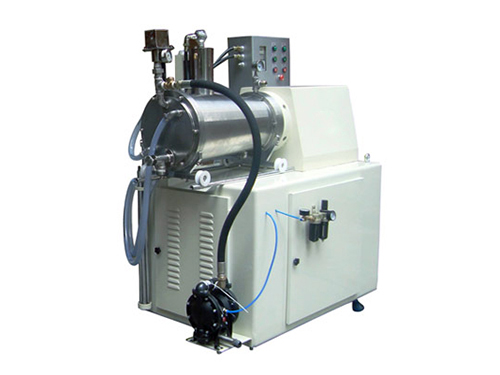
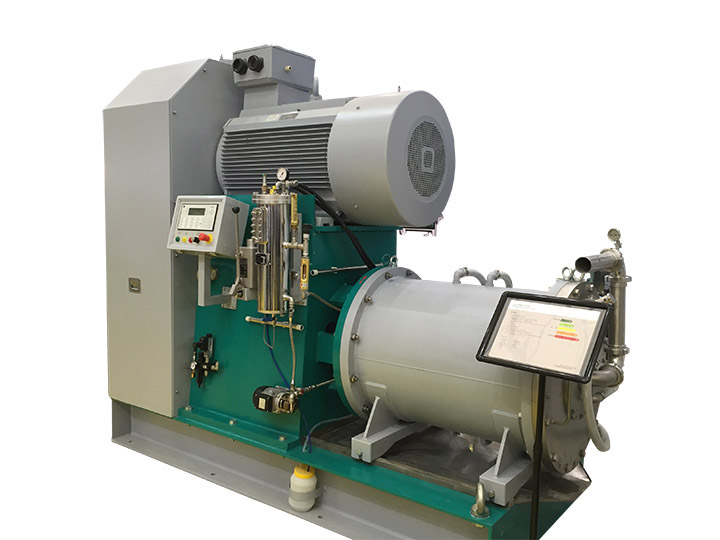
laboratory ceramic nano ball mill is a specialized fine grinding and nano-scale material processing equipment tailored for scientific research, product formulation testing, and small-batch trial production. Differentiated from conventional metal-lined ball mills, this equipment adopts high-purity ceramic lining as the core structural material, featuring compact volume, low operational capacity, and precise grinding performance. It is specially designed to meet the ultra-fine pulverization, mixing, and refinement demands of laboratory scenarios, covering material pretreatment, formula verification, and process parameter exploration. Serving as a critical bridge between laboratory research and industrial mass production, it effectively solves the problems of excessive material loss, low grinding precision, and metal contamination in traditional small-scale grinding equipment.
2. Core Structural Characteristics
The most prominent feature of the laboratory ceramic nano ball mill is its full ceramic lining structure, usually made of high-hardness alumina or zirconia ceramic materials. This non-metallic lining completely isolates the contact between the grinding cylinder and raw materials, fundamentally eliminating metal impurity contamination caused by equipment wear—a key advantage that makes it irreplaceable in high-purity material research. Compared with traditional manganese steel-lined ball mills, the ceramic lining boasts superior wear resistance and corrosion resistance, with a service life 3 to 5 times longer than conventional metal liners. Meanwhile, the lightweight ceramic structure optimizes the overall equipment load, ensuring stable low-noise operation and reducing energy consumption during laboratory batch tests.
In terms of structural design, the equipment adopts a miniaturized integrated layout compatible with laboratory environments. It supports flexible switching between dry and wet grinding modes, with adjustable grinding fineness ranging from micron to nano scale. The compact volume and simple disassembly structure facilitate daily cleaning, sample replacement, and equipment maintenance, avoiding cross-contamination between different experimental samples and ensuring high repeatability of experimental data.
3. Performance and Functional Advantages
The laboratory ceramic nano ball mill achieves dual improvements in grinding efficiency and production adaptability through optimized mechanical operation principles and structural design. Firstly, its high-strength impact and friction grinding mechanism efficiently breaks down material agglomerations, realizing uniform ultra-fine grinding and nano-level particle refinement, which greatly improves the pulverization efficiency of fine and special materials. Secondly, the equipment breaks the application limitations of traditional small ball mills, expanding the scope of processable materials and applicable experimental scenarios.
In terms of operational performance, the equipment supports adjustable rotating speed and customizable grinding time, enabling precise control of material particle size distribution. It features low energy consumption, stable operation, and minimal material residue, which fully meets the rigorous precision requirements of material science research, new material development, and chemical formulation experiments. For small-batch trial production, it can stably complete continuous grinding operations, balancing experimental accuracy and small-scale production efficiency.
4. Main Application Scenarios
Benefiting from its high purity, high precision, and flexible operability, the laboratory ceramic nano ball mill is widely applied in multiple high-precision research and small-batch production fields. In new material research, it is used for nano-powder preparation, ceramic raw material refinement, and composite material mixing. In the chemical industry, it undertakes fine grinding of chemical raw materials, pigment dispersion, and catalyst pretreatment. In addition, it is also an essential core device in pharmaceutical fine processing, electronic material grinding, and mineral sample refinement laboratories.
Targeting the trial production stage of new products, the equipment can quickly verify grinding process parameters, optimize material proportioning schemes, and provide reliable experimental data support for subsequent industrial large-scale production. It is the preferred precision grinding equipment for scientific research institutions, enterprise R&D laboratories, and small-batch customized production workshops.
5. Conclusion
As a professional nano-scale fine grinding device for laboratories, the ceramic nano ball mill stands out in the field of material pretreatment and experimental processing by virtue of its pure ceramic anti-pollution structure, high-precision grinding performance, and wide application adaptability. It not only significantly enhances the efficiency and quality of laboratory material grinding and trial production but also fills the gap in high-purity ultra-fine grinding for small-scale experimental scenarios. With the continuous development of new material technology and precision chemical industry, this equipment will play an increasingly important role in scientific research innovation and product process iteration, providing solid technical support for the transformation from laboratory R&D to industrial production.



 +86 18051935350