Laboratory Grinding Mill: How to Choose the Right Lab Mill in 2026
Release time:2026-10-05 Visits:647
A university procurement officer in Istanbul asked on 2026-08-02: "we have a USD 25k budget for a lab grinding mill that will run for 30+ grad students — what should we buy?" — this is the framework we sent him.
What counts as a "laboratory grinding mill"
A
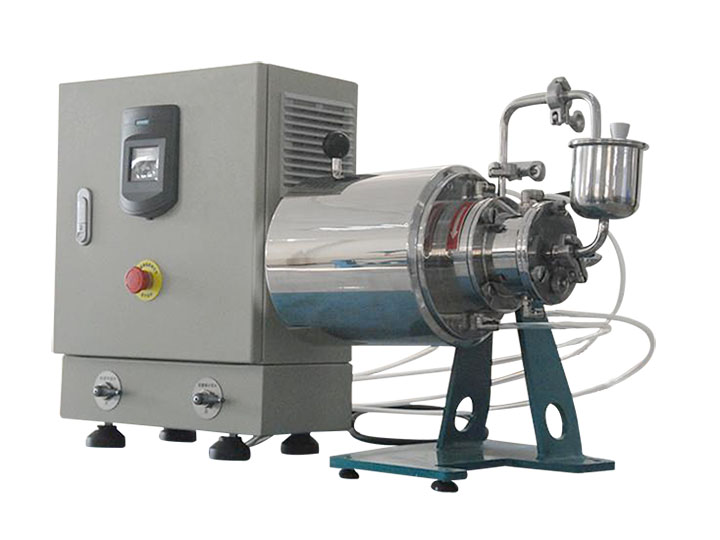
laboratory grinding mill in 2026 is any grinding machine with a chamber volume between 0.3L and 5L, designed for batch operation, easy cleaning between runs, and recipe-level data logging. The category includes: lab sand mills (most common), lab basket mills, lab planetary ball mills (dry or wet), and lab disc mills. The right choice depends on the feed form, target D50 and budget.
|
Mill type |
Feed form |
D50 range |
2026 starting price |
Best for |
|
Lab sand / bead mill |
Liquid slurry |
50 nm–10 μm |
USD 2,800 |
Inks, coatings, battery |
|
Lab basket mill |
Liquid slurry |
5–50 μm |
USD 3,500 |
Coatings, pigment dispersion |
|
Lab planetary ball mill |
Dry powder / paste |
100 nm–50 μm |
USD 4,500 |
Ceramics, metallurgy, mechanochemistry |
|
Lab disc mill / grinder |
Liquid slurry |
1–50 μm |
USD 3,200 |
Pharma, cosmetics |
|
Lab jet mill / air-jet |
Dry powder |
1–50 μm |
USD 8,000 |
Pharma, fine chemicals |
Five questions to answer before buying
Is the feed a liquid slurry or a dry powder? Slurry → sand / bead / basket / disc. Dry → planetary ball mill / jet mill.
What target D50? Sub-1 μm → sand/bead mill. 1–50 μm → basket / disc / planetary. > 50 μm → almost any mill will do.
Is the material abrasive? Abrasive feeds (e.g. ceramic glaze, mineral pigments) destroy PU linings fast — specify SS316L or zirconia.
Multi-user or single-researcher? Multi-user → pick a mill with a recipe-management UI and easy disassembly. Single → budget matters more.
What certifications do you need? University → CE only. Pharma R&D → GMP-cleanable design + IQ/OQ documentation. Battery R&D → SS316L or zirconia wetted parts.
Why a sand mill is the most versatile pick in 2026
For a general-purpose lab that handles inks, coatings, battery precursors, and pharma intermediates, a 1–2L laboratory sand mill covers ~70% of use cases in our customer base. It will not grind dry powder, but it can hit sub-100nm liquid work that other mill types cannot. If you also need dry grinding, add a small planetary ball mill (USD 4,500–8,000) as a complement.
The hidden costs of a lab grinding mill
Budget line items that surprise first-time buyers: (a) chiller (USD 1,500–3,500) — most labs skip this then realise within a month they need it; (b) grinding media starter pack (USD 300–800) — you want 3 bead sizes on day 1; (c) spare seal kit (USD 180–420) — one of these in a drawer is the difference between a working lab and a dead lab.
FAQ — Laboratory Grinding Mill 2026
What is the difference between a laboratory sand mill and a laboratory grinding mill?
A laboratory grinding mill is the broad category (any lab-scale grinding machine). A laboratory sand mill is a specific type within that category — one that uses beads as the grinding media for wet slurry work.
Which lab grinding mill is best for battery R&D?
A 1-2L horizontal sand mill with SS316L or zirconia wetted parts, VFD, and data logging. Budget USD 5,000-9,000 in 2026 plus a USD 2,000 chiller.
Can a planetary ball mill replace a sand mill?
No — planetary ball mills are best for dry powder and mechanochemistry. They cannot match a sand mill for sub-micron liquid slurry throughput.
Do I need a chiller for my lab grinding mill?
For sand / bead / disc mills, yes. For planetary ball mills running short batches, often no.
What is the most common mistake when buying a lab grinding mill?
Choosing the wrong chamber volume. A 5L pilot mill for a single researcher is overkill; a 0.3L bench-top for a 30-person lab is a bottleneck. Match the volume to your weekly throughput target.
Budget USD 25k for a multi-user lab? Tell us your research domains and we'll spec a 2-machine set (e.g. 1L sand mill + 2L planetary) that fits the budget and serves 30+ users.
About our lab



 +86 18051935350