1. Introduction
In the process of industrial deep processing, ultra-fine grinding is a crucial link that determines the performance and quality of final products. Whether it is the grinding of new material powders, the dispersion of coating pigments, the refinement of pharmaceutical raw materials, or the processing of food additives, the grinding efficiency, particle size uniformity, and product purity directly affect the subsequent production processes, product performance, and market competitiveness. Traditional grinding equipment (such as ball mills, Raymond mills) have inherent defects: low grinding efficiency, uneven product particle size, easy contamination of materials by metal wear debris, and high energy consumption, which are difficult to meet the requirements of modern industrial production for high precision and pollution-free.
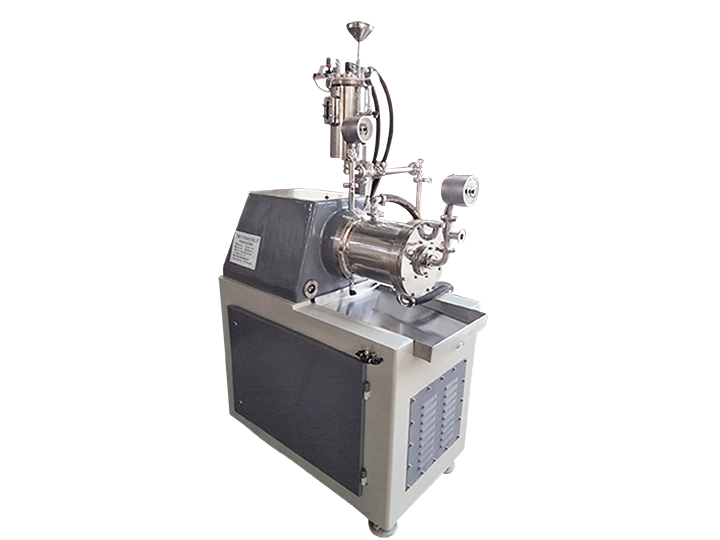
Ceramic sand mills, as a new type of ultra-fine grinding equipment, have been continuously optimized and upgraded in structure and technology, and gradually formed a complete product system to adapt to different grinding needs. Compared with traditional grinding equipment, ceramic sand mills have the advantages of high grinding efficiency, uniform particle size, no material contamination, low energy consumption, and compact structure. They adopt ceramic materials (such as zirconia, alumina) for key grinding components, which effectively avoid metal contamination and ensure product purity; the closed-loop operation design reduces dust leakage and environmental pollution, conforming to the development trend of green industrial production.
Against this background, it is of great practical significance to conduct in-depth and comprehensive analysis of ceramic sand mills. This paper takes the core demand of ""high-efficiency grinding and pollution-free production"" as the starting point, systematically combs the working principle and structural characteristics of ceramic sand mills, parses the key technical parameters affecting the grinding effect and pollution control, classifies and evaluates mainstream ceramic sand mill types, and combines typical industry application cases to clarify the selection and application points. It is hoped that this paper can provide valuable reference for relevant enterprises and personnel, help them better apply ceramic sand mills, and promote the high-quality and green development of industrial grinding production.
2. Core Working Principle of Ceramic Sand Mills: The Foundation of High-Efficiency and Pollution-Free Grinding
The core function of ceramic sand mills is to realize ultra-fine grinding and uniform dispersion of materials through the high-speed collision, friction, and shearing between ceramic grinding media and materials in a closed grinding cavity. Its working principle is based on the comprehensive action of mechanical force (collision, friction, shearing) and fluid dynamics, which can effectively break the agglomeration of materials, reduce the particle size of materials to the ultra-fine level (usually 0.1~10μm), and ensure the uniformity and purity of materials. The working process of ceramic sand mills is mainly divided into four stages: feeding, grinding, separation, and discharging, which are carried out continuously to achieve efficient and stable grinding.
2.1 Structural Basis of Grinding and Pollution Control
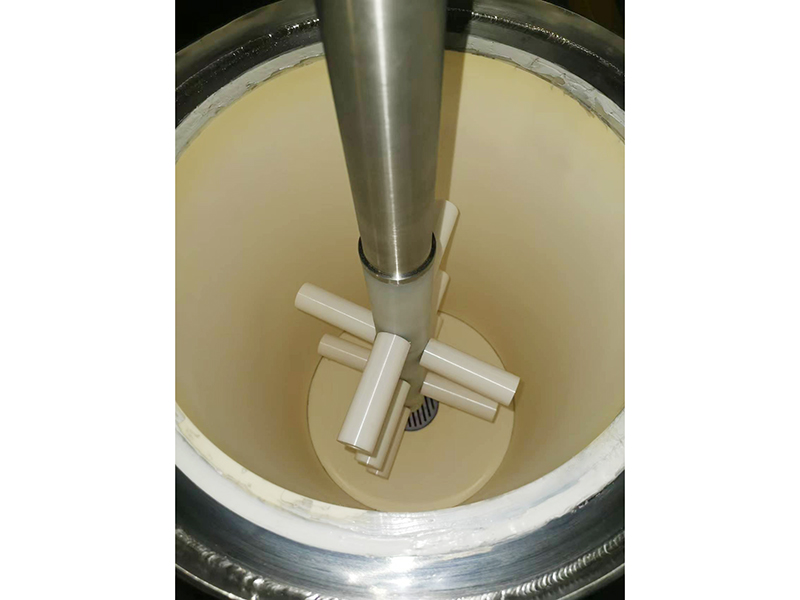
The core structural components of ceramic sand mills that realize high-efficiency grinding and pollution-free production include the ceramic grinding cavity, ceramic grinding media, high-speed stirring shaft, ceramic lining, separation device, and closed feeding/discharging system. The ceramic grinding cavity and lining are made of high-purity ceramic materials (zirconia, alumina), which have excellent wear resistance, corrosion resistance, and non-toxicity, avoiding material contamination caused by metal wear; the ceramic grinding media (ceramic beads) have high hardness, uniform particle size, and good wear resistance, ensuring grinding efficiency and avoiding media fragmentation and contamination; the separation device (such as dynamic separator, static separator) realizes the separation of grinding media and materials, preventing media from being discharged with materials; the closed feeding/discharging system reduces dust leakage and environmental pollution, ensuring pollution-free production.
2.2 Working Process
1. Feeding Stage: The material to be ground (usually in the form of slurry) is evenly fed into the closed ceramic grinding cavity through the feeding pump. The feeding speed is adjustable, and it is necessary to ensure uniform feeding to avoid material accumulation in the grinding cavity, which will affect the grinding efficiency and cause equipment overload. The closed feeding design prevents dust leakage and material pollution.
2. Grinding Stage: The motor drives the high-speed stirring shaft to rotate through the transmission system. The stirring shaft drives the ceramic grinding media in the grinding cavity to move at high speed (linear speed up to 10~20m/s), generating strong collision, friction, and shearing force between the media and the material, and between the media and the ceramic lining. Under the action of these mechanical forces, the material particles are continuously crushed and refined, and the agglomerated particles are fully dispersed, realizing ultra-fine grinding. The ceramic materials of the grinding cavity and media avoid metal contamination, ensuring the purity of the material.
3. Separation Stage: The ground material slurry and grinding media enter the separation device together. The separation device (usually a screen or dynamic separator) separates the ceramic grinding media from the material slurry— the grinding media are retained in the grinding cavity for continuous grinding, and the qualified ultra-fine material slurry passes through the separation device and enters the discharging stage. The separation device ensures that no grinding media are mixed into the finished product, avoiding product contamination.
4. Discharging Stage: The qualified material slurry is discharged through the closed discharging system, and can be directly sent to the subsequent production process or stored. The closed discharging design prevents dust leakage and environmental pollution, and avoids secondary contamination of the material. The particle size of the discharged material can be adjusted by optimizing the grinding parameters (such as stirring speed, media size, grinding time).
The key to high-efficiency and pollution-free grinding of ceramic sand mills lies in the reasonable matching of the ceramic grinding system (cavity, lining, media) and the optimization of grinding parameters. The high-purity ceramic materials ensure the non-contamination of materials; the high-speed stirring of the grinding media ensures the grinding efficiency and particle size uniformity; the closed-loop operation design ensures pollution-free production.
3. Core Structural Components and Technical Characteristics of Ceramic Sand Mills
The performance and reliability of ceramic sand mills are directly determined by their core structural components and technical design. The rational design of each component not only ensures high-efficiency grinding but also achieves pollution-free production. The following is a detailed analysis of the core structural components and key technical characteristics of ceramic sand mills:
3.1 Core Structural Components
- Ceramic Grinding Cavity: The core working component of the ceramic sand mill, usually made of high-purity zirconia or alumina ceramic materials. It has excellent wear resistance, corrosion resistance, high temperature resistance, and non-toxicity, which can effectively avoid material contamination caused by the wear of the cavity. The inner wall of the cavity is smooth, reducing the friction between the material and the cavity, and improving the grinding efficiency. The volume of the grinding cavity ranges from 1L to 1000L, which can be selected according to the production scale.
- Ceramic Grinding Media: The key component that realizes material grinding, usually ceramic beads made of zirconia, alumina, or silicon nitride. The particle size of the media ranges from 0.1mm to 5mm, and the appropriate media size can be selected according to the grinding requirements. Ceramic media have high hardness (Mohs hardness ≥8), good wear resistance, uniform particle size, and no metal impurities, which can ensure the grinding efficiency and avoid material contamination. The filling rate of the media is usually 70%~85%, which directly affects the grinding efficiency and particle size uniformity.
- High-Speed Stirring Shaft: The power transmission component of the ceramic sand mill, usually made of high-strength stainless steel or ceramic-coated steel. The stirring shaft is equipped with stirring discs or paddles, which drive the grinding media to move at high speed. The surface of the stirring shaft and discs is usually coated with ceramic materials to improve wear resistance and avoid metal contamination. The rotation speed of the stirring shaft is adjustable (usually 1000~5000r/min), and the linear speed of the stirring discs is the key parameter affecting the grinding effect.
- Ceramic Lining: Inlaid on the inner wall of the grinding cavity, made of the same material as the grinding cavity (zirconia, alumina). It plays a role in protecting the grinding cavity, reducing wear, and ensuring the purity of the material. The ceramic lining is easy to replace, which can reduce the maintenance cost of the equipment.
- Separation Device: Used to separate the grinding media from the material slurry, mainly including dynamic separators and static separators. The dynamic separator is driven by the stirring shaft to rotate, and the separation effect is high, suitable for ultra-fine grinding; the static separator (such as a screen) has a simple structure and low cost, suitable for general grinding. The separation accuracy of the separation device directly affects the quality of the finished product, ensuring that no media are mixed into the product.
- Closed Feeding/Discharging System: Including feeding pump, feeding pipe, discharging pipe, and storage tank, all of which are made of corrosion-resistant and non-toxic materials (such as stainless steel, PTFE). The closed design prevents dust leakage and environmental pollution, and avoids secondary contamination of the material. The feeding pump is adjustable, which can control the feeding speed to match the grinding efficiency.
3.2 Key Technical Characteristics
- High-Efficiency Grinding: The high-speed movement of ceramic grinding media generates strong collision, friction, and shearing force, which can realize ultra-fine grinding of materials in a short time. The grinding efficiency is 3~5 times higher than that of traditional ball mills, and the particle size of the product can reach 0.1~10μm, with uniform particle size distribution (particle size distribution index ≤1.5).
- Pollution-Free Production: The key components (grinding cavity, lining, media, stirring shaft coating) are made of high-purity ceramic materials, which have no metal impurities and no wear debris, ensuring the purity of the material and avoiding metal contamination. The closed-loop operation design reduces dust leakage and environmental pollution, meeting the green production requirements of modern industry.
- Strong Adaptability to Materials: Suitable for grinding various materials, including inorganic powders (such as calcium carbonate, talc), organic materials (such as resin, rubber), pharmaceutical raw materials, food additives, and coating pigments. It can handle materials with different viscosities (100~100000mPa·s) and moisture contents, and can realize continuous or batch grinding.
- Precise Particle Size Control: By adjusting the stirring speed, media size, media filling rate, feeding speed, and grinding time, the particle size of the product can be precisely controlled, meeting the different requirements of various industries for product particle size. The particle size uniformity is good, which can improve the performance of the final product.
- Energy Saving and Environmental Protection: The optimized structural design and high-efficiency grinding principle reduce energy consumption—under the same grinding effect, the energy consumption is 30%~50% lower than that of traditional grinding equipment. The closed operation design reduces dust and noise pollution, and the noise is controlled within 75dB, meeting the environmental protection and occupational health requirements.
- Compact Structure and Easy Maintenance: The equipment has a compact structure, small floor space, and easy installation and debugging. The ceramic lining and grinding media are easy to replace, and the maintenance cycle is long, reducing the maintenance cost and downtime. The intelligent control system can realize automatic control of grinding parameters, reducing manual operation errors.
4. Classification and Characteristics of Mainstream Ceramic Sand Mills
According to the structural design, stirring form, and application scenarios, ceramic sand mills can be divided into various types, each with its own unique structural characteristics, advantages, and applicable scenarios. Clarifying the classification and characteristics of mainstream ceramic sand mills is the basis for scientific selection and rational application. The following is a detailed analysis of the mainstream ceramic sand mill types:
4.1 Horizontal Ceramic Sand Mill
The horizontal ceramic sand mill is the most widely used type of ceramic sand mill, with a horizontal grinding cavity and a high-speed stirring shaft. The material slurry flows horizontally in the grinding cavity, and the grinding media are driven by the stirring shaft to move at high speed, realizing continuous grinding. It is equipped with a high-efficiency dynamic separator, which can ensure the separation effect and product quality.
- Characteristics: High grinding efficiency, uniform particle size, good stability, and large handling capacity. The horizontal structure ensures uniform distribution of grinding media, avoiding uneven grinding caused by media sedimentation. The dynamic separator has high separation accuracy, suitable for ultra-fine grinding. The equipment can be equipped with a cooling system to control the temperature of the grinding cavity, avoiding material degradation caused by high temperature. However, the structure is relatively complex, and the purchase cost is slightly higher.
- Applicable Scenarios: Widely used in large-scale industrial production, such as coatings, inks, new materials, and pharmaceutical industries, suitable for continuous ultra-fine grinding of high-viscosity and high-hardness materials. The grinding cavity volume ranges from 10L to 1000L, and the handling capacity can reach 100~5000L/h.
4.2 Vertical Ceramic Sand Mill
The vertical ceramic sand mill adopts a vertical grinding cavity, and the stirring shaft is vertically installed. The material slurry is fed from the bottom of the grinding cavity and discharged from the top, and the grinding media are driven by the stirring shaft to move at high speed, realizing grinding. It is equipped with a static separator or dynamic separator, with a simple structure and small floor space.
- Characteristics: Compact structure, small floor space, easy installation and maintenance, and low purchase cost. The vertical structure is convenient for feeding and discharging, and suitable for small-batch and batch grinding. The grinding effect is good, and the particle size uniformity is high. However, the handling capacity is small, and the media are easy to sediment, which is not suitable for long-term continuous operation.
- Applicable Scenarios: Suitable for small-scale production, laboratory research, and small-batch processing, such as laboratory grinding of new materials, small-batch production of pharmaceutical raw materials, and food additives. The grinding cavity volume ranges from 1L to 50L, and the handling capacity is 10~500L/h.
4.3 Bead Mill Type Ceramic Sand Mill
The bead mill type ceramic sand mill is a new type of high-efficiency ceramic sand mill, which adopts a special stirring disc design and high-precision ceramic beads. The stirring disc drives the ceramic beads to generate high-frequency collision and shearing force, which can realize ultra-fine grinding of materials with higher efficiency. It is equipped with a fully enclosed separation system, ensuring pollution-free production.
- Characteristics: Ultra-high grinding efficiency, extremely uniform particle size, and high product purity. The special stirring disc design improves the utilization rate of grinding media and reduces energy consumption. The fully enclosed structure ensures zero dust leakage and zero material contamination, suitable for high-precision and pollution-free grinding requirements. However, the maintenance cost is high, and the requirements for operating personnel are relatively high.
- Applicable Scenarios: Suitable for high-end industries with high requirements on product quality, such as high-end coatings, electronic materials, biological pharmaceuticals, and precision ceramics. The particle size of the product can reach 0.1~1μm, meeting the ultra-fine grinding requirements.
4.4 Laboratory Ceramic Sand Mill
The laboratory ceramic sand mill is a small-sized ceramic sand mill with a compact structure, small volume, and precise control. It is mainly used for experimental research and small-batch sample preparation, with adjustable grinding parameters and high grinding precision.
- Characteristics: Small volume, light weight, easy operation, and precise control of grinding parameters. The grinding cavity is made of high-purity ceramic materials, ensuring the purity of experimental samples. The stirring speed and feeding speed are adjustable, suitable for grinding various experimental materials. However, the handling capacity is very small, and it is not suitable for industrial production.
- Applicable Scenarios: Suitable for material laboratories, research institutes, and universities, used for experimental research on ultra-fine grinding of materials, sample preparation, and formula optimization. The grinding cavity volume ranges from 0.1L to 5L, and the handling capacity is 1~50L/h.
5. Core Advantages of Ceramic Sand Mills in High-Efficiency and Pollution-Free Production
Compared with traditional grinding equipment (such as ball mills, Raymond mills) and other sand mill types (such as metal sand mills), ceramic sand mills have obvious advantages in high-efficiency grinding and pollution-free production, which are the key to their wide application in high-end industrial fields. The specific core advantages are as follows:
5.1 High Grinding Efficiency and Ultra-Fine Particle Size
Ceramic sand mills adopt high-speed stirring of ceramic grinding media, generating strong collision, friction, and shearing force, which can break material particles more effectively and realize ultra-fine grinding in a short time. The grinding efficiency is 3~5 times higher than that of traditional ball mills, and the particle size of the product can reach 0.1~10μm, with uniform particle size distribution. This can effectively improve the performance of the final product, such as the gloss of coatings, the dispersion of inks, and the activity of new materials.
5.2 Zero Material Contamination and High Product Purity
The key components of ceramic sand mills (grinding cavity, lining, media, stirring shaft coating) are made of high-purity ceramic materials (zirconia, alumina), which have no metal impurities and no wear debris. Compared with metal sand mills, ceramic sand mills can completely avoid material contamination caused by metal wear, ensuring the purity of the product. This is crucial for industries with high requirements on product purity, such as pharmaceuticals, food, and electronic materials.
5.3 Pollution-Free Production and Environmental Protection
The closed-loop operation design of ceramic sand mills (closed feeding, closed discharging, closed grinding cavity) reduces dust leakage and environmental pollution, avoiding the impact of grinding dust on the environment and the health of operators. At the same time, the equipment has low energy consumption and low noise, meeting the green production requirements of modern industrial policies. The grinding process does not produce harmful substances, realizing clean production.
5.4 Strong Adaptability and Flexible Operation
Ceramic sand mills can handle various types of materials, including inorganic powders, organic materials, high-viscosity slurries, and heat-sensitive materials. By adjusting the stirring speed, media size, media filling rate, and feeding speed, the same equipment can meet the grinding requirements of different materials and different particle sizes, improving the utilization rate of the equipment. The equipment can realize continuous or batch grinding, which is flexible and adaptable to different production modes.
5.5 Long Service Life and Low Maintenance Cost
Ceramic materials have excellent wear resistance and corrosion resistance, so the service life of the core components (grinding cavity, lining, media) of ceramic sand mills is long— the average service life of ceramic lining and media is 2~3 times that of metal components. The equipment has a simple structure, few vulnerable parts, and the replacement of vulnerable parts is simple and fast, which can reduce the maintenance cost and downtime, ensuring the continuity of production.
6. Application of Ceramic Sand Mills in Typical Industries
With their advantages of high-efficiency grinding, zero contamination, and environmental protection, ceramic sand mills have been widely used in various high-end industrial fields. Their application effects are closely related to the characteristics of the industry and the requirements of materials. The following are typical application cases in key industries, providing reference for enterprises to select and apply ceramic sand mills:
6.1 Coating and Ink Industry
Industry Characteristics: High requirements for the dispersion and fineness of pigments, requiring uniform particle size, high gloss, and no precipitation; the product must be free of metal contamination to avoid affecting the color and performance of the coating/ink. The production scale is large, requiring continuous and stable operation of equipment.
Application Scenario: Ultra-fine grinding of coating pigments, ink pigments, and resin slurries. For example, a high-end coating enterprise needs to grind titanium dioxide pigment into particles with a particle size of 0.5~2μm, requiring uniform particle size, no metal contamination, and high dispersion. The enterprise selected a horizontal ceramic sand mill with a grinding cavity volume of 100L, equipped with zirconia ceramic media (particle size 0.8mm) and a dynamic separator. The stirring speed was adjusted to 2500r/min, and the feeding speed was 500L/h. The grinding efficiency reached 98%, the particle size uniformity was ≤1.2, and the product was free of metal contamination, meeting the requirements of high-end coatings.
6.2 New Material Industry
Industry Characteristics: The raw materials are mostly high-hardness, high-purity powders (such as zirconia, alumina, graphene), requiring ultra-fine grinding to improve the performance of the material; the product must be free of contamination to ensure the purity and performance of the new material. The grinding precision requirements are high, and the particle size must be strictly controlled.
Application Scenario: Ultra-fine grinding of new material powders. For example, a new material enterprise needs to grind graphene into particles with a particle size of 0.1~1μm, requiring high purity, no metal contamination, and uniform particle size. The enterprise selected a bead mill type ceramic sand mill with a grinding cavity volume of 50L, equipped with high-purity zirconia ceramic beads (particle size 0.3mm) and a fully enclosed separation system. The grinding time was 2 hours, and the particle size of the graphene powder reached 0.5μm, with uniform distribution and no metal contamination, meeting the performance requirements of new material production.
6.3 Pharmaceutical Industry
Industry Characteristics: High requirements for product purity and safety, requiring the grinding equipment to be non-toxic, corrosion-resistant, and free of contamination; the raw materials are mostly pharmaceutical powders and slurries, requiring ultra-fine grinding to improve the solubility and bioavailability of drugs. The equipment must meet GMP standards.
Application Scenario: Ultra-fine grinding of pharmaceutical raw materials and Chinese medicine powders. For example, a pharmaceutical enterprise needs to grind a Chinese medicine powder into particles with a particle size of 1~5μm, requiring no metal contamination, non-toxic, and meeting GMP standards. The enterprise selected a vertical ceramic sand mill with a grinding cavity volume of 10L, made of high-purity alumina ceramic materials, equipped with a closed feeding/discharging system. The grinding speed was adjusted to 3000r/min, and the grinding time was 1.5 hours. The product was non-toxic, free of metal contamination, and the particle size met the requirements, conforming to GMP standards.
6.4 Food Industry
Industry Characteristics: High requirements for food safety and hygiene, requiring the grinding equipment to be non-toxic, corrosion-resistant, and easy to clean; the raw materials are mostly food additives, fruit and vegetable slurries, and grain powders, requiring ultra-fine grinding to improve the taste and absorption rate of food. The equipment must meet food-grade standards.
Application Scenario: Ultra-fine grinding of food additives and food raw materials. For example, a food enterprise needs to grind calcium carbonate food additive into particles with a particle size of 1~3μm, requiring non-toxic, no contamination, and meeting food-grade standards. The enterprise selected a horizontal ceramic sand mill with a grinding cavity volume of 30L, made of food-grade zirconia ceramic materials, equipped with a cleanable structure. The grinding media were food-grade ceramic beads, and the grinding process was closed, ensuring no contamination. The product met food-grade standards and improved the absorption rate of the food additive.
6.5 Laboratory and Research Institutions
Usage Characteristics: Small batch, high precision, flexible operation, mainly used for experimental research and sample preparation, requiring the equipment to be small in size, easy to operate, and able to precisely control the grinding parameters.
Application Scenario: Experimental grinding of materials and sample preparation. For example, a material laboratory needs to grind a small-batch ceramic raw material into particles with a particle size of 0.5~2μm for performance testing. The laboratory selected a laboratory ceramic sand mill with a grinding cavity volume of 1L, equipped with adjustable stirring speed and feeding speed. The grinding media were zirconia ceramic beads (particle size 0.5mm), and the grinding time was 1 hour. The particle size of the sample reached the experimental requirements, and the purity was high, ensuring the accuracy of the experimental results.
7. Professional Selection and Operation Optimization of Ceramic Sand Mills
To give full play to the advantages of ceramic sand mills in high-efficiency and pollution-free production, it is necessary to conduct scientific selection and optimize the operation process, avoid common problems such as mismatched equipment, low grinding efficiency, material contamination, and high energy consumption, and improve production efficiency and product quality.
7.1 Professional Selection Guide
The selection of ceramic sand mills needs to comprehensively consider the material characteristics, grinding requirements, production scale, and cost budget, following the principles of ""matching with materials, meeting requirements, and cost-effectiveness"". The specific selection steps are as follows:
1. Clarify Material Characteristics: Determine the type, hardness, viscosity, moisture content, and grinding target particle size of the material. For high-hardness materials (Mohs hardness ≥7), select a ceramic sand mill with high-hardness ceramic media (zirconia); for high-viscosity materials, select a horizontal ceramic sand mill with strong stirring force; for heat-sensitive materials, select a ceramic sand mill with a cooling system; for materials requiring high purity, select a sand mill with high-purity ceramic components.
2. Clarify Grinding Requirements: Determine the target particle size, particle size uniformity, handling capacity, and production mode (continuous/batch). For ultra-fine grinding (particle size ≤1μm), select a bead mill type ceramic sand mill; for large-scale continuous production, select a horizontal ceramic sand mill; for small-batch or laboratory use, select a vertical or laboratory ceramic sand mill.
3. Select the Type of Ceramic Sand Mill: According to the material characteristics and grinding requirements, select the appropriate type. For example, large-scale continuous grinding of high-viscosity materials selects horizontal ceramic sand mill; ultra-fine grinding of high-purity materials selects bead mill type ceramic sand mill; small-batch production selects vertical ceramic sand mill; laboratory research selects laboratory ceramic sand mill.
4. Determine Key Parameters: Determine the grinding cavity volume, media size, media filling rate, stirring speed, and feeding speed according to the production scale and grinding requirements. For example, the media size should be 1~2 times the target particle size; the media filling rate is usually 70%~85%; the stirring speed is adjusted according to the material viscosity and target particle size.
5. Cost-Effectiveness Evaluation: Compare the purchase cost, operation cost, and maintenance cost of different brands and models of ceramic sand mills, select the equipment with the highest cost-effectiveness. At the same time, consider the after-sales service of the manufacturer (installation, commissioning, maintenance, technical support) and whether the equipment meets the industry standards (such as GMP, food-grade standards).
7.2 Operation Optimization Strategies
- Optimize Grinding Parameters: According to the material characteristics and target particle size, adjust the stirring speed, media size, media filling rate, feeding speed, and grinding time to achieve the optimal grinding effect. For example, for ultra-fine grinding, reduce the media size, increase the stirring speed, and extend the grinding time; for high-viscosity materials, increase the media filling rate and reduce the feeding speed. Regularly test the particle size of the product and adjust the parameters in time.
- Strengthen Pollution Control: Regularly clean the grinding cavity, feeding/discharging system, and separation device to avoid material residue and cross-contamination. Replace the ceramic lining and grinding media in time when they are worn to avoid material contamination caused by media fragmentation. Ensure the tightness of the closed system to prevent dust leakage and environmental pollution.
- Standardize Equipment Operation: Operators should strictly follow the operation procedures, check the equipment status (such as lubrication, tightness, media filling rate) before starting the equipment, and start the equipment in sequence. After the grinding is completed, clean the equipment thoroughly to avoid material residue. Avoid feeding hard impurities (such as metal blocks) into the grinding cavity to prevent damage to the ceramic components.
- Regular Maintenance and Inspection: Establish a regular maintenance system, regularly inspect the stirring shaft, bearing, separation device, and ceramic components, and tighten the loose fasteners in time. Check the lubrication system regularly to ensure sufficient lubricating oil and good lubrication effect. Replace the ceramic lining, grinding media, and seals in time when they are worn to extend the service life of the equipment.
- Intelligent Operation and Monitoring: Make full use of the intelligent control system of the ceramic sand mill to realize real


 +86 18051935350
  Current
location:Home > Ceramic Sand Mills: A Comprehensive Analysis of Core Equipment for High-Efficiency Grinding and Pollution-Free Production
Current
location:Home > Ceramic Sand Mills: A Comprehensive Analysis of Core Equipment for High-Efficiency Grinding and Pollution-Free Production