1. Introduction
In the context of global industrial upgrading and the increasing emphasis on product quality and environmental protection, grinding technology, as a key link in the deep processing of materials, has higher and higher requirements for the performance of grinding equipment. From the traditional metal sand mill to the high-end ceramic sand mill, from the laboratory small-scale grinding machine to the industrial large-scale continuous production equipment, the types and specifications of grinding machines are constantly enriched, and their technical performance is also continuously upgraded. However, for most enterprises, especially small and medium-sized enterprises, the lack of systematic selection knowledge and unclear understanding of the characteristics of various grinding machines often lead to irrational selection decisions.
In practical production, many enterprises have encountered such problems: selecting a high-precision, high-cost grinding machine for general production needs, resulting in waste of equipment investment; choosing a low-cost, low-performance grinding machine for high-purity, high-precision product production, leading to unqualified product quality and failure to meet market requirements; ignoring the adaptability of equipment to materials and production scale, resulting in low grinding efficiency, frequent equipment failures, and increased maintenance costs. These problems not only affect the normal progress of production but also increase the comprehensive production cost of enterprises, restricting the development of enterprises.
Against this background, it is of great practical significance to formulate a scientific and systematic grinding machine selection guide. This paper takes the core needs of enterprise production as the starting point, deeply analyzes the core elements of grinding machine selection, sorts out the characteristics and applicable scenarios of mainstream grinding machine types, provides precise recommendations for different industries and production needs, and summarizes common selection misunderstandings and solutions. It is hoped that this guide can help relevant personnel fully grasp the key points of grinding machine selection, avoid selection risks, and select the most suitable grinding machine to improve production efficiency, reduce production costs, and enhance the core competitiveness of enterprises.
2. Core Elements of Grinding Machine Selection: The Foundation of Rational Selection
The selection of
grinding machines is not a simple comparison of parameters or prices, but a systematic decision-making process based on the comprehensive consideration of multiple factors. The core elements of selection determine the direction and rationality of selection, and enterprises must focus on these elements to avoid blind selection. The specific core elements are as follows:
2.1 Material Characteristics: The Core Premise of Selection
The characteristics of the materials to be ground are the most basic premise for selecting a grinding machine. Different materials have great differences in hardness, corrosiveness, viscosity, initial particle size, and purity requirements, which directly determine the type, performance, and key parameters of the grinding machine to be selected. The specific analysis is as follows:
- Material Hardness: Material hardness is the key factor determining the wear resistance requirements of grinding machine components. For high-hardness materials (Mohs hardness ≥ 7, such as ceramic powder, graphene, metal oxides), it is necessary to select a grinding machine with high wear resistance components (such as ceramic sand mills with zirconia components, silicon carbide ball mills); for medium-hardness materials (Mohs hardness 4~7, such as food additives, pigments, Chinese medicine powders), common grinding machines (such as alumina ceramic sand mills, ordinary ball mills) can meet the requirements; for low-hardness materials (Mohs hardness < 4, such as plastic powder, organic materials), low-wear grinding machines (such as jet mills, horizontal sand mills with ordinary metal components) can be selected to reduce costs.
- Material Corrosiveness: For corrosive materials (such as acids, alkalis, chemical intermediates, pharmaceutical intermediates), it is necessary to select a grinding machine with corrosion-resistant components to avoid equipment corrosion and material contamination. Ceramic sand mills (zirconia, silicon nitride materials) and stainless steel grinding machines are the first choices; for non-corrosive materials, ordinary metal sand mills or ball mills can be selected to control costs.
- Material Viscosity and State: Materials in different states (powder, slurry, block) and different viscosities require different types of grinding machines. For high-viscosity slurry materials (viscosity ≥ 5000mPa·s), horizontal sand mills, vertical sand mills with strong shearing force are suitable; for low-viscosity powder or slurry materials, jet mills, ball mills are more suitable; for block materials, it is necessary to match a crusher first, and then select a grinding machine according to the particle size after crushing.
- Initial Particle Size and Target Particle Size: The initial particle size of the material and the target particle size of the finished product determine the grinding efficiency and precision requirements of the grinding machine. If the initial particle size is large (≥ 100μm) and the target particle size is small (≤ 1μm), it is necessary to select a multi-stage grinding machine or a high-efficiency ultra-fine grinding machine (such as ceramic bead mills, jet mills); if the target particle size is not high (1~10μm), ordinary sand mills or ball mills can meet the requirements.
- Material Purity Requirements: For materials with high purity requirements (such as pharmaceutical raw materials, electronic materials, food additives), it is necessary to select a grinding machine with no pollution, no dead angle, and easy cleaning (such as pharmaceutical-grade ceramic sand mills, food-grade stainless steel grinding machines), avoiding material contamination caused by equipment wear or component reaction; for general purity requirements, ordinary grinding machines can be selected.
2.2 Product Requirements: The Core Goal of Selection
The quality requirements of the finished product directly determine the performance requirements of the grinding machine, and are the core goal of selection. Enterprises need to select equipment according to the specific indicators of the finished product to ensure that the grinding effect meets the production needs.
- Finished Product Particle Size and Distribution: The fineness of the finished product and the narrowness of the particle size distribution are key indicators of grinding quality. For products requiring ultra-fine particle size (≤ 1μm) and narrow particle size distribution (particle size distribution index ≤ 0.8), such as electronic paste, graphene, it is necessary to select high-precision grinding machines (such as ceramic bead mills, jet mills); for products with general particle size requirements (1~100μm), such as ordinary pigments, building materials, ordinary sand mills or ball mills can be selected.
- Dispersion Uniformity: For products requiring high dispersion uniformity (such as coatings, inks, electronic paste), it is necessary to select a grinding machine with strong shearing force and good dispersion effect (such as pin-type sand mills, ceramic bead mills), which can effectively break the agglomeration of particles and ensure the uniformity of the finished product.
- Production Efficiency Requirements: The production efficiency of the grinding machine must match the production scale of the enterprise. For large-scale continuous production (daily output ≥ 1 ton), horizontal sand mills, large-scale ball mills, or continuous jet mills with large capacity should be selected; for small-batch production (daily output ≤ 0.5 tons) or laboratory use, vertical sand mills, small-scale ball mills, or laboratory-grade grinding machines should be selected.
- Product Stability Requirements: For enterprises requiring stable product quality (such as pharmaceuticals, electronics), it is necessary to select a grinding machine with high stability, precise parameter control, and intelligent monitoring (such as intelligent ceramic sand mills, fully automatic grinding production lines), avoiding quality fluctuations caused by manual operation errors.
2.3 Environmental Protection and Safety Standards: The Basic Constraint of Selection
With the in-depth implementation of global environmental protection policies and the increasing emphasis on production safety, the environmental protection and safety performance of grinding machines have become important constraints for selection. Enterprises must select equipment that meets relevant standards to avoid environmental pollution and safety accidents.
- Environmental Protection Standards: The grinding machine should meet the requirements of noise, dust, and waste discharge. For example, the noise of the equipment should be ≤ 75dB; for powder grinding, a closed grinding machine (such as closed sand mills, jet mills with dust collection devices) should be selected to avoid dust leakage; for corrosive materials, the equipment should have good sealing performance to avoid material leakage and environmental pollution. At the same time, the energy consumption of the equipment should meet the energy-saving standards, reducing energy waste.
- Safety Standards: The grinding machine should be equipped with complete safety protection devices, such as overload protection, fault alarm, and emergency stop devices, to avoid safety accidents caused by equipment failure or improper operation. For food, pharmaceutical, and other industries, the equipment should meet the corresponding hygiene standards (such as GMP, FDA standards), with no dead angle, easy cleaning and sterilization, ensuring product safety.
2.4 Cost Budget: The Key Factor of Selection Balance
The cost budget includes equipment purchase cost, operation cost, and maintenance cost. Enterprises need to balance the performance and cost of the equipment, select the equipment with the highest cost-effectiveness, and avoid blind pursuit of high performance or low cost.
- Equipment Purchase Cost: The purchase cost of different types of grinding machines varies greatly. High-precision, high-performance grinding machines (such as zirconia ceramic sand mills, jet mills) have higher purchase costs, while ordinary metal sand mills and ball mills have lower purchase costs. Enterprises should select equipment according to their own product positioning and production needs, and not blindly pursue high-priced equipment.
- Operation Cost: The operation cost mainly includes energy consumption, wearing parts consumption, and labor cost. High-efficiency, energy-saving grinding machines (such as ceramic sand mills, intelligent grinding machines) have lower energy consumption; grinding machines with wear-resistant components (such as ceramic sand mills) have lower wearing parts consumption; automatic grinding machines can reduce labor cost, and one person can operate multiple equipment.
- Maintenance Cost: The maintenance cost is related to the service life of the equipment and the frequency of wearing parts replacement. Grinding machines with high wear resistance, stable performance (such as ceramic sand mills) have lower maintenance costs, while ordinary metal sand mills have higher maintenance costs due to frequent replacement of wearing parts. Enterprises should consider the long-term maintenance cost when selecting equipment, not just the purchase cost.
2.5 After-Sales Service: The Guarantee of Stable Operation
The after-sales service of the grinding machine is an often ignored but very important selection element. Good after-sales service can ensure the stable operation of the equipment, timely solve the problems encountered in the operation process, and reduce the downtime. When selecting equipment, enterprises should focus on the after-sales service capabilities of the manufacturer, including installation and commissioning, technical training, spare parts supply, and fault maintenance. Manufacturers with perfect after-sales service can provide timely technical support and spare parts supply, ensuring the normal progress of production.
3. Classification and Evaluation of Mainstream Grinding Machines: Basis for Precise Selection
At present, there are many types of grinding machines on the market, and each type has its own characteristics, advantages, and applicable scenarios. Clarifying the characteristics and evaluation of mainstream grinding machines is the basis for precise selection. The following is a detailed classification and evaluation of mainstream grinding machines:
3.1 Sand Mills: Suitable for Ultra-Fine Grinding of Slurry Materials
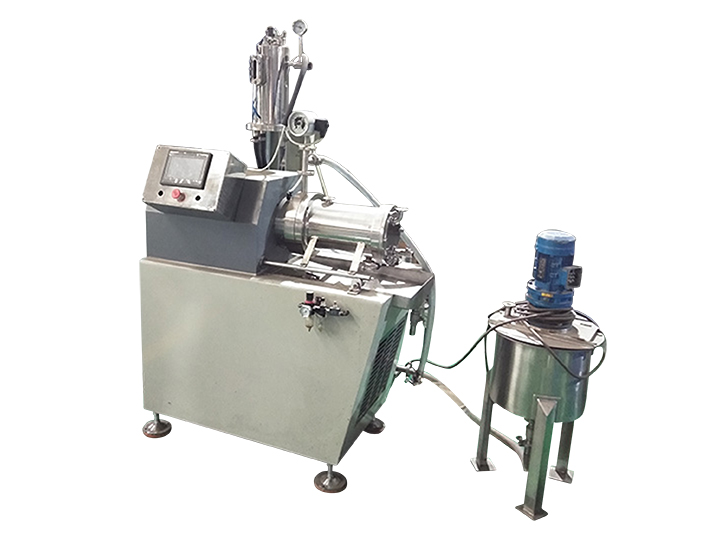
Sand mills are widely used in ultra-fine grinding of slurry materials, with high grinding efficiency and precision, and are divided into ceramic sand mills and metal sand mills according to the material of key components.
- Ceramic Sand Mills: Key components (grinding cavity, disperser, grinding media) are made of high-performance ceramic materials (zirconia, alumina, silicon nitride). Advantages: high wear resistance, strong corrosion resistance, non-toxic and pollution-free, high grinding precision, narrow particle size distribution, long service life. Disadvantages: high purchase cost. Applicable scenarios: high-purity, high-precision, corrosive material grinding, such as pharmaceuticals, electronics, new materials, food additives.
- Metal Sand Mills: Key components are made of metal materials (stainless steel, carbon steel). Advantages: low purchase cost, simple structure, easy maintenance. Disadvantages: poor wear resistance, easy to cause material contamination, short service life, poor corrosion resistance. Applicable scenarios: general grinding of non-corrosive, low-purity materials, such as building materials, ordinary pigments, coatings.
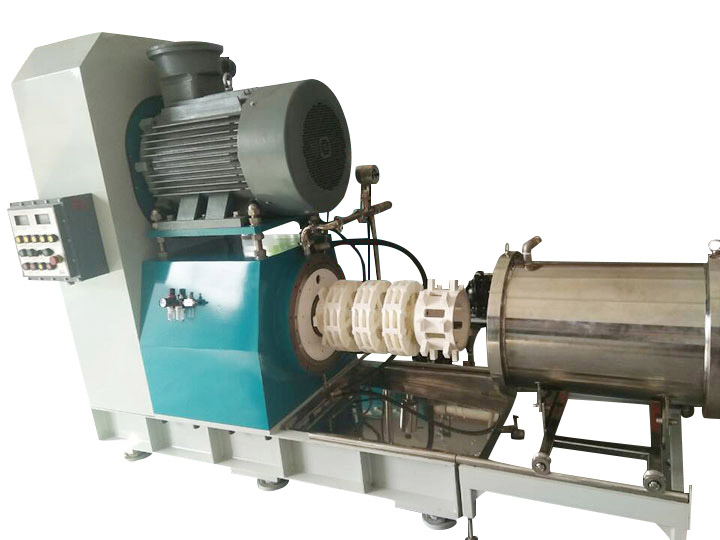
According to the structural type, sand mills can be divided into horizontal sand mills and vertical sand mills. Horizontal sand mills have large capacity, high efficiency, and are suitable for large-scale continuous production; vertical sand mills have small floor space, low cost, and are suitable for small-batch production and laboratory use.
3.2 Ball Mills: Suitable for Large-Scale Grinding of Powder Materials
Ball mills are traditional grinding equipment, mainly used for large-scale grinding of powder materials, with simple structure, strong adaptability, and low cost. According to the grinding medium, they can be divided into ceramic ball mills and metal ball mills.
- Ceramic Ball Mills: Grinding medium is ceramic balls, with the advantages of non-toxic, pollution-free, wear-resistant, and suitable for grinding of high-purity materials (such as pharmaceuticals, food). Disadvantages: low grinding efficiency, large floor space. Applicable scenarios: large-scale grinding of high-purity powder materials.
- Metal Ball Mills: Grinding medium is metal balls (steel balls, iron balls), with the advantages of high grinding efficiency, low cost. Disadvantages: easy to cause material contamination, poor corrosion resistance. Applicable scenarios: large-scale grinding of non-corrosive, low-purity materials (such as metallurgy, building materials).
3.3 Jet Mills: Suitable for Ultra-Fine Grinding of Heat-Sensitive, High-Purity Materials
Jet mills use high-speed air flow to drive materials to collide and grind each other, with no contact between materials and equipment components, avoiding material contamination. Advantages: high grinding precision (nano-scale), no pollution, low temperature rise, suitable for heat-sensitive materials. Disadvantages: high energy consumption, high purchase cost, low production efficiency for high-viscosity materials. Applicable scenarios: ultra-fine grinding of heat-sensitive, high-purity materials (such as pharmaceuticals, electronic materials, rare earth materials).
3.4 Other Special Grinding Machines
- Colloid Mills: Suitable for grinding and dispersing high-viscosity materials (such as cosmetics, food emulsions), with good dispersion effect, simple structure. Disadvantages: low grinding precision, not suitable for ultra-fine grinding.
- Grinding Rollers: Suitable for grinding of block or granular materials (such as minerals, food), with high production efficiency, low energy consumption. Disadvantages: low grinding precision, not suitable for ultra-fine grinding.
3.5 Comprehensive Evaluation of Mainstream Grinding Machines
To facilitate enterprises to quickly select suitable grinding machines, the following is a comprehensive evaluation of mainstream grinding machines from the aspects of grinding precision, efficiency, pollution-free performance, cost, and applicable scenarios:
Grinding Machine Type
Grinding Precision
Production Efficiency
Pollution-Free Performance
Comprehensive Cost
Applicable Scenarios
Ceramic Sand Mill
High (≤1μm)
High
Excellent (no pollution)
High (high purchase cost, low operation/maintenance cost)
High-purity, high-precision, corrosive materials (pharmaceuticals, electronics, new materials)
Metal Sand Mill
Medium (1~10μm)
High
Poor (easy to contaminate)
Low (low purchase cost, high operation/maintenance cost)
General non-corrosive, low-purity materials (building materials, ordinary pigments)
Ceramic Ball Mill
Medium (1~10μm)
Medium
Good (no pollution)
Medium
Large-scale high-purity powder materials (pharmaceuticals, food)
Metal Ball Mill
Medium (1~100μm)
High
Poor (easy to contaminate)
Low
Large-scale non-corrosive, low-purity materials (metallurgy, building materials)
Jet Mill
Ultra-high (≤0.1μm)
Low
Excellent (no pollution)
High (high purchase/energy cost)
Heat-sensitive, high-purity ultra-fine materials (pharmaceuticals, electronic materials)
4. Precise Recommendations for Grinding Machines in Typical Industries
Different industries have great differences in material characteristics, product requirements, and production scales, so the selection of grinding machines also has obvious industry characteristics. The following provides precise grinding machine recommendations for typical industries, helping enterprises quickly select suitable equipment:
4.1 Pharmaceutical Industry
Industry characteristics: High requirements for product purity (metal ion content ≤ 1ppm), fineness (≤5μm), and hygiene (meets GMP standards); materials are mostly heat-sensitive, corrosive, and small-batch production is common.
Recommended equipment: Pharmaceutical-grade zirconia ceramic sand mills (small and medium-sized horizontal or vertical), jet mills.
Recommendation basis: Zirconia ceramic sand mills have non-toxic, pollution-free, wear-resistant, and corrosion-resistant characteristics, meeting GMP standards and high-purity requirements; jet mills have low temperature rise, suitable for heat-sensitive materials. For small-batch laboratory research, select laboratory-grade vertical ceramic sand mills; for large-scale production, select horizontal ceramic sand mills.
4.2 New Material Industry
Industry characteristics: High requirements for product fineness (nano-scale), dispersion uniformity, and purity; materials are mostly high-hardness (such as graphene, ceramic powder), and large-scale continuous production is required.
Recommended equipment: Zirconia ceramic bead mills, horizontal ceramic sand mills, jet mills.
Recommendation basis: Ceramic bead mills have high grinding precision and narrow particle size distribution, suitable for ultra-fine grinding of high-hardness materials; horizontal ceramic sand mills have high production efficiency, suitable for large-scale continuous production; jet mills are suitable for nano-scale ultra-fine grinding of high-purity new materials.
4.3 Food Industry
Industry characteristics: High requirements for food safety (meets FDA, GB standards), non-toxic and pollution-free; materials are mostly food additives, fruit and vegetable slurries, with moderate fineness requirements (≤10μm), and small to medium-scale production.
Recommended equipment: Food-grade alumina ceramic sand mills, ceramic ball mills, colloid mills.
Recommendation basis: Alumina ceramic sand mills have non-toxic, pollution-free, easy-to-clean characteristics, meeting food safety standards; ceramic ball mills are suitable for large-scale grinding of food powder; colloid mills are suitable for grinding and dispersing food emulsions and high-viscosity slurries.
4.4 Electronic Industry
Industry characteristics: Extremely high requirements for product purity (metal ion content ≤ 0.1ppm), fineness (≤1μm), and dispersion uniformity; materials are mostly electronic paste, semiconductor materials, and small-batch high-precision production.
Recommended equipment: Electronic-grade zirconia ceramic bead mills, jet mills.
Recommendation basis: Zirconia ceramic bead mills have high precision, no pollution, and can avoid impurity introduction; jet mills have ultra-high grinding precision, suitable for nano-scale grinding of electronic materials, ensuring the electrical performance of electronic products.
4.5 Metallurgy and Building Materials Industry
Industry characteristics: Low requirements for product purity, high requirements for production efficiency, large-scale production; materials are mostly non-corrosive, high-hardness minerals or building materials.
Recommended equipment: Metal ball mills, metal sand mills, grinding rollers.
Recommendation basis: Metal ball mills and sand mills have high production efficiency and low cost, suitable for large-scale grinding of non-corrosive materials; grinding rollers are suitable for grinding of block materials, improving production efficiency.
4.6 Laboratory Use
Usage characteristics: Small batch, high precision, flexible operation; mainly used for material formula research and grinding effect test.
Recommended equipment: Laboratory-grade vertical ceramic sand mills, small-scale jet mills, small ball mills.
Recommendation basis: Small volume, flexible operation, high precision, meeting the experimental needs of different materials.
5. Common Misunderstandings in Grinding Machine Selection and Solutions
In the actual selection process, many enterprises often fall into selection misunderstandings due to insufficient professional knowledge, resulting in irrational selection. The following summarizes common misunderstandings and corresponding solutions to help enterprises avoid selection risks:
5.1 Misunderstanding 1: Blindly Pursuing High Performance and Ignoring Production Needs
Performance: Some enterprises blindly select high-precision, high-performance grinding machines (such as zirconia ceramic sand mills, jet mills) regardless of their own production needs, resulting in waste of equipment investment and high operation costs. For example, enterprises producing ordinary pigments select ceramic sand mills, which is unnecessary.
Solution: Clarify the core production needs (product fineness, purity, production scale), select equipment that matches the needs, and balance performance and cost. For general production needs, select ordinary grinding machines; for high-precision, high-purity needs, select high-performance grinding machines.
5.2 Misunderstanding 2: Blindly Pursuing Low Cost and Ignoring Product Quality
Performance: Some enterprises only focus on the purchase cost, select low-cost, low-performance grinding machines (such as ordinary metal sand mills), resulting in unqualified product quality, low production efficiency, and increased maintenance costs. For example, pharmaceutical enterprises select metal sand mills, leading to metal ion contamination of products.
Solution: Focus on the comprehensive cost (purchase cost + operation cost + maintenance cost) and product quality, not just the purchase cost. For industries with high quality requirements, select high-performance, high-reliability grinding machines to avoid quality risks and additional costs.
5.3 Misunderstanding 3: Ignoring Material Adaptability and Blindly Selecting Equipment
Performance: Some enterprises do not consider the characteristics of materials (hardness, corrosiveness, viscosity), blindly select equipment, resulting in equipment wear, material contamination, and low grinding efficiency. For example, selecting metal sand mills for corrosive materials leads to equipment corrosion.
Solution: First, clarify the material characteristics, then select the equipment according to the material adaptability of the grinding machine. For corrosive materials, select corrosion-resistant equipment; for high-hardness materials, select wear-resistant equipment.
5.4 Misunderstanding 4: Ignoring After-Sales Service and Only Focusing on Equipment Parameters
Performance: Some enterprises only pay attention to the parameters and price of the equipment, ignoring the after-sales service of the manufacturer, resulting in failure to solve equipment faults in time, affecting production progress.
Solution: When selecting equipment, comprehensively consider the after-sales service capabilities of the manufacturer, select manufacturers with perfect after-sales service, and ensure that the equipment can be maintained and repaired in time.
6. Key Points of Post-Selection Operation and Maintenance: Extend Equipment Service Life
The rational selection of grinding machines is only the first step to ensure efficient production. Scientific operation and maintenance can extend the service life of the equipment, reduce maintenance costs, and ensure stable grinding effect. The key points of operation and maintenance are as follows:
6.1 Standardized Operation
Operators should be trained professionally, master the operation procedures and parameter adjustment methods of the equipment, and avoid improper operation causing equipment damage or product quality problems. For example, do not overload the equipment, adjust the feeding speed and grinding parameters according to the material characteristics, and avoid over-grinding or insufficient grinding.
6.2 Regular Cleaning and Maintenance
Regularly clean the grinding cavity, disperser, feeding and discharging pipeline of the equipment to avoid material accumulation and cross-contamination. For food, pharmaceutical, and other industries, the equipment should be sterilized after cleaning. Regularly inspect the wearing parts (grinding media, seals) of the equipment, and replace them in time when the wear is serious.
6.3 Lubrication Maintenance
Regularly add lubricating oil to the moving parts (bearing, reducer) of the equipment to reduce friction and wear, and extend the service life of the equipment. The lubricating oil should be selected according to the equipment requirements, and should not be mixed with other lubricating oils.
6.4 Parameter Monitoring and Optimization
Regularly monitor the key parameters of the equipment (grinding speed, feeding speed, cooling temperature, etc.), and adjust the parameters according to the production situation and material characteristics to ensure the optimal grinding effect. For intelligent grinding machines, make full use of the intelligent monitoring system to realize real-time monitoring and automatic adjustment of parameters.
6.5 Storage and Protection
When the equipment is not in use for a long time, it should be cleaned and dried, and stored in a dry and clean environment to avoid equipment corrosion and component damage. For ceramic components, avoid collision and damage during storage.
7. Conclusion
The selection of grinding machines is a systematic project that requires comprehensive consideration of material characteristics, product requirements, environmental protection standards, cost budget, and after-sales service. There is no ""best"" grinding machine, only the ""most suitable"" one for the enterprise's own production needs. Blindly pursuing high performance or low cost will lead to irrational selection, affecting production efficiency and product quality, and increasing comprehensive production costs.
This guide systematically parses the core elements of grinding machine selection, classifies and evaluates mainstream grinding machines, provides precise recommendations for different industries and production scenarios, and summarizes common selection misunderstandings and operation and maintenance key points. It is hoped that this guide can help relevant enterprises and personnel establish a scientific selection system, accurately grasp the key points of selection, avoid selection risks, and select the most suitable grinding machine.
With the continuous progress of grinding technology, the types and performance of grinding machines will be continuously upgraded. Enterprises should pay attention to the development trend of grinding machine technology, combine their own production needs, and continuously optimize the selection and operation of equipment, so as to achieve efficient, high-quality, energy-saving, and environmental protection production, and enhance the core competitiveness of enterprises in the market competition.


 +86 18051935350
  Current
location:Home > Ultimate Guide to Grinding Machine Selection: Core Element Analysis and Precise Recommendations
Current
location:Home > Ultimate Guide to Grinding Machine Selection: Core Element Analysis and Precise Recommendations