1. Introduction
In modern industrial production, many products rely on the uniform mixing and stable dispersion of multi-phase materials. For example, milk and dairy products require uniform dispersion of fat globules to avoid stratification; cosmetics need stable emulsification of oil and water phases to ensure product texture and efficacy; pharmaceuticals require uniform distribution of active ingredients to guarantee drug efficacy and safety. Homogenizing emulsifiers, as core equipment to achieve this goal, can break down large particles or droplets into tiny, uniform particles, form a stable heterogeneous system, and enhance the functional properties and stability of products.
Compared with traditional mixing and emulsifying equipment, homogenizing emulsifiers have the advantages of high homogenization efficiency, fine particle size distribution, good product stability, and strong adaptability to materials. With the continuous upgrading of industrial production requirements, especially the increasing demand for product quality, safety, and functionalization, homogenizing emulsifiers have been widely used in various fields and have developed into a variety of types and specifications to adapt to different production needs. However, in practical applications, there are still problems such as unreasonable equipment selection, insufficient understanding of core mechanisms, and improper operation, which lead to reduced product quality, increased energy consumption, and increased production costs.
Therefore, a comprehensive analysis of the core mechanisms, classification, and industrial selection guidelines of homogenizing emulsifiers is of great significance for improving the application level of homogenizing emulsifiers, reducing production costs, and promoting the high-quality development of related industries. This paper systematically combs the core knowledge of homogenizing emulsifiers, provides a scientific selection guide for industrial production, and lays a foundation for the rational application and technical upgrading of homogenizing emulsifiers.
2. Core Working Mechanisms of Homogenizing Emulsifiers
The core function of
homogenizing emulsifiers is to break down large particles or droplets in multi-phase materials into tiny, uniform particles (usually in the range of 0.1~10 μm) and form a stable heterogeneous system. This process is mainly achieved through the combined action of four key mechanisms: shear, impact, cavitation, and turbulence. These mechanisms work together to overcome the interfacial tension between different phases, realize the uniform dispersion and emulsification of materials.
2.1 Shear Mechanism
Shear is the most basic and core mechanism of homogenizing emulsifiers. When materials pass through the narrow gap (homogenizing valve, rotor-stator gap) of the homogenizer at high speed, they are subjected to intense shear force. The shear force is generated by the velocity difference between the material layers: the material near the wall of the gap moves at a low speed due to friction, while the material in the middle moves at a high speed, forming a strong velocity gradient. This velocity gradient generates shear stress, which breaks down large particles or droplets into smaller ones.
The magnitude of the shear force is related to the flow velocity of the material, the width of the gap, and the viscosity of the material. The higher the flow velocity, the narrower the gap, and the higher the viscosity of the material, the greater the shear force, and the better the homogenization effect. Shear mechanism is particularly important for the emulsification of liquid-liquid two-phase materials (such as oil and water), which can effectively break down oil droplets and disperse them uniformly in the water phase.
2.2 Impact Mechanism
The impact mechanism is mainly generated by the high-speed collision of materials with the homogenizing component (such as the homogenizing valve seat, rotor blade) or the collision between material particles. When materials pass through the homogenizing gap at high speed (usually up to 100~300 m/s), they collide with the valve seat or blade with great kinetic energy, and the large particles or droplets are broken down under the action of impact force. At the same time, the collision between material particles also contributes to the breaking of particles, further improving the homogenization effect.
The impact force is related to the flow velocity of the material and the mass of the particles. The higher the flow velocity and the larger the particle mass, the greater the impact force. Impact mechanism is more effective for the homogenization of solid-liquid two-phase materials (such as suspensions), which can break down large solid particles into fine particles and disperse them uniformly in the liquid phase.
2.3 Cavitation Mechanism
Cavitation is a special physical phenomenon generated when materials flow through the homogenizing gap at high speed. When the flow velocity of the material increases sharply, the pressure in the gap decreases rapidly. When the pressure is lower than the saturated vapor pressure of the liquid phase in the material, tiny bubbles (cavitation bubbles) are generated in the liquid. As the material flows out of the gap, the pressure rises rapidly, and the cavitation bubbles collapse instantly. The collapse of cavitation bubbles generates intense shock waves and micro-jets, which act on the particles or droplets in the material, breaking them down into smaller ones.
Cavitation mechanism can significantly enhance the homogenization effect, especially for materials with high viscosity or hard particles. However, excessive cavitation may cause damage to the homogenizing components (such as valve cores, blades) and generate noise. Therefore, the homogenizing emulsifier needs to be designed reasonably to control the cavitation intensity within an appropriate range.
2.4 Turbulence Mechanism
When materials flow through the homogenizing gap at high speed, intense turbulence is generated due to the sudden change of flow channel and the action of shear force. Turbulence causes chaotic movement of material particles, which increases the collision frequency between particles and the contact area between different phases, promoting the uniform dispersion and emulsification of materials. Turbulence also helps to transport the broken particles to the entire system, avoiding local aggregation of particles and ensuring the uniformity of the product.
The intensity of turbulence is related to the flow velocity of the material and the structure of the homogenizing component. The higher the flow velocity and the more complex the flow channel structure, the more intense the turbulence. Turbulence mechanism works synergistically with shear, impact, and cavitation mechanisms, forming a comprehensive homogenization effect.
3. Classification of Homogenizing Emulsifiers
Homogenizing emulsifiers have a variety of classification methods, which can be divided into different types according to structural characteristics, working principles, homogenization pressure, and application scenarios. Each type of homogenizing emulsifier has its own unique structural features, working advantages, and applicable ranges, which can meet the different needs of industrial production.
3.1 Classification by Structural Characteristics
According to the structural characteristics, homogenizing emulsifiers can be divided into valve-type homogenizers, rotor-stator homogenizers, colloid mills, and ultrasonic homogenizers, which are the most common classification methods.
- Valve-Type Homogenizers: Also known as high-pressure homogenizers, they are the most widely used type of homogenizing emulsifiers. The core component is a homogenizing valve (including a valve core and a valve seat), and the material is homogenized through the high-speed flow and collision of the material in the narrow gap of the valve. According to the number of homogenizing valves, it can be divided into single-valve and double-valve homogenizers. Double-valve homogenizers can realize secondary homogenization, which has a better homogenization effect. Valve-type homogenizers have the advantages of high homogenization pressure (up to 100~300 MPa), fine particle size, and large processing capacity. They are widely used in food, pharmaceutical, and chemical industries, such as the homogenization of milk, yogurt, and pharmaceutical suspensions.
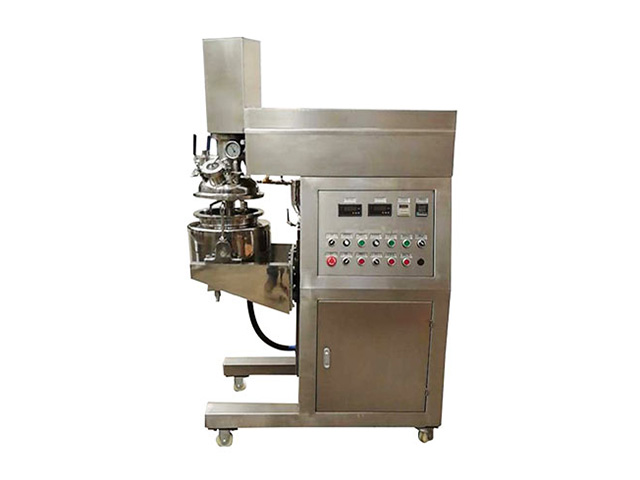
- Rotor-Stator Homogenizers: The core components are a high-speed rotating rotor and a fixed stator, with a narrow gap between the rotor and the stator. When the rotor rotates at high speed (usually 1000~15000 rpm), the material is sucked into the gap, and subjected to intense shear, impact, and turbulence, realizing homogenization and emulsification. Rotor-stator homogenizers can be divided into batch type and continuous type. They have the advantages of simple structure, easy operation, and strong adaptability to viscous materials. They are suitable for small and medium-sized production occasions, such as the emulsification of cosmetics, food additives, and laboratory-scale homogenization.
- Colloid Mills: The core components are a fixed grinding disc and a rotating grinding disc, with a small adjustable gap between the two discs. When the material passes through the gap between the grinding discs, it is subjected to intense shear, extrusion, and grinding, breaking down large particles into fine particles. Colloid mills have the advantages of strong grinding capacity, good homogenization effect for high-viscosity materials, and adjustable particle size. They are suitable for the homogenization and grinding of high-viscosity materials, such as food pastes, cosmetics, and chemical slurries.
- Ultrasonic Homogenizers: They use high-frequency ultrasonic waves (usually 20~100 kHz) to generate cavitation, shear, and turbulence in the material, realizing homogenization and emulsification. Ultrasonic homogenizers can be divided into probe-type and bath-type. Probe-type ultrasonic homogenizers have high energy density and are suitable for small-scale batch homogenization; bath-type ultrasonic homogenizers have uniform ultrasonic distribution and are suitable for large-scale continuous homogenization. They have the advantages of small volume, low noise, and good homogenization effect for fine particles. They are widely used in biotechnology, pharmaceutical, and laboratory fields, such as the homogenization of cell suspensions and protein solutions.
3.2 Classification by Working Principles
According to the working principles, homogenizing emulsifiers can be divided into mechanical homogenizers and non-mechanical homogenizers.
- Mechanical Homogenizers: Homogenization is achieved through mechanical forces (shear, impact, extrusion, grinding), including valve-type homogenizers, rotor-stator homogenizers, and colloid mills. Mechanical homogenizers have the advantages of mature technology, stable performance, and large processing capacity, and are the main type of homogenizing emulsifiers in industrial production.
- Non-Mechanical Homogenizers: Homogenization is achieved through non-mechanical methods, such as ultrasonic, high-pressure jet, and electromagnetic. Ultrasonic homogenizers are the most widely used non-mechanical homogenizers. They have the advantages of high efficiency, low energy consumption, and no pollution, and are suitable for occasions with high requirements for product purity and fineness.
3.3 Classification by Homogenization Pressure
According to the homogenization pressure, homogenizing emulsifiers can be divided into low-pressure homogenizers, medium-pressure homogenizers, and high-pressure homogenizers.
- Low-Pressure Homogenizers: Homogenization pressure is 0~20 MPa, which is suitable for materials that do not require high homogenization fineness, such as the mixing of low-viscosity liquids and the preliminary homogenization of large particles. Common types include low-pressure rotor-stator homogenizers and colloid mills.
- Medium-Pressure Homogenizers: Homogenization pressure is 20~60 MPa, which has a good homogenization effect and is suitable for most industrial production occasions, such as the emulsification of cosmetics, food, and chemical materials.
- High-Pressure Homogenizers: Homogenization pressure is above 60 MPa, which can achieve ultra-fine homogenization (particle size below 1 μm) and is suitable for occasions with high requirements for product fineness and stability, such as pharmaceuticals, biotechnology, and high-end cosmetics.
3.4 Classification by Application Scenarios
According to the application scenarios, homogenizing emulsifiers can be divided into food-grade homogenizers, pharmaceutical-grade homogenizers, cosmetic-grade homogenizers, and chemical-grade homogenizers.
- Food-Grade Homogenizers: They are made of food-grade materials (such as stainless steel 316L), which are non-toxic, tasteless, easy to clean, and meet food safety standards. They are used for the homogenization and emulsification of food materials, such as milk, yogurt, juice, and food additives. Common types include valve-type homogenizers and rotor-stator homogenizers.
- Pharmaceutical-Grade Homogenizers: They have high requirements for cleanliness, sterility, and precision, and are made of corrosion-resistant and high-purity materials. They are used for the homogenization of pharmaceutical materials, such as drug suspensions, emulsions, and cell cultures. High-pressure valve-type homogenizers and ultrasonic homogenizers are widely used.
- Cosmetic-Grade Homogenizers: They are suitable for the emulsification of cosmetic materials (such as creams, lotions, and essences), requiring stable emulsification effect and fine product texture. Rotor-stator homogenizers and colloid mills are commonly used, and some high-end cosmetics also use high-pressure homogenizers to improve product quality.
- Chemical-Grade Homogenizers: They have strong corrosion resistance and load capacity, and are suitable for the homogenization of chemical materials (such as coatings, inks, and adhesives). They can adapt to harsh working environments (high temperature, high pressure, corrosion). Valve-type homogenizers and colloid mills are widely used.
4. Industrial Selection Guide for Homogenizing Emulsifiers
The rational selection of homogenizing emulsifiers is crucial for ensuring product quality, improving production efficiency, and reducing production costs. The selection process needs to comprehensively consider factors such as material properties, product requirements, production scale, cost-effectiveness, and compliance with standards. This section details the key selection criteria and practical selection methods, combined with typical application cases.
4.1 Key Selection Criteria
- Material Properties: The properties of the material are the core factor determining the selection of homogenizing emulsifiers, including material phase (solid-liquid, liquid-liquid, gas-liquid), viscosity, particle size, and corrosion resistance. For example, high-viscosity materials (such as pastes, slurries) are suitable for colloid mills or high-power rotor-stator homogenizers; corrosive materials require homogenizers made of corrosion-resistant materials (such as Hastelloy, titanium alloy); solid-liquid two-phase materials with large particles are suitable for valve-type homogenizers with high impact force.
- Product Requirements: The requirements for the final product, such as particle size distribution, stability, and purity, directly affect the selection of homogenizing emulsifiers. For example, products requiring ultra-fine particle size (below 1 μm) need high-pressure valve-type homogenizers or ultrasonic homogenizers; products requiring long-term stability (such as emulsions) need homogenizers with good emulsification effect (such as double-valve homogenizers, rotor-stator homogenizers); products with high purity requirements (such as pharmaceuticals) need homogenizers with good sterility and cleanability.
- Production Scale: The production scale determines the type and specification of the homogenizing emulsifier. For small-scale production (laboratory, pilot test), batch-type rotor-stator homogenizers or ultrasonic homogenizers are suitable; for medium-scale production, continuous-type rotor-stator homogenizers or medium-pressure valve-type homogenizers are suitable; for large-scale industrial production, high-pressure valve-type homogenizers with large processing capacity are suitable.
- Cost-Effectiveness: The selection of homogenizing emulsifiers needs to balance performance and cost, including equipment purchase cost, operation cost (energy consumption, maintenance), and service life. For example, high-pressure homogenizers have good performance but high purchase and operation costs, which are suitable for occasions with high product requirements; rotor-stator homogenizers have low cost and easy maintenance, which are suitable for occasions with general product requirements.
- Standard Compliance: The selected homogenizing emulsifier must comply with relevant international and national standards, such as food safety standards (FDA 21 CFR, GB 19883) for food-grade homogenizers, and GMP standards for pharmaceutical-grade homogenizers. This ensures the safety and quality of the product.
4.2 Practical Selection Methods
The practical selection of homogenizing emulsifiers can be divided into the following four steps, ensuring the rationality and scientificity of the selection:
1. Clarify Requirements: First, clarify the material properties (phase, viscosity, particle size), product requirements (particle size, stability, purity), and production scale (batch, continuous, processing capacity). This is the basis for the selection of homogenizing emulsifiers.
2. Preliminary Screening: According to the clarified requirements, screen out the types of homogenizing emulsifiers that meet the basic conditions. For example, for large-scale production of milk homogenization, high-pressure valve-type homogenizers are preferred; for laboratory-scale cell homogenization, ultrasonic homogenizers are preferred.
3. Performance Evaluation: For the preliminarily screened homogenizing emulsifiers, evaluate their performance through experiments (pilot test). Test indicators include homogenization efficiency, particle size distribution, product stability, energy consumption, and operation stability. Select the emulsifier with the best performance and cost-effectiveness.
4. Standard Verification: Verify whether the selected homogenizing emulsifier complies with relevant standards and industry specifications, and ensure that it meets the safety and quality requirements of the product. At the same time, consider the after-sales service and maintenance support of the equipment manufacturer.
4.3 Typical Selection Cases
- Case 1: Food Industry (Milk Homogenization): A large dairy enterprise needs to homogenize raw milk with a processing capacity of 50 t/h, requiring the fat globule size to be below 2 μm to avoid stratification. According to the requirements, a high-pressure double-valve homogenizer with a homogenization pressure of 150 MPa is selected. The homogenizer has a large processing capacity, fine particle size, and stable performance, which can meet the production needs. After application, the milk stability is significantly improved, and the shelf life is extended by 30%.
- Case 2: Cosmetics Industry (Cream Emulsification): A cosmetic enterprise produces facial cream, requiring the oil-water emulsification to be stable, and the particle size to be uniform (1~5 μm). The material is a high-viscosity oil-water mixture. A continuous-type rotor-stator homogenizer with a rotating speed of 8000 rpm is selected. The homogenizer has strong adaptability to high-viscosity materials, simple operation, and low energy consumption. The produced cream has a fine texture and good stability, which meets the product requirements.
- Case 3: Pharmaceutical Industry (Drug Suspension Homogenization): A pharmaceutical enterprise produces a drug suspension, requiring the particle size of the drug to be below 1 μm, and the suspension to be stable for a long time. A high-pressure valve-type homogenizer with a homogenization pressure of 200 MPa is selected, which is made of stainless steel 316L and meets GMP standards. The homogenizer can achieve ultra-fine homogenization, ensuring the uniformity and stability of the drug suspension, and improving the drug efficacy.
- Case 4: Laboratory (Cell Homogenization): A biotechnology laboratory needs to homogenize cell suspensions for protein extraction, requiring gentle homogenization to avoid protein denaturation, and the particle size to be uniform. A probe-type ultrasonic homogenizer with a frequency of 40 kHz is selected. The homogenizer has small volume, low noise, and gentle homogenization effect, which can effectively break down cells without damaging proteins, meeting the experimental requirements.
5. Key Technical Indicators and Standard Compliance
The performance of homogenizing emulsifiers is evaluated by a series of technical indicators, which are the basis for the selection, design, and operation of homogenizing emulsifiers. At the same time, the design, production, and application of homogenizing emulsifiers must comply with relevant international and national standards to ensure the quality and safety of the equipment and products.
5.1 Key Technical Indicators
- Homogenization Pressure: It is the core indicator of homogenizing emulsifiers, which directly affects the homogenization effect and particle size. The homogenization pressure ranges from 0~300 MPa, and different pressure levels correspond to different homogenization effects. High pressure can achieve finer particle size, but it also increases energy consumption and equipment wear.
- Processing Capacity: It refers to the volume or mass of materials processed by the homogenizing emulsifier per unit time, which is related to the size of the equipment, homogenization pressure, and material viscosity. The processing capacity ranges from a few milliliters per minute (laboratory) to hundreds of tons per hour (industrial production).
- Particle Size Distribution: It refers to the distribution of particle sizes after homogenization, which is an important indicator reflecting the homogenization effect. The more uniform the particle size distribution, the better the product stability. The particle size after homogenization is usually 0.1~10 μm, and ultra-fine homogenization can reach below 0.1 μm.
- Energy Consumption: It refers to the energy consumed by the homogenizing emulsifier per unit of processed material, which is related to homogenization pressure, processing capacity, and material viscosity. Low energy consumption can reduce production costs, which is an important indicator of energy-saving performance.
- Service Life: It refers to the effective working time of the homogenizing emulsifier, which is related to the material of the core components (valve core, rotor, stator), the quality of the equipment, and the maintenance level. The service life of general industrial homogenizing emulsifiers is 5~10 years, and high-quality equipment can reach more than 10 years.
5.2 Compliance with Relevant Standards and Codes
The design, production, and application of homogenizing emulsifiers must comply with relevant international standards, national codes, and industry specifications to ensure the performance and safety of the equipment and products. The main relevant standards and codes are as follows:
- International Standards: ISO 13320 (Particle Size Analysis - Laser Diffraction Methods), ISO 22000 (Food Safety Management Systems), FDA 21 CFR (Code of Federal Regulations), USP (United States Pharmacopeia), EU GMP (Good Manufacturing Practice).
- National Codes: GB/T 30944-2014 (High-Pressure Homogenizers), GB 19883-2005 (Hygienic Requirements for Food Machinery and Equipment), GB/T 21096-2007 (Rotor-Stator Homogenizers), GB/T 14254-2008 (Metallic Materials for Food Machinery), GMP (Good Manufacturing Practice for Pharmaceuticals).
- Industry Specifications: QB/T 4494-2013 (Cosmetic Machinery - Emulsifiers), HG/T 20639-1997 (Technical Specification for Chemical Homogenizing Equipment), NY/T 1644-2008 (Dairy Processing Machinery - Homogenizers).
In the actual production and application, it is necessary to strictly implement the requirements of the above standards and codes, select homogenizing emulsifiers that meet the standards, and conduct regular inspection and maintenance to ensure the stable operation of the equipment and the safety and quality of the products.
6. Development Trend of Homogenizing Emulsifiers
With the continuous development of industrial technology, especially the integration of intelligent technology, green technology, and precision manufacturing technology, homogenizing emulsifiers are developing in the direction of intelligence, precision, energy conservation, and customization. The main development trends are as follows:
- Intelligent Development: The integration of intelligent technologies such as Internet of Things, big data, and artificial intelligence into homogenizing emulsifiers can realize real-time monitoring of equipment operation parameters (homogenization pressure, flow rate, temperature, etc.), fault early warning, and intelligent adjustment. For example, through sensors installed on the equipment, the operation status is collected in real time, and the data is analyzed through the cloud platform to realize the intelligent adjustment of homogenization parameters and the early warning of equipment faults, reducing the labor intensity of operators and improving the reliability of equipment operation.
- Precision Development: With the increasing demand for product fineness and uniformity, homogenizing emulsifiers are developing in the direction of precision. The precision of core components (homogenizing valve, rotor-stator) is continuously improved, and the homogenization pressure and flow rate can be adjusted steplessly, realizing precise control of particle size distribution. For example, ultra-high-pressure homogenizers with a pressure of more than 300 MPa can achieve particle size below 0.1 μm, meeting the needs of high-end products.
- Energy-Saving and Environmental Protection Development: By optimizing the structure of the equipment, improving the efficiency of the homogenizing component, and adopting energy-saving motors and hydraulic systems, the energy consumption of homogenizing emulsifiers is reduced. At the same time, the sealing performance of the equipment is improved, and the emission of waste gas and waste liquid is reduced, meeting the environmental protection requirements. For example, the new type of energy-saving homogenizing valve can reduce energy consumption by 15%~25% under the same homogenization effect.
- Customization and Integration Development: With the increasingly diverse needs of industrial production, homogenizing emulsifiers will develop in the direction of customization. According to the specific characteristics of materials and production requirements, customized homogenizing emulsifiers are designed to improve the adaptability and homogenization effect of the equipment. At the same time, the integration of homogenizing emulsifiers with other equipment (such as mixers, filters, and filling machines) forms a complete production line, improving production efficiency and reducing production costs.
- Application Expansion Development: With the development of new industries such as biotechnology, new energy, and advanced materials, the application scope of homogenizing emulsifiers is continuously expanded. For example, in the field of new energy, homogenizing emulsifiers are used for the homogenization of battery materials to improve the performance of batteries; in the field of advanced materials, they are used for the dispersion of nano-materials to enhance the functional properties of materials.
7. Conclusion
Homogenizing emulsifiers, as core equipment for multi-phase material homogenization and emulsification, play an irreplaceable role in food processing, cosmetics, pharmaceuticals, chemical engineering, and biotechnology industries. This paper conducts a comprehensive analysis of homogenizing emulsifiers from three aspects: core working mechanisms, classification, and industrial selection guidelines. It is pointed out that the core working mechanisms of homogenizing emulsifiers are shear, impact, cavitation, and turbulence, which work together to realize the uniform dispersion and emulsification of materials. According to different classification methods, homogenizing emulsifiers can be divided into various types, each of which has its own unique structural characteristics and applicable ranges.
The rational selection of homogenizing emulsifiers needs to comprehensively consider material properties, product requirements, production scale, cost-effectiveness, and standard compliance. The practical selection method of ""clarify requirements - preliminary screening - performance evaluation - standard verification"" can ensure the scientificity and rationality of the selection. The performance of homogenizing emulsifiers is evaluated by key technical indicators such as homogenization pressure, processing capacity, and particle size distribution, and must comply with relevant international and national standards.
With the continuous development of industrial technology, homogenizing emulsifiers are developing in the direction of intelligence, precision, energy conservation, and customization. It is hoped that this paper can provide systematic technical guidance for the rational selection, operation, and maintenance of homogenizing emulsifiers in industrial production, promote the technological progress of homogenizing emulsifiers, and further improve the quality and efficiency of production in related industries. In the future, with the continuous innovation of technology, homogenizing emulsifiers will play a more important role in the high-quality development of various industries.



 +86 18051935350