1. Introduction
In modern industrial production and resource utilization, the crushing of solid materials is a basic and indispensable process. Whether it is the mining of mineral resources, the processing of construction waste, the production of chemical raw materials, or the processing of food and medicine, crushers play an irreplaceable role. The core function of crushers is to break large-sized solid materials into small particles or powders through mechanical force, which not only facilitates subsequent processes such as grinding, mixing, transportation, and storage but also improves the utilization rate of materials and reduces transportation costs.
With the continuous development of industrial technology, the requirements for crushing efficiency, product particle size, energy consumption, and environmental protection are increasingly strict. Traditional crushers have been unable to meet the diversified needs of modern production due to their limitations in efficiency, precision, and adaptability. In response to different material characteristics (such as hardness, brittleness, humidity) and processing requirements (such as particle size, output), a variety of crushers with different structures and working principles have been developed, such as jaw crushers, impact crushers, cone crushers, and hammer crushers.
However, for related practitioners, there are still many problems in the use of crushers: unclear understanding of the working principle leads to improper operation; blind selection of crusher types leads to low processing efficiency and poor product quality; neglect of safe operation guidelines leads to safety accidents and equipment damage. Therefore, it is necessary to comprehensively analyze the working principle, type characteristics, and safe operation of crushers. This paper focuses on solving these problems, providing a comprehensive and professional technical guide for the selection, use, and maintenance of crushers.
2. Working Principle of Crushers
The core working principle of
crushers is to apply mechanical force to solid materials, overcoming the internal cohesion of the materials, so that the materials are broken into small particles or powders. The mechanical forces used by crushers mainly include impact force, pressure force, shear force, and friction force. Different types of crushers use different combinations of mechanical forces, and their structural compositions and crushing mechanisms also vary. The following is a detailed elaboration of the general structural composition and core crushing mechanism of crushers.
2.1 General Structural Composition
Although the types of crushers are diverse, their basic structural composition is relatively consistent, mainly including the following core components:
2.1.1 Feeding Device
The feeding device is used to transport the raw materials to be crushed into the crushing chamber stably and uniformly. Common feeding devices include vibrating feeders, belt feeders, and hoppers. The feeding device should have adjustable feeding speed to match the crushing efficiency of the crusher, avoiding material blockage or insufficient feeding. At the same time, the feeding device is usually equipped with a screening structure to remove large impurities in the raw materials, preventing damage to the crusher.
2.1.2 Crushing Chamber
The crushing chamber is the core part where the material is crushed, and it is the space where the mechanical force acts on the material. The shape, size, and internal structure of the crushing chamber vary according to the type of crusher. For example, the crushing chamber of a jaw crusher is a V-shaped space formed by a fixed jaw and a movable jaw; the crushing chamber of an impact crusher is a cavity surrounded by a rotor and a counterattack plate. The inner wall of the crushing chamber is usually lined with wear-resistant materials (such as manganese steel) to extend the service life of the equipment.
2.1.3 Power System
The power system provides the power required for the crushing operation, usually composed of a motor, reducer, and transmission mechanism. The motor converts electrical energy into mechanical energy, and the reducer adjusts the speed of the motor to meet the working speed requirements of the crusher. The transmission mechanism (such as a belt drive, gear drive) transmits the mechanical energy to the moving parts of the crusher (such as the movable jaw, rotor) to drive their movement and complete the crushing action.
2.1.4 Discharge Device
The discharge device is used to transport the crushed materials out of the crushing chamber. Common discharge devices include belt conveyors, screw conveyors, and discharge chutes. The discharge device should have a smooth discharge capacity to avoid material accumulation in the crushing chamber, which affects the crushing efficiency. Some crushers are equipped with a grading device at the discharge port to screen the crushed materials according to the particle size, ensuring that the product meets the required specifications.
2.1.5 Safety Protection Device
The safety protection device is an important component to ensure the safe operation of the crusher, including protective covers, emergency stop buttons, overload protection devices, and temperature monitoring devices. The protective cover is used to prevent materials from splashing and operators from touching the moving parts; the emergency stop button can stop the equipment immediately in case of emergency; the overload protection device can automatically cut off the power supply when the equipment is overloaded, avoiding equipment damage; the temperature monitoring device monitors the temperature of the motor and transmission parts in real time to prevent overheating.
2.2 Core Crushing Mechanisms
Different types of crushers adopt different crushing mechanisms, which are determined by the type of mechanical force used. The main crushing mechanisms are as follows:
2.2.1 Pressure Crushing Mechanism
The pressure crushing mechanism uses static pressure or dynamic pressure to act on the material, causing the material to be crushed due to exceeding its compressive strength. This mechanism is mainly used for crushing hard and brittle materials (such as ores, rocks). The jaw crusher, cone crusher, and roller crusher adopt this crushing mechanism. For example, the jaw crusher clamps the material between the fixed jaw and the movable jaw, and the movable jaw moves towards the fixed jaw under the action of power, applying pressure to the material to crush it.
2.2.2 Impact Crushing Mechanism
The impact crushing mechanism uses the impact force generated by the high-speed movement of the hammer, rotor, or impact plate to hit the material, causing the material to be crushed due to brittle fracture. This mechanism is suitable for crushing medium-hard and brittle materials (such as limestone, coal, and concrete). The impact crusher and hammer crusher adopt this crushing mechanism. For example, the impact crusher drives the rotor to rotate at high speed through the motor, and the hammer head on the rotor hits the material entering the crushing chamber, breaking the material into small particles.
2.2.3 Shear Crushing Mechanism
The shear crushing mechanism uses shear force to cut the material into small pieces, which is suitable for crushing materials with certain toughness (such as plastic, rubber, and wood). The shear crusher and double-roll crusher adopt this crushing mechanism. For example, the shear crusher uses two rotating blades to cut the material into small pieces through relative movement.
2.2.4 Friction Crushing Mechanism
The friction crushing mechanism uses the friction force between the material and the crushing chamber wall, or between the materials, to grind the material into powder. This mechanism is mainly used for fine crushing and ultra-fine crushing of materials (such as talc, limestone, and pharmaceutical raw materials). The ball mill and Raymond mill adopt this crushing mechanism. For example, the ball mill drives the steel balls to rotate at high speed through the cylinder, and the steel balls hit and grind the material, making the material into powder.
3. Classification of Crushers and Type Selection Guide
According to the structural characteristics, working principle, application field, and crushing degree, crushers can be divided into multiple types. Each type has unique performance characteristics, applicable materials, and application scenarios. The scientific selection of crusher types is the key to ensuring processing efficiency and product quality. The following is a detailed classification of crushers and a guide for type selection.
3.1 Classification of Crushers
The most common classification method of crushers is based on the crushing degree and working principle, which can be divided into primary crushers, secondary crushers, and fine crushers. At the same time, according to the structural form, they can be divided into jaw crushers, impact crushers, cone crushers, hammer crushers, roller crushers, and shear crushers.
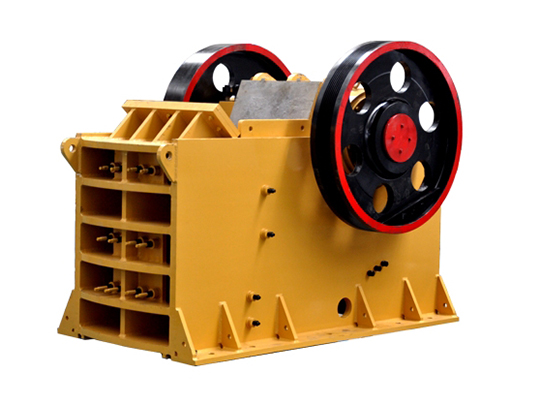
3.1.1 Jaw Crushers
Structural Characteristics: The jaw crusher is composed of a frame, fixed jaw, movable jaw, eccentric shaft, and toggle plate. The crushing chamber is a V-shaped space formed by the fixed jaw and the movable jaw. The movable jaw moves back and forth under the drive of the eccentric shaft, clamping and crushing the material.
Working Principle: Adopt the pressure crushing mechanism. The motor drives the eccentric shaft to rotate, and the eccentric shaft drives the movable jaw to swing. When the movable jaw moves towards the fixed jaw, the material is clamped and crushed by pressure; when the movable jaw moves away from the fixed jaw, the crushed material falls into the discharge port under the action of gravity.
Applicable Materials: Hard and brittle materials, such as ores (iron ore, copper ore, limestone), rocks, and concrete blocks.
Application Scenarios: Primary crushing in mining, construction, and metallurgical industries. It is suitable for crushing large-sized raw materials (with a maximum feed size of 1000-1500mm) into medium-sized particles (discharge particle size of 100-300mm).
Advantages and Disadvantages: Advantages: Simple structure, strong reliability, easy operation and maintenance, high crushing efficiency for hard materials. Disadvantages: Large product particle size, uneven particle size distribution, high energy consumption.
3.1.2 Impact Crushers
Structural Characteristics: The impact crusher is composed of a frame, rotor, hammer head, counterattack plate, and impact frame. The rotor is equipped with multiple hammer heads, and the counterattack plate is installed around the rotor to form a crushing chamber.
Working Principle: Adopt the impact crushing mechanism. The motor drives the rotor to rotate at high speed (rotational speed of 1000-2000r/min), and the hammer head on the rotor hits the material entering the crushing chamber, breaking the material into small particles. The crushed material hits the counterattack plate again for secondary crushing, and the final product is discharged from the discharge port.
Applicable Materials: Medium-hard and brittle materials, such as limestone, coal, gypsum, and concrete waste.
Application Scenarios: Secondary crushing and fine crushing in construction, mining, and chemical industries. It is suitable for crushing medium-sized materials (feed size of 300-500mm) into small particles (discharge particle size of 10-50mm).
Advantages and Disadvantages: Advantages: High crushing efficiency, uniform product particle size, good particle shape, strong adaptability. Disadvantages: The hammer head is easy to wear, not suitable for crushing hard materials, high maintenance cost.
3.1.3 Cone Crushers
Structural Characteristics: The cone crusher is composed of a frame, fixed cone, movable cone, eccentric sleeve, and transmission mechanism. The fixed cone is fixed on the frame, and the movable cone is installed in the eccentric sleeve, forming a crushing chamber between the fixed cone and the movable cone.
Working Principle: Adopt the pressure crushing mechanism. The motor drives the eccentric sleeve to rotate through the transmission mechanism, and the eccentric sleeve drives the movable cone to swing around the central axis. The material is clamped between the fixed cone and the movable cone, and is crushed by the pressure generated by the swing of the movable cone.
Applicable Materials: Hard and medium-hard materials, such as ores (iron ore, copper ore, granite), rocks, and quartz.
Application Scenarios: Secondary crushing and fine crushing in mining, metallurgy, and building materials industries. It is suitable for crushing medium-sized materials (feed size of 100-300mm) into fine particles (discharge particle size of 5-30mm).
Advantages and Disadvantages: Advantages: High crushing precision, uniform product particle size, stable operation, low noise, long service life. Disadvantages: Complex structure, high manufacturing cost, difficult maintenance, high energy consumption.
3.1.4 Hammer Crushers
Structural Characteristics: The hammer crusher is composed of a frame, rotor, hammer head, screen plate, and feed hopper. The rotor is equipped with multiple hammer heads, and the screen plate is installed at the discharge port to control the product particle size.
Working Principle: Adopt the impact and friction crushing mechanism. The motor drives the rotor to rotate at high speed, and the hammer head on the rotor hits the material, breaking the material into small particles. The crushed material is screened by the screen plate, and the particles that meet the size requirements are discharged, while the large particles are crushed again by the hammer head.
Applicable Materials: Medium-hard and brittle materials, such as coal, limestone, gypsum, and agricultural waste (straw, wood chips).
Application Scenarios: Crushing in coal, building materials, agricultural, and chemical industries. It is suitable for primary and secondary crushing of materials with small feed size (feed size of 100-200mm) and discharge particle size of 5-20mm.
Advantages and Disadvantages: Advantages: Simple structure, small volume, low cost, high crushing efficiency. Disadvantages: The hammer head and screen plate are easy to wear, not suitable for crushing hard materials, uneven product particle size.
3.1.5 Roller Crushers
Structural Characteristics: The roller crusher is composed of a frame, two or more rollers, a transmission mechanism, and a pressure device. The rollers are installed in parallel, and the distance between the rollers can be adjusted to control the product particle size.
Working Principle: Adopt the pressure and shear crushing mechanism. The motor drives the two rollers to rotate in opposite directions through the transmission mechanism, and the material is fed between the two rollers. The material is crushed by the pressure and shear force generated by the rotation of the rollers, and the crushed material is discharged from the gap between the rollers.
Applicable Materials: Medium-hard and soft materials, such as coal, coke, limestone, and plastic.
Application Scenarios: Fine crushing in coal, chemical, and building materials industries. It is suitable for crushing materials with small feed size (feed size of 50-100mm) into fine particles (discharge particle size of 1-10mm).
Advantages and Disadvantages: Advantages: Uniform product particle size, low noise, simple operation, low energy consumption. Disadvantages: Low crushing efficiency for hard materials, easy to block, roller surface easy to wear.
3.1.6 Shear Crushers
Structural Characteristics: The shear crusher is composed of a frame, two rotating blades, a feed hopper, and a transmission mechanism. The two blades rotate in opposite directions, and the gap between the blades can be adjusted.
Working Principle: Adopt the shear crushing mechanism. The motor drives the two blades to rotate in opposite directions, and the material is fed between the two blades. The material is cut into small pieces by the shear force generated by the rotation of the blades.
Applicable Materials: Materials with toughness, such as plastic, rubber, wood, and metal scraps.
Application Scenarios: Crushing of waste materials in environmental protection, plastic processing, and wood processing industries. It is suitable for crushing materials with irregular shapes and certain toughness.
Advantages and Disadvantages: Advantages: Good crushing effect for tough materials, low energy consumption, no dust pollution. Disadvantages: Low crushing efficiency, not suitable for hard materials, blade easy to wear.
3.2 Type Selection Guide
The selection of crusher types should be based on the following factors: material characteristics (hardness, brittleness, humidity, feed size), processing requirements (discharge particle size, output, product quality), application field, and economic cost. The specific selection steps and principles are as follows:
3.2.1 Determine the Crushing Degree
According to the requirements of the subsequent process, determine the crushing degree (primary crushing, secondary crushing, fine crushing). For example, if the raw material is large-sized ore (feed size > 1000mm) and needs to be crushed into medium-sized particles (discharge size 100-300mm), a primary crusher (jaw crusher) should be selected; if further fine crushing is needed (discharge size 5-30mm), a secondary crusher (cone crusher, impact crusher) should be selected.
3.2.2 Consider Material Characteristics
For hard and brittle materials (such as granite, iron ore), jaw crushers or cone crushers with pressure crushing mechanism should be selected; for medium-hard and brittle materials (such as limestone, coal), impact crushers or hammer crushers with impact crushing mechanism should be selected; for tough materials (such as plastic, wood), shear crushers should be selected; for materials with high humidity (water content > 15%), roller crushers or impact crushers with anti-blocking design should be selected to avoid material blockage.
3.2.3 Meet Processing Requirements
If the requirement for product particle size uniformity is high (such as building aggregates), impact crushers or cone crushers should be selected; if the output requirement is high (such as large-scale mining), jaw crushers (primary) + cone crushers (secondary) combined crushing equipment should be selected; if fine powder is needed (such as pharmaceutical raw materials), fine crushers (ball mill, Raymond mill) should be selected.
3.2.4 Consider Economic Cost
For small-scale production and low budget, simple-structured crushers (jaw crushers, hammer crushers) should be selected; for large-scale production and high requirements for product quality, high-efficiency and high-precision crushers (cone crushers, impact crushers) should be selected. At the same time, the maintenance cost, energy consumption, and service life of the equipment should be considered to ensure the economic benefits of production.
3.2.5 Comply with Environmental Requirements
In areas with strict environmental requirements (such as urban construction), crushers with low noise, low dust, and environmental protection functions should be selected. For example, impact crushers with dust removal devices, shear crushers with closed structure, etc., to reduce environmental pollution.
4. Safe Operation Guidelines for Crushers
The operation of crushers involves high-speed rotating parts, large mechanical force, and material splashing, which has certain safety risks. To ensure the personal safety of operators and the normal operation of equipment, operators must strictly abide by the safe operation guidelines, including pre-operation inspection, in-operation norms, post-operation maintenance, and common safety hazards and prevention measures.
4.1 Pre-Operation Inspection
Before starting the crusher, a comprehensive inspection must be carried out to ensure that the equipment is in good condition. The specific inspection items are as follows:
1. Equipment Appearance Inspection: Check whether the frame, crushing chamber, and other components are intact, whether there are loose bolts, nuts, or other fasteners, and whether the protective cover is installed correctly and firmly.
2. Power System Inspection: Check whether the motor, reducer, and transmission mechanism are normal, whether the power supply is connected correctly, whether the voltage and current meet the requirements, and whether the lubricating oil in the reducer is sufficient and clean.
3. Crushing Chamber Inspection: Check whether there are foreign objects (such as metal blocks, stones) in the crushing chamber, whether the hammer head, jaw plate, and other wearing parts are worn or damaged, and whether the gap between the moving parts and the fixed parts is reasonable.
4. Feeding and Discharge Device Inspection: Check whether the feeding device (vibrating feeder, belt feeder) is normal, whether the discharge device (belt conveyor, discharge chute) is smooth, and whether there is material accumulation.
5. Safety Protection Device Inspection: Check whether the emergency stop button, overload protection device, temperature monitoring device, and other safety protection devices are sensitive and effective, and whether the warning signs are clear and complete.
After the inspection is completed and no abnormalities are found, the crusher can be started. If any abnormality is found, it must be handled in time before starting the equipment.
4.2 In-Operation Norms
During the operation of the crusher, operators must abide by the following norms to ensure safe and efficient operation:
1. Operation Post Requirements: Operators must wear protective equipment (such as safety glasses, gloves, work clothes, and safety shoes) to avoid material splashing and mechanical injury. No irrelevant personnel are allowed to stay around the equipment during operation.
2. Feeding Norms: The feeding must be uniform and stable, and it is not allowed to feed too much or too fast to avoid material blockage and equipment overload. It is strictly forbidden to feed hard foreign objects (such as metal blocks, stones) into the crushing chamber to prevent damage to the equipment.
3. Operation Monitoring: Operators must closely monitor the operation status of the equipment, including the sound, vibration, temperature, and output of the equipment. If any abnormal situation (such as abnormal noise, strong vibration, overheating, or material blockage) is found, the equipment must be stopped immediately, the power supply must be cut off, and the cause must be checked and handled.
4. Prohibited Operations: It is strictly forbidden to open the protective cover during the operation of the equipment; it is strictly forbidden to touch the rotating parts with hands or other objects; it is strictly forbidden to adjust the equipment parameters or repair the equipment during operation; it is strictly forbidden to overload the equipment.
5. Emergency Handling: In case of emergency (such as equipment failure, personal injury), the emergency stop button must be pressed immediately to stop the equipment, and relevant personnel must be notified to deal with it.
4.3 Post-Operation Maintenance
After the operation of the crusher is completed, the following maintenance work must be done to extend the service life of the equipment and ensure the normal operation of the next operation:
1. Shutdown Sequence: First stop the feeding device, wait for the material in the crushing chamber to be completely discharged, then stop the crusher, and finally cut off the power supply.
2. Cleaning Work: Clean the crushing chamber, feeding device, and discharge device to remove the residual material and impurities, avoiding material caking and corrosion of the equipment.
3. Wearing Parts Inspection and Replacement: Check the wear of the hammer head, jaw plate, counterattack plate, and other wearing parts. If the wear is serious, replace them in time. The replaced wearing parts should be cleaned and stored properly.
4. Lubrication Maintenance: Add lubricating oil to the motor, reducer, transmission mechanism, and other moving parts to reduce friction and wear. The type and amount of lubricating oil should be in accordance with the equipment manual, and the lubricating oil should be replaced regularly.
5. Equipment Inspection and Storage: Check the tightness of all components, and tighten them in time if there is any looseness. If the equipment is not used for a long time, it should be coated with anti-rust oil, covered with a protective cover, and stored in a dry and ventilated place.
4.4 Common Safety Hazards and Prevention Measures
In the process of using crushers, common safety hazards include material splashing, mechanical injury, equipment overload, and fire. The corresponding prevention measures are as follows:
4.4.1 Material Splashing
Hazards: Material splashing during the crushing process may hurt the operator's eyes, skin, and other parts.
Prevention Measures: Install a complete protective cover on the crushing chamber and discharge port; operators must wear safety glasses and other protective equipment; set up isolation barriers around the equipment to prevent irrelevant personnel from approaching.
4.4.2 Mechanical Injury
Hazards: The rotating parts (rotor, hammer head, rollers) of the crusher may cause mechanical injury to the operator if they are touched accidentally.
Prevention Measures: Ensure that the protective cover is installed correctly and firmly, and it is not allowed to remove the protective cover during operation; operators must abide by the operation norms and not touch the rotating parts; set up obvious warning signs around the equipment.
4.4.3 Equipment Overload
Hazards: Excessive feeding or hard foreign objects entering the crushing chamber may cause equipment overload, leading to damage to the motor, reducer, and other components, and even fire.
Prevention Measures: Feed uniformly and stably, and avoid excessive feeding; install an overload protection device to automatically cut off the power supply when the equipment is overloaded; check the raw materials before feeding to remove hard foreign objects.
4.4.4 Fire
Hazards: The motor and transmission parts overheat due to insufficient lubrication or overload, which may cause fire; the crushing of flammable materials (such as wood, plastic) may cause fire if there is a spark.
Prevention Measures: Do a good job in the lubrication maintenance of the equipment to avoid overheating; install a temperature monitoring device to monitor the temperature of the motor and transmission parts in real time; prohibit crushing flammable and explosive materials without protective measures; equip fire-fighting equipment around the equipment.
5. Common Problems and Solutions in the Use of Crushers
In the process of using crushers, due to factors such as improper operation, parameter setting, wearing parts wear, and equipment aging, some common problems may occur, which affect the processing efficiency and product quality. The following are common problems and corresponding solutions:
5.1 Problem 1: Material Blockage in the Crushing Chamber
Causes: Excessive feeding, uneven feeding, high material humidity, or hard foreign objects entering the crushing chamber.
Solutions: Stop the equipment immediately, cut off the power supply, and remove the blocked material and foreign objects; adjust the feeding speed to ensure uniform feeding; dry the material if the humidity is too high; install a screening device at the feeding port to remove hard foreign objects.
5.2 Problem 2: Uneven Product Particle Size
Causes: Worn wearing parts (hammer head, jaw plate), improper gap adjustment between moving parts and fixed parts, or uneven feeding.
Solutions: Replace the worn wearing parts; adjust the gap between the moving parts and fixed parts according to the required product particle size; ensure uniform feeding.
5.3 Problem 3: Abnormal Noise and Vibration
Causes: Loose bolts and nuts, worn bearings, unbalanced rotor, or uneven material feeding.
Solutions: Check and tighten the loose bolts and nuts; replace the worn bearings; balance the rotor or replace the damaged rotor; adjust the feeding speed to ensure uniform feeding.
5.4 Problem 4: Low Crushing Efficiency
Causes: Improper type selection, worn wearing parts, insufficient power, or material blockage.
Solutions: Re-select the appropriate crusher type according to the material characteristics and processing requirements; replace the worn wearing parts; check the power system to ensure sufficient power; clear the material blockage and adjust the feeding speed.
5.5 Problem 5: Wearing Parts Wear Too Fast
Causes: Crushing hard materials, uneven feeding, insufficient lubrication, or poor quality of wearing parts.
Solutions: Select wearing parts with high hardness and wear resistance; avoid crushing hard materials beyond the equipment's capacity; ensure uniform feeding; do a good job in lubrication maintenance to reduce friction.
6. Development Trends of Crusher Technology
With the continuous advancement of intelligent manufacturing, green manufacturing, and high-efficiency processing technology, crusher technology is developing in the direction of intelligence, high efficiency, energy saving, environmental protection, and customization. The main development trends are as follows:
- Intelligent Development: The integration of artificial intelligence (AI), Internet of Things (IoT), and big data technology into crushers will realize intelligent functions such as automatic parameter adjustment, fault early warning, predictive maintenance, and online monitoring. The equipment can automatically adjust the feeding speed, crushing gap, and other parameters according to the material characteristics and processing requirements, real-time monitor the operation status of the equipment, and avoid sudden faults. At the same time, the integration of robot technology will realize automatic feeding, automatic cleaning, and automatic maintenance, improving production efficiency and reducing labor intensity.
- High Efficiency and Energy Saving Development: By optimizing the structural design, improving the crushing mechanism, and adopting advanced power systems (such as variable frequency motors), the crushing efficiency of crushers will be further improved, and the energy consumption will be reduced. For example, the new type of impact crusher adopts a high-speed rotor and optimized hammer head design, which can improve the crushing efficiency by 20%-30% and reduce energy consumption by 15%-25% compared with traditional crushers. In addition, the development of energy recovery technology will realize the recycling of energy generated during the crushing process, further improving energy utilization efficiency.
- Environmental Protection Development: With the increasing emphasis on environmental protection, crushers will develop towards low noise, low dust, and no pollution. The adoption of closed crushing chambers, dust removal devices, and noise reduction measures will reduce dust and noise pollution. The development of water-free crushing technology will avoid water pollution caused by wet crushing. At the same time, the recycling of crushed materials (such as construction waste crushing into recycled aggregates) will realize the resource utilization of waste materials, conforming to the concept of green manufacturing.
- Ultra-Fine Crushing Technology Development: With the increasing demand for ultra-fine powder in chemical, pharmaceutical, and new material industries, ultra-fine crushers (such as ultrafine ball mills, jet mills) will develop rapidly. The ultra-fine crushing technology will realize the crushing of materials into powder with a particle size of less than 10μm, meeting the requirements of high-precision processing.
- Customization Development: With the diversification of application scenarios and processing requirements, crushers will develop towards customization. Manufacturers will design and produce crushers with specific functions and performance according to the special requirements of different industries and customers, such as large-scale crushers for mining, small-scale mobile crushers for construction sites, and special crushers for food and medicine, to meet the personalized processing needs.


 +86 18051935350
 Current
location:Home > Crushers: A Comprehensive Analysis of Working Principles, Type Selection and Safe Operation Guidelines
Current
location:Home > Crushers: A Comprehensive Analysis of Working Principles, Type Selection and Safe Operation Guidelines