Comprehensive Analysis of Food Mixers: Types, Principles, and Application Guide
Release time:2026-01-02 Visits:2338
Food mixers are indispensable key equipment in modern food processing, mainly used for efficiently and evenly mixing various food ingredients or materials to ensure the stability of product flavor and quality. According to their working principles and application scenarios, mixers can be divided into various types, the most common of which are paddle mixers and drum mixers.
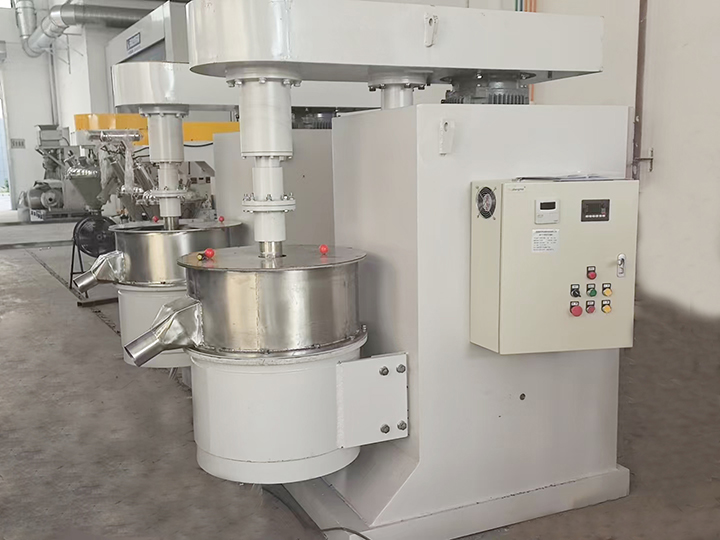
Paddle Mixers
These devices use a motor to drive mechanisms such as "S"-shaped paddles, spiral mixing paddles, or augers to rotate inside the container, generating shearing, convection, and diffusion effects on the materials to fully blend ingredients such as meat, vegetables, and seasonings. Their working process includes feeding, low-speed mixing (some models support forward and reverse rotation to avoid accumulation), uniform mixing, and discharging. Many models also offer vacuum mixing functionality, which compacts fillings by extracting air and prevents oxidative discoloration; some models integrate chopping or temperature control (refrigeration/heating) functions to adapt to different process requirements. Such equipment is widely used in the preparation of fillings for dumplings, buns, sausages, meatballs, etc., and is found in home kitchens, central kitchens of restaurant chains, and food processing plants.
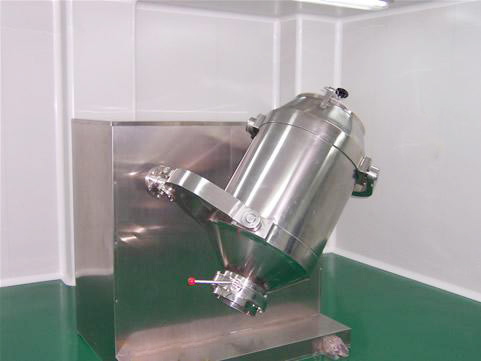
Drum Mixers
The core component is a rotatable drum, often equipped with blades or baffles on the inner wall. When the motor drives the drum to rotate at low speed, the materials are lifted to a certain height by the inner wall structure and then freely thrown down under gravity. Through convective mixing, particles rub and penetrate each other, ultimately achieving uniform mixing. After mixing is completed, the drum typically discharges by reversing rotation or tilting. This mixing method has low wear and low maintenance costs, making it particularly suitable for processing granular, block-shaped materials or those requiring surface coating with flour, sugar, or sesame seeds, such as puffed rice crackers, fried dough twists, red tangerine cakes, sesame balls, and other snack foods. However, its drawbacks include poor mixing for high-viscosity materials (e.g., colloids) and relatively long mixing cycles.
Other Types of Mixers
In addition to the above two main types, there are various mixers suitable for different scenarios:
- Ribbon Blenders: Suitable for high-viscosity, large-capacity mixing and stirring, such as plastics, rubber, and putty.
- Planetary Mixers: The mixing head revolves and rotates, achieving high mixing uniformity, suitable for high-viscosity materials such as dough and fillings.
- High-Speed Homogenizing Emulsifying Mixers: Achieve micron-level emulsification through high shear force, suitable for salad dressings, dairy products, etc.
Key Factors in Selecting a Mixer
Users need to choose the appropriate type based on output, material characteristics, and specific process requirements:
- Material Characteristics: High-viscosity materials are suitable for paddle or ribbon blenders; granular or block-shaped materials are suitable for drum mixers.
- Output Requirements: Small-scale production can choose household or commercial models, while large-scale production requires industrial-grade equipment.
- Functional Requirements: For vacuum mixing, chopping, or temperature control, multi-functional models should be selected.
Mixers significantly improve production efficiency, with mixing far superior to manual operations, making them one of the core equipment in modern food processing. By selecting the appropriate type, users can optimize production processes and ensure product quality.


 +86 18051935350
  Current
location:Home > Comprehensive Analysis of Food Mixers: Types, Principles, and Application Guide
Current
location:Home > Comprehensive Analysis of Food Mixers: Types, Principles, and Application Guide