Efficient and Uniform Industrial Mixing Solutions: A Comprehensive Analysis of Ribbon Blenders
Release time:2026-01-09 Visits:2464
The ribbon blender is an efficient industrial mixing equipment specifically designed for powders, granules, and slurries. With its unique structure and excellent performance, it is widely used in various industries such as chemical, pharmaceutical, food, metallurgy, and environmental protection. Its core advantage lies in achieving rapid and uniform mixing through three-dimensional convective motion, making it particularly suitable for materials with high viscosity, easy agglomeration, or requiring liquid addition.
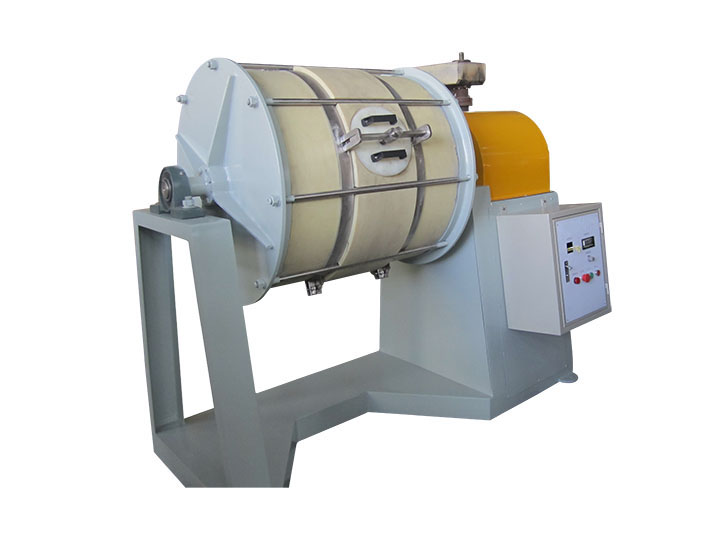
Structurally, the ribbon blender adopts a horizontal U-shaped cylinder design with double-layer or triple-layer helical ribbon blades inside. These blades are precision-engineered: the outer ribbon pushes materials from both ends of the cylinder toward the center, while the inner ribbon conveys materials from the center to both ends. This reverse motion mechanism forces materials to generate strong convection and shear in both axial and radial directions, effectively eliminating mixing dead zones and significantly improving mixing uniformity. The U-shaped container structure ensures low-resistance movement of materials within the cylinder, creating an efficient mixing environment.
In terms of performance, the ribbon blender features a high loading coefficient, small footprint, and stable operation. The main shaft speed is typically low (approximately 30 rpm), driven by a reducer connected directly to the motor or via chain transmission, ensuring reliability and low energy consumption. Discharging methods are flexible: powder materials can use a pneumatic large-door structure for rapid residue-free discharge; high-fineness or semi-fluid materials are suitable for manual or pneumatic butterfly valves to meet sealing requirements. Additionally, the equipment can be configured with a jacket for heating or cooling. Heating methods include electric heating or thermal oil heating, while cooling can be achieved by directly injecting cooling water into the jacket. The jacket has a large heat exchange area, enabling efficient temperature control.
Ribbon blenders come in various specifications and models, with effective volumes ranging from 0.1 cubic meters to 30 cubic meters. Each mixing batch can range from tens of kilograms to several tons, and the supporting power varies from 1.5 kW to 75 kW depending on the model, adapting to different production requirements. Its application range is extremely wide: in the chemical industry, it is used for mixing pigments and plastics; in the pharmaceutical industry, it ensures uniform mixing of medicinal powders; in food processing, it handles flour and condiments; in the metallurgical industry, it mixes metal powders to prepare alloys; in the environmental protection industry, it processes sludge and药剂 mixing to solve the problem of easy agglomeration of high-viscosity materials.
In conclusion, with its efficient mixing capacity, wide material adaptability, and stable and reliable operating performance, the ribbon blender has become an indispensable key equipment in modern industrial production. Its design balances mixing efficiency and equipment lifespan, with balanced force and low vibration, suitable for large-scale continuous production or small-batch fine operations, helping users improve production efficiency and product quality.


 +86 18051935350
 Current
location:Home > Efficient and Uniform Industrial Mixing Solutions: A Comprehensive Analysis of Ribbon Blenders
Current
location:Home > Efficient and Uniform Industrial Mixing Solutions: A Comprehensive Analysis of Ribbon Blenders