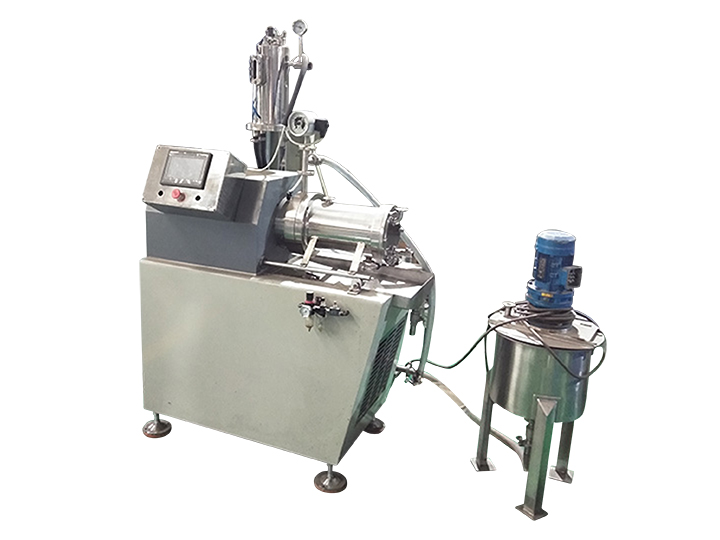
What Is an Industrial Mixer?
An industrial mixer is a vessel with one or more agitators that combine ingredients into a homogeneous mixture, dispersion, or solution. The agitator may be a simple paddle, a high-speed impeller, a planetary motion, or a ribbon. The vessel may be open-top, closed, jacketed for heating/cooling, or pressurized.
Mixers are used for:
Blending liquids of different viscosities.
Dispersing powders into liquids.
Dissolving solids into liquids.
Emulsifying oil and water.
Suspending solids in liquids.
Kneading doughs and pastes.
Coating particles with liquid.
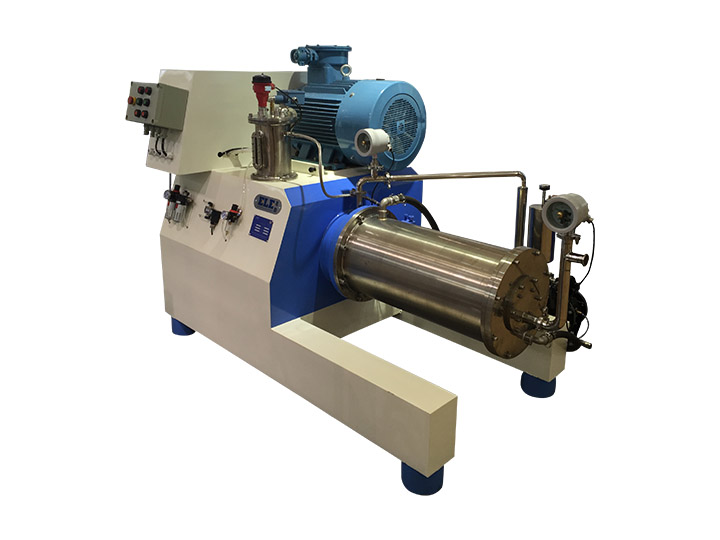
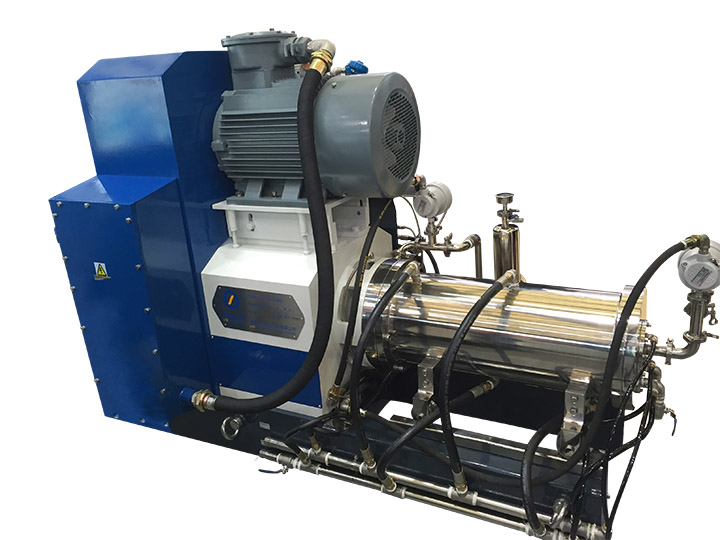
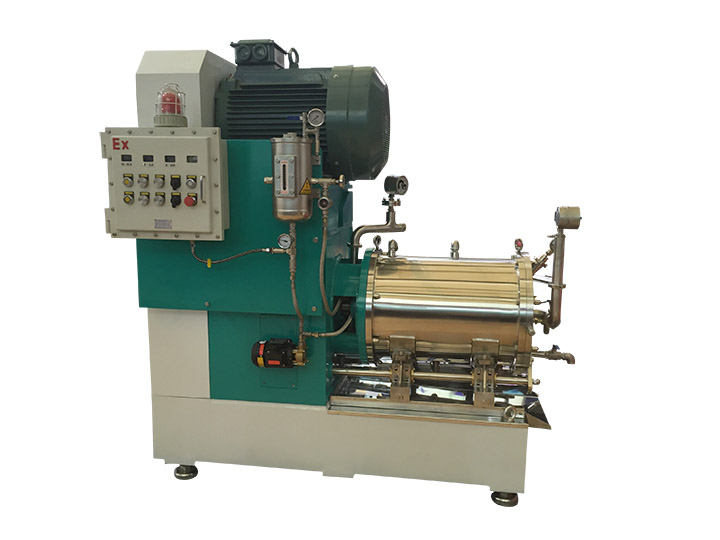
The Xinyang mixer product line covers container mixers, laboratory mixers, powder mixers, plastic mixers, food mixers, cone mixers, and custom-built mixers.
What Are the Main Configurations?
|
Configuration |
Operating Principle |
Best For |
|
High-shear mixer |
High-speed impeller (1000–10,000 RPM) |
Emulsification, powder dispersion, homogenization |
|
Planetary mixer |
Agitator orbits the vessel while rotating on its own axis |
High-viscosity pastes, doughs, coatings |
|
Conical mixer (Nauta) |
Screw agitator in a conical vessel |
Powders, granules, low-viscosity pastes |
|
Paddle mixer |
Slow-speed paddle (10–100 RPM) |
Low-viscosity liquids, gentle blending |
|
Ribbon mixer |
Helical ribbon agitator |
Powders, granules, pastes |
|
Drum mixer |
Tumbling drum |
Powders, granules, coating |
|
Static mixer |
No moving parts; flow through fixed elements |
Continuous mixing of low-viscosity liquids |
|
Inline mixer |
High-speed rotor-stator in a pipe |
Continuous emulsification, homogenization
|
The selection depends on the viscosity, the batch size, the mixing intensity, and the product requirements.
When Is a High-Shear Mixer the Right Choice?
A high-shear mixer is the right choice when:
High mixing intensity is required: emulsification, powder dispersion, or homogenization.
Batch sizes are small to medium: typical laboratory and pilot scale.
Viscosity is low to medium: < 50,000 cP typically.
Fast mixing is required: typical batch time of 5–60 minutes.
High-shear mixers use a high-speed impeller (typically 1000–10,000 RPM) that creates intense shear in the liquid. The shear breaks down agglomerates, disperses powders, and emulsifies oil and water.
Common applications:
Cosmetic creams and lotions.
Pharmaceutical suspensions and emulsions.
Coatings and paints.
Food sauces and dressings.
Chemical dispersions.
When Is a Planetary Mixer the Right Choice?
A planetary mixer is the right choice when:
High viscosity: 10,000–1,000,000 cP or higher.
Pastelike consistency: doughs, pastes, sealants, thick coatings.
Thorough mixing is required: no dead zones, no unmixed material.
Batch sizes are medium to large: 50 L to 5000 L.
Planetary mixers use an agitator that orbits the vessel while rotating on its own axis. The motion ensures that the agitator reaches every part of the vessel, including the walls and the bottom. This eliminates dead zones and ensures thorough mixing.
Common applications:
Battery electrode slurries.
Adhesives and sealants.
Cosmetic pastes (lipstick, foundation).
Chocolate and confectionery.
Pharmaceutical ointments.
When Is a Conical Mixer (Nauta) the Right Choice?
A conical mixer is the right choice when:
Powder or granular mixing: dry blending, granulation, coating.
Gentle mixing is required: no particle breakage.
Easy discharge is required: conical bottom allows complete discharge.
Batch sizes are large: 100 L to 50,000 L.
Conical mixers use a screw agitator that rotates around the inside of a conical vessel while slowly orbiting the vessel wall. The combination produces a gentle but thorough mixing of powders and granules.
Common applications:
Dry powder blending (food, chemicals, pharmaceuticals).
Granulation.
Powder coating.
Premix and intermediate blending.
When Is a Paddle or Ribbon Mixer the Right Choice?
A paddle or ribbon mixer is the right choice when:
Low-viscosity blending: liquids, slurries.
Gentle powder blending: no shear, no particle breakage.
Large batch sizes: 100 L to 50,000 L.
Simple and cost-effective: low capital cost.
Paddle mixers use a slow-speed paddle (10–100 RPM) that gently moves the material. Ribbon mixers use a helical ribbon that moves material in both directions, providing more thorough mixing than a simple paddle.
Common applications:
Wastewater treatment (sludge blending).
Food and beverage blending.
Concrete and cement mixing.
Animal feed blending.
When Is an Inline Mixer the Right Choice?
An inline mixer is the right choice when:
Continuous processing is required: high-volume production.
Emulsification or homogenization is required: high-shear rotor-stator.
No batch time is acceptable: continuous flow.
CIP (clean-in-place) is required: sanitary applications.
Inline mixers use a high-speed rotor-stator in a pipe. The product flows through the rotor-stator, which provides intense shear. Inline mixers are used for continuous emulsification, homogenization, and dispersion.
Common applications:
Dairy and beverage processing.
Pharmaceutical continuous manufacturing.
Chemical continuous processing.
Cosmetic continuous manufacturing.
How Is Mixer Capacity Calculated?
Mixer capacity is calculated from:
Vessel volume (L): the working volume of the vessel (typically 50–80% of total volume).
Batch time (min): the time to mix one batch.
Throughput (kg/h or L/h): the mass or volume of product per hour.
Capacity = Vessel volume × 60 / Batch time × Density
The actual capacity depends on the material, the viscosity, the mixing intensity, and the equipment.
What Are the Key Selection Criteria?
The selection criteria for an industrial mixer include:
|
Criterion |
Consideration |
|
Viscosity range |
Low, medium, high, paste |
|
Batch size |
Laboratory, pilot, production |
|
Mixing intensity |
Gentle, moderate, high |
|
Product requirements |
Homogeneity, particle size, dispersion |
|
Cleanability |
CIP, manual cleaning |
|
Material of construction |
Stainless steel, carbon steel, special alloys |
|
Heating/cooling |
Jacketed vessel, direct heating |
|
Capital budget |
One-time cost |
|
Operating cost |
Energy, maintenance, cleaning |
For a given application, the criteria narrow the choice to one or two mixer types.
What Are the Common Operating Issues?
Common operating issues in industrial mixers:
|
Issue |
Cause |
Prevention |
|
Poor mixing |
Insufficient speed, wrong agitator, wrong viscosity |
Optimize agitator and speed |
|
Long batch time |
Insufficient mixing intensity |
Increase speed, change agitator |
|
Air entrainment |
High speed, vortex |
Use baffles, reduce speed |
|
Particle breakage |
High shear, wrong agitator |
Use gentle agitator for fragile particles |
|
Foaming |
High speed, surfactants |
Reduce speed, add defoamer |
|
Heat generation |
High speed, viscous material |
Add cooling, reduce speed |
|
Dead zones |
Wrong agitator geometry |
Use planetary or scraper agitator |
|
Contamination |
Wrong material of construction |
Use appropriate materials |
|
Bearing failure |
Overload, poor lubrication |
Monitor load, maintain bearings |
Each issue is preventable with discipline. For production mixers, monitoring and preventive maintenance are standard.
How Is Mixer Cost Calculated?
Mixer cost is the sum of:
Capital cost: the purchase price of the mixer, including motor and controls.
Installation cost: foundation, piping, electrical.
Energy cost: the ongoing electricity cost.
Maintenance cost: bearing replacement, seal replacement, agitator replacement.
For a large industrial mixer, the operating cost is dominated by energy and maintenance. For a laboratory mixer, the capital cost dominates.
How Is Scale-Up from Lab to Production Calculated?
Scale-up from laboratory to production:
Maintain the same tip speed (m/s) between lab and production.
Maintain the same power per unit volume (kW/L) between lab and production.
Maintain the same mixing time between lab and production.
Verify the lab result in a pilot mixer before committing to production.
The Xinyang laboratory mixer line includes small mixers for testing and scale-up.
What Is the Future of Industrial Mixing?
Trends in industrial mixing:
Continuous mixing: replacement of batch mixers with continuous mixers.
Inline mixing: integration of mixing with downstream processing.
Improved materials: better materials of construction for corrosive and sanitary applications.
AI-based control: real-time optimization of mixing parameters.
Hybrid mixing: combined mixing technologies (e.g., high-shear + planetary).
For a manufacturer of industrial mixers, the trend is toward more efficient mixers with better control and lower operating cost.
Conclusion
Industrial
mixers are essential equipment for combining ingredients into homogeneous mixtures, dispersions, or solutions. The main types — high-shear, planetary, conical, paddle, ribbon, and inline — each have different strengths. The selection depends on the viscosity range, the batch size, the mixing intensity, the cleanability, and the cost. Xinyang's mixer product line covers the full range from laboratory to production, and the emulsifying machine line complements the mixer line for high-shear emulsification and homogenization.
Frequently Asked Questions
What is the difference between a high-shear mixer and a planetary mixer?
A high-shear mixer uses a high-speed impeller (1000–10,000 RPM) for emulsification and dispersion; a planetary mixer uses an agitator that orbits the vessel while rotating on its own axis for high-viscosity pastes.
What is the difference between a planetary mixer and a conical mixer?
A planetary mixer uses an agitator that orbits the vessel for high-viscosity pastes; a conical mixer uses a screw agitator in a conical vessel for powders and granules.
What is the difference between a paddle mixer and a ribbon mixer?
A paddle mixer uses a simple paddle for low-viscosity blending; a ribbon mixer uses a helical ribbon for more thorough blending of powders and pastes.
What is the difference between a batch mixer and an inline mixer?
A batch mixer processes one batch at a time in a vessel; an inline mixer processes continuous flow in a pipe. Batch mixers are more flexible; inline mixers are more efficient for high-volume production.
What is the typical batch time for an industrial mixer?
The typical batch time is 5–60 minutes for high-shear mixers, 30–120 minutes for planetary mixers, and 5–30 minutes for paddle and ribbon mixers.
What is the typical capacity of an industrial mixer?
Industrial mixers range from 1 L (laboratory) to 50,000 L (large production). The exact capacity depends on the application and the viscosity.
How is the mixing quality measured?
Mixing quality is measured by homogeneity (e.g., coefficient of variation of a tracer), particle size distribution (for dispersions), or product-specific quality tests.
How is air entrainment prevented?
Air entrainment is prevented by using baffles in the vessel, by reducing the impeller speed, or by using a close-clearance agitator that prevents vortex formation.
What material of construction is used for sanitary mixers?
Sanitary mixers are typically constructed of stainless steel (304 or 316L) with sanitary finishes (e.g., polished to Ra 0.8 µm or better). They are designed for clean-in-place (CIP) and sterilize-in-place (SIP).
What safety precautions are needed for industrial mixers?
Safety precautions include guarding the rotating parts, lockout/tagout for maintenance, pressure relief for closed vessels, and dust collection for powder mixers.
Can mixers be used for both liquids and powders?
Yes, some mixers (e.g., planetary, ribbon) are designed for both liquids and powders. Other mixers (e.g., high-shear) are designed primarily for liquids.
What is the future of industrial mixing?
The future is toward continuous mixing, inline mixing, improved materials of construction, AI-based control, and hybrid mixing technologies.


 +86 18051935350
  Current
location:Home > Industrial Mixer Selection Guide: High-Shear, Planetary, Conical, Paddle, and Ribbon
Current
location:Home > Industrial Mixer Selection Guide: High-Shear, Planetary, Conical, Paddle, and Ribbon