Tube Filling and Sealing Machine: Structure, Working Process and Industrial Application
A tube filling and sealing machine is an automated packaging equipment specially designed for plastic hose and composite tube products. It integrates quantitative filling, tube positioning, tail folding, sealing and coding into one continuous production process. Mostly made of food-grade stainless steel, this equipment features high sealing precision, stable metering performance and easy sanitization. Widely applicable for viscous materials such as cream, paste and ointment, it has become essential automated packaging machinery in daily chemical, pharmaceutical and food processing industries.
1. Basic Structural Composition
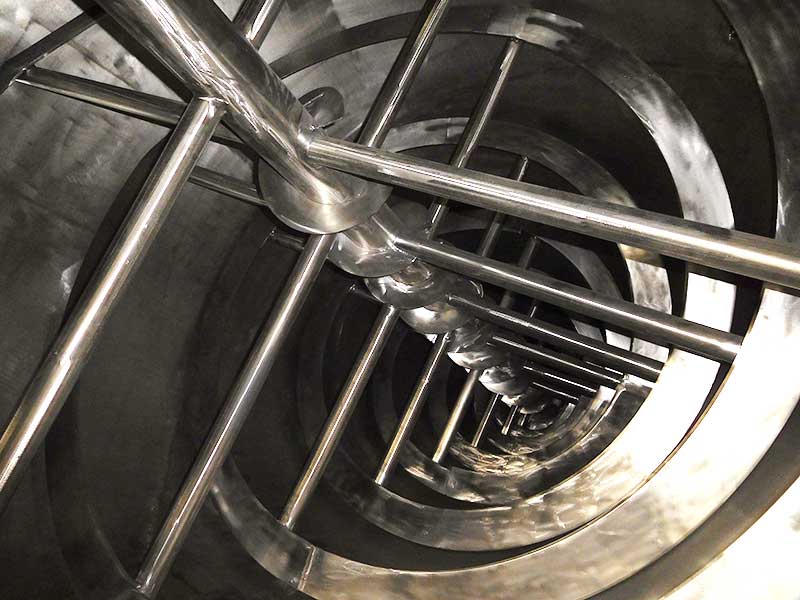
The tube filling and sealing machine consists of multiple core functional modules. The feeding system automatically arranges and conveys empty hoses to ensure orderly feeding without dislocation. The quantitative filling module adopts a precision piston pump or screw metering device to control filling volume accurately. The heating and pressing sealing unit uses hot air heating or ultrasonic welding to soften the tube tail for compact sealing. In addition, it is equipped with a coding mechanism for date printing, a finished product discharging port and an intelligent electric control cabinet. All contact parts are polished stainless steel, which avoids material adhesion and meets sanitary production standards.
2. Working Principle and Production Flow
The whole working process realizes fully automated cyclic operation. Firstly, empty hoses are sorted and fixed by the tube feeding mechanism, and the tube mouths are cleaned and disinfected. Secondly, viscous materials are quantitatively injected into the hose through the filling nozzle under precise pressure control. After filling, the residual air inside the tube is exhausted to prevent bulging. Subsequently, the tube tail is heated and softened, and sealed tightly through folding and pressing. Finally, the equipment cuts redundant tube edges and prints production information such as batch number and expiration date before discharging finished products.
3. Core Performance Advantages
Compared with manual and semi-automatic packaging equipment, automatic filling and sealing machines have obvious industrial advantages. Firstly, the high-precision metering system ensures stable filling accuracy with minimal material error. Secondly, ultrasonic or hot air sealing produces smooth and crack-free tube tails with good airtightness, effectively preventing liquid leakage and deterioration. Thirdly, the fully enclosed processing structure avoids external dust and bacterial contamination. Moreover, the equipment runs continuously with fast production speed, simple operation and low failure rate, greatly reducing manual labor costs.
4. Main Industrial Application
This packaging machine covers a wide range of viscous product industries. In the daily chemical industry, it is used for filling and sealing toothpaste, hand cream, skin care gel and cleaning paste. In pharmaceutical manufacturing, it processes medical ointments, antibacterial creams and external medicinal pastes to meet sterile packaging requirements. In the food industry, the equipment packages honey, jam, edible cream and other thick food materials. Furthermore, it is widely applied in chemical industry for packaging industrial adhesives, lubricating grease and coating pastes.
5. Conclusion and Development Trend
With the booming demand for flexible hose packaging,
tube filling and sealing machines are constantly upgraded toward intelligence, high efficiency and diversified compatibility. Modern models adopt servo control systems to realize stepless speed regulation and intelligent error alarm. Optimized sealing technology improves the appearance flatness of tube tails. In conclusion, the filling and sealing machine is an indispensable automated packaging device. Its reliable sealing performance and sanitary production conditions provide strong technical support for standardized mass production of hose packaging products.


 +86 18051935350
 Current
location:Home > Tube Filling and Sealing Machine: Structure, Working Process and Industrial Application
Current
location:Home > Tube Filling and Sealing Machine: Structure, Working Process and Industrial Application