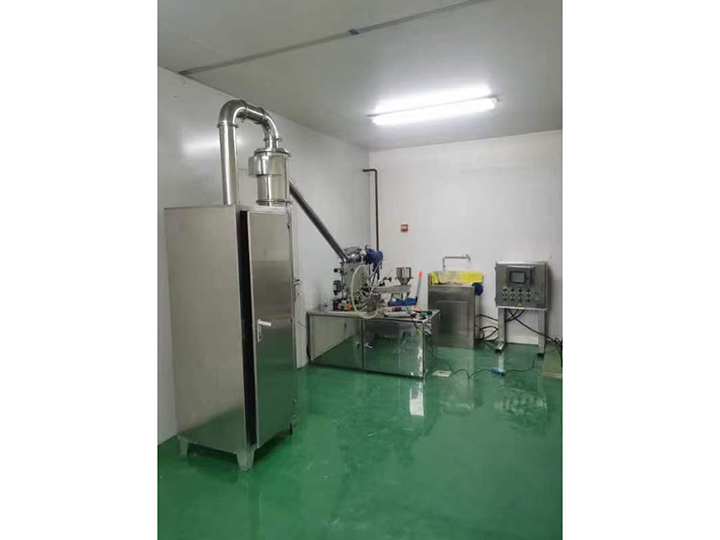
Industrial Vibratory Sieves and Separators: Principles, Dynamics, and Application Engineering
Introduction
Industrial Vibratory Sieves—often referred to as vibrating screens, vibratory separators, or gyratory sifters—constitute a critical unit operation in particle processing. These machines utilize mechanical vibration to transport, stratify, and separate particulate materials by size. From high-value pharmaceutical APIs to high-tonnage mineral ores, vibratory screening is indispensable for quality control, product classification, and process efficiency. The evolution of screening technology has moved far beyond simple size separation toward sophisticated, multi-deck systems capable of handling complex feed characteristics and stringent hygiene standards.
Classification and Working Principles
Vibratory sieves are classified primarily by their vibration mode and trajectory, which dictate their suitability for specific materials and capacities.
1. Circular Vibrating Screens (Gyratory Motion)
These machines employ an eccentric counterweight drive to generate a three-dimensional gyratory motion (elliptical or circular).
• Mechanism: The screen surface moves in a spiral pattern, lifting particles and allowing them to cascade down through the apertures. This throw-and-spread action prevents blinding and promotes high throughput.
• Application: Ideal for coarse screening, scalping oversized material, and applications involving wet or sticky materials (e.g., mining, aggregates, recycling).
2. Linear Vibratory Screens
Utilizing dual vibrating motors rotating in opposite directions, these screens produce a straight-line, reciprocating motion.
• Mechanism: The linear throw rapidly conveys material forward while dewatering or draining liquids. The aggressive vibration is effective for removing surface water from washed materials.
• Application: Dewatering tailings, desliming, and medium-duty classification in coal preparation and sand processing.
3. Tumbler Screening Machines (Gyratory Sifters)
These are high-precision separators that mimic the natural hand-sieving motion combined with vertical bouncing balls.
• Mechanism: They generate a horizontal gyratory motion (similar to a pendulum) with a slight vertical component. This gentle yet effective motion allows for long residence time on the screen surface without particle degradation.
• Application: Fine screening of powders (< 300 microns) in the chemical, food, and pharmaceutical industries where high accuracy and yield are required.
Core Design Parameters and Dynamics
The performance of a vibratory sieve is governed by a complex interplay of mechanical and material factors.
• Vibration Amplitude and Frequency: Amplitude (stroke length) controls the particle lift and bed looseness, while frequency determines the number of stratification cycles per minute. Sticky materials require high amplitude/low frequency, whereas fine powders require low amplitude/high frequency.
• Screen Mesh Technology: Beyond standard woven wire mesh, modern applications utilize:
◦ Ultrasonic Deblinding Systems: High-frequency vibrations (36,000 Hz) transmitted to the mesh prevent fine particles from clogging the screen, crucial for materials < 50 microns.
◦ Polyurethane and Rubber Panels: Used in abrasive mining applications to extend service life.
• Angle of Inclination: Affects the residence time and throughput. Steeper angles increase capacity but reduce screening efficiency; shallower angles improve accuracy but risk overloading.
Anti-Blinding and Cleaning Systems
One of the greatest challenges in screening is aperture blockage (blinding). Modern machines integrate several cleaning mechanisms:
• Bouncing Ball Systems: Rubber or silicone balls beneath the screen deck bounce continuously to dislodge trapped particles.
• Rotary Brush Cleaners: Motor-driven brushes sweep the underside of the screen, effective for fibrous or soft materials.
• Ultrasonic Transducers: As mentioned, these are essential for electrostatic or high-fines materials.
Material Considerations and Selection Criteria
Selecting the correct vibratory sieve requires a deep understanding of the feed material's rheology:
Material Property Impact on Screen Selection Recommended Solution
Moisture Content Wet materials tend to clump and blind the mesh. High-amplitude circular motion screens with wedge wire panels.
Particle Shape Flaky or elongated particles bridge easily. Larger aperture sizes or tumbler screens with longer retention.
Bulk Density Low-density powders fluidize easily; high-density materials require robust structures. Adjust motor power and spring stiffness accordingly.
Abrasiveness Hard minerals wear out wire mesh quickly. Polyurethane screens, hardened steel frames, and ceramic coatings.
Industrial Applications
• Mining and Aggregates: Scalping run-of-mine ore, separating gravel sizes, and dewatering sand.
• Food Processing: Grading flour, sugar, and salt; removing foreign bodies from spices; and classifying snack foods.
• Pharmaceuticals: Ensuring uniform particle size of Active Pharmaceutical Ingredients (APIs) to guarantee dissolution rates and tablet hardness.
• Recycling: Separating shredded municipal waste, recovering metals from e-waste, and glass cullet cleaning.
Maintenance, Safety, and Operational Excellence
Given the high-energy dynamics involved, maintenance is critical:
• Bearing Lubrication: Vibratory bearings operate under high centrifugal forces and require specialized grease and frequent re-lubrication schedules.
• Structural Integrity: Bolts and springs must be inspected regularly for fatigue, as resonance can lead to catastrophic failure if not managed.
• Isolation: Proper mounting using isolation springs or air mounts is necessary to prevent vibration transmission to surrounding structures and sensitive instruments.
Conclusion
The
vibratory sieve is far more than a simple filter; it is a precision engineering tool that balances physics, material science, and mechanical design. As industries push toward finer particle sizes and zero-waste processes, innovations such as AI-driven vibration monitoring and smart mesh sensors will continue to transform this traditional equipment into intelligent, self-optimizing systems.


 +86 18051935350
 Current
location:Home > Industrial Vibratory Sieves and Separators: Principles, Dynamics, and Application Engineering
Current
location:Home > Industrial Vibratory Sieves and Separators: Principles, Dynamics, and Application Engineering