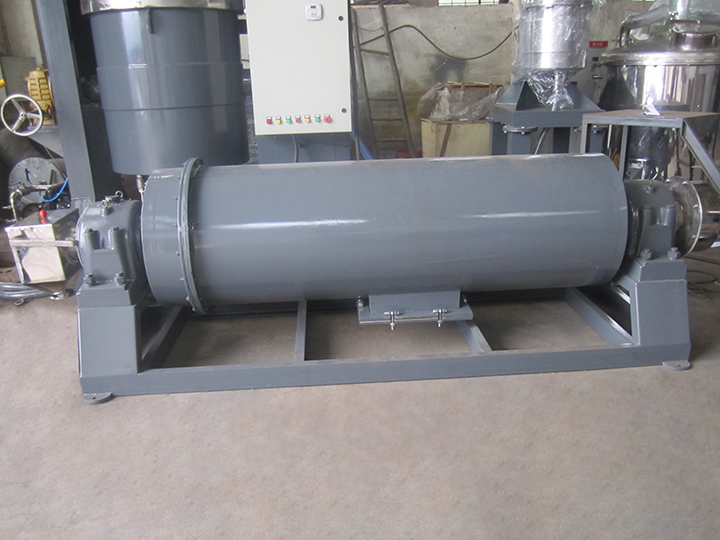
Guide to Purchasing Mixers: A Comprehensive Analysis from Home Kitchens to Industrial Applications
Mixers are core equipment for achieving uniform mixing, emulsification, dispersion, or reaction of materials, widely used in food processing, chemical industry, environmental protection, pharmaceuticals, and other fields. Depending on the application scenario, mixers are mainly divided into two categories: household kitchen mixers and industrial mixing equipment. This article provides a comprehensive purchasing guide to help you select the most suitable product based on specific needs.
Key Points for Purchasing Household Kitchen Mixers
Household kitchen mixers primarily meet daily dietary needs, focusing on convenience, safety, and versatility. The following are core factors to consider when purchasing:
1. Motor Power and Speed: Motor power directly affects mixing efficiency. Ordinary household models typically have a power range of 300W to 800W, while high-end professional models can reach over 1000W. Attention should also be paid to the speed range; multiple speed settings or stepless speed control can better adapt to processing different ingredients.
2. Cup Material and Capacity: Common cup materials include glass, stainless steel, and Tritan plastic. Glass is easy to clean and heat-resistant but not shatterproof; stainless steel is durable but heavy; Tritan plastic is lightweight and shatter-resistant. Capacity selection depends on family size and daily usage, with 1L to 2L being a common range.
3. Blade Design: Multi-blade or blunt blade designs enhance mixing efficiency and safety. Some models support blade replacement to accommodate different functions such as chopping and grinding.
4. Smart Features: Modern household mixers often come with intelligent preset programs, one-touch operation, and automatic power-off protection, greatly improving usability and safety.
Key Points for Purchasing Industrial Mixing Equipment
Industrial mixing equipment has extremely high requirements for efficiency, durability, energy efficiency, and adaptability to complex working conditions. Focus on the following aspects when purchasing:
1. Equipment Type and Principle: Select the appropriate equipment type based on material characteristics (e.g., viscosity, corrosiveness) and process requirements (mixing, dispersion, homogenization). For example:
Mechanical Stirrers: Suitable for large-volume mixing of medium to high viscosity materials with adjustable stirring intensity.
Dispersers: Generate strong shear force through high-speed rotating dispersion discs, suitable for nano-material dispersion and suspension homogenization.
Homogenizers: Achieve micron-level refinement of materials through high pressure or high-speed shearing, suitable for emulsion preparation and biological sample processing.
Ultrasonic Mixers: Achieve mixing through cavitation effects, suitable for sterile environments or corrosive materials.
2. Energy-Saving Technology: Energy consumption of industrial equipment is a key long-term cost factor. Prioritize products with energy-saving technologies such as permanent magnet motors and variable frequency speed control, which can significantly reduce operating costs.
3. Material and Durability: Equipment materials should be selected based on the corrosiveness of processed materials, commonly including stainless steel, carbon steel, and special alloys. Sealing performance (e.g., mechanical seals) is also crucial to prevent leakage and contamination.
4. Customization Services: For non-standard working conditions, choosing manufacturers that offer customized solutions is particularly important. Full-life cycle services including, simulation testing, and after-sales maintenance ensure optimal equipment operation.
General Purchasing Recommendations
Whether for household or industrial use, the following steps should be followed when purchasing mixers:
1. Clarify Requirements: First, clarify the application scenario, material characteristics, and production capacity requirements, which form the basis for selecting equipment type and specifications.
2. Performance Comparison: Compare core parameters of different brands and models, such as power, speed, material, and energy consumption, to ensure they meet requirements.
3. Brand and After-Sales Service: Choose reputable brands and thoroughly understand their after-sales service network and technical support capabilities, which are particularly critical for the long-term stable operation of industrial equipment.
4. Cost Consideration: In addition to equipment purchase cost, consider operating energy consumption, maintenance costs, and service life to comprehensively evaluate the total cost of ownership.
Through the above guide, you can more targeted select suitable mixers, whether for home kitchens or industrial production, ensuring efficient, stable, and economical operation.


 +86 18051935350
 Current
location:Home > Guide to Purchasing Mixers: A Comprehensive Analysis from Home Kitchens to Industrial Applications
Current
location:Home > Guide to Purchasing Mixers: A Comprehensive Analysis from Home Kitchens to Industrial Applications