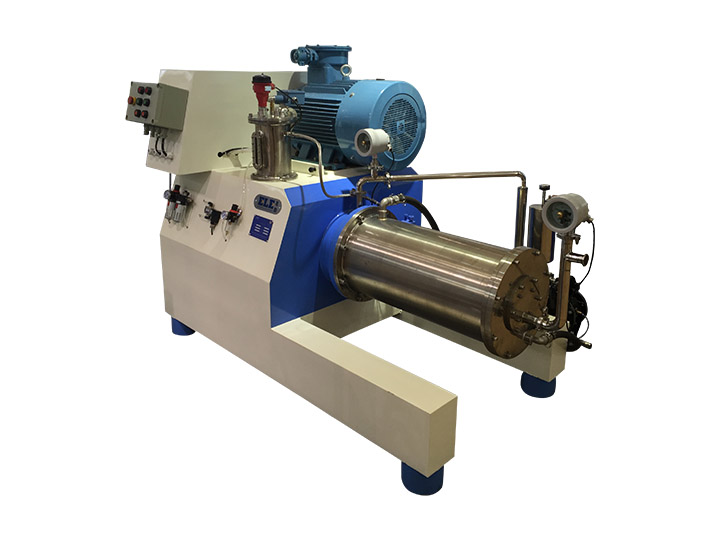
What Is Grinding Media?
Grinding media are the particles (balls, beads, rods, cylinders) inside a mill that apply impact and attrition forces to the feed material, reducing its particle size. The media is the primary consumer of energy in a media mill; the feed material is the recipient.
Grinding media come in many sizes, materials, and shapes. The selection of media depends on the mill type, the target product, the slurry properties, and the contamination tolerance.
What Are the Common Grinding Media Materials?
|
Material |
Density (g/cm³) |
Hardness (Mohs) |
Best For |
|
Steel (carbon) |
7.8 |
6–7 |
Coarse grinding, mineral processing |
|
Cast iron |
7.2 |
6–7 |
Cement, mining |
|
High-chrome cast iron |
7.6 |
7–8 |
Abrasive applications |
|
Alumina (Al₂O₃, 92%) |
3.6 |
9 |
General purpose, low contamination |
|
Alumina (Al₂O₃, 99%) |
3.9 |
9 |
High purity applications |
|
Zirconia (ZrO₂, Y-stab) |
6.0 |
8.5 |
High-energy milling, low contamination |
|
Zirconia-silica composite |
4.5–5.0 |
7.5 |
Coatings, inks, general use |
|
Silicon nitride (Si₃N₄) |
3.2 |
9 |
High-energy milling, low density |
|
Silicon carbide (SiC) |
3.2 |
9.5 |
Abrasive applications |
|
Glass |
2.5 |
5.5 |
Low-cost, low-contamination applications |
|
Sand (natural silica) |
2.6 |
7 |
Legacy applications, mineral processing |
|
Polymer (PS, PU) |
1.0–1.2 |
1–2 |
Specialty applications, soft materials |
|
Steel shot |
7.8 |
6–7 |
Surface preparation (peening) |
|
Steel rods |
7.8 |
6–7 |
Rod mills, coarse grinding |
The Xinyang ball mill and sand mill product lines support all common grinding media.
How Is Media Size Selected?
The media size is selected based on the target product size and the mill type:
|
Mill Type |
Typical Media Size |
Target Product Size |
|
Ball mill (coarse) |
20–80 mm |
100 µm – 1 mm |
|
Ball mill (fine) |
5–20 mm |
50–500 µm |
|
Bead mill (fine) |
0.5–2.5 mm |
1–50 µm |
|
Bead mill (very fine) |
0.2–0.5 mm |
0.5–10 µm |
|
Nano bead mill |
0.05–0.2 mm |
< 1 µm |
|
Rod mill |
50–100 mm diameter rods |
1–10 mm |
|
Pebble mill |
25–75 mm pebbles |
100 µm – 1 mm
|
General rule: the media size should be 10–100 times the target product size. Smaller media produce finer products but require higher energy and have higher wear.
How Is Media Density Selected?
The media density affects the energy transfer in the mill:
Higher density media (steel, zirconia) deliver more energy per collision and are preferred for high-viscosity slurries, hard materials, and coarse grinding.
Lower density media (alumina, glass, polymer) deliver less energy per collision but are preferred for contamination-sensitive applications and fine grinding.
The trade-off is between energy transfer and contamination. For contamination-sensitive applications (e.g., battery materials, electronic materials, pharmaceutical actives), ceramic media (zirconia, alumina) is preferred despite the higher cost.
How Is Media Shape Selected?
The media shape affects the flow behavior in the mill:
|
Shape |
Best For |
|
Spherical balls |
General purpose, most mills |
|
Cylindrical rods |
Rod mills, coarse grinding |
|
Cylindrical beads |
Bead mills (less common than spherical) |
|
Irregular shapes (pebbles) |
Pebble mills, low-cost applications |
|
Sharp/angular (chipped) |
Specialty applications, sand mills (legacy)
|
Spherical media are the most common because they flow well, are easy to separate from the product, and provide consistent energy transfer.
How Is Media Hardness Selected?
The media hardness affects the wear rate:
Harder media (silicon carbide, zirconia, alumina) wear slower and produce less contamination.
Softer media (glass, polymer) wear faster but are used for specialty applications (e.g., pigment dispersion where iron contamination must be avoided).
The Mohs hardness of the media should be at least 2 Mohs harder than the feed material to prevent excessive media wear.
What Is Media Loading?
Media loading is the volume fraction of the mill filled with grinding media:
|
Mill Type |
Typical Media Loading |
|
Ball mill (drum) |
30–50% of mill volume |
|
Bead mill (stirred) |
70–85% of chamber volume |
|
Rod mill |
35–45% of mill volume |
Higher media loading increases the energy transfer but also increases the viscosity of the slurry and the wear on the mill.
What Is Media Wear and How Is It Managed?
Media wear is the gradual loss of media material during operation. The wear rate depends on:
Material properties: harder media wear slower.
Feed material properties: abrasive feed wears media faster.
Operating conditions: high speed, high viscosity, and high energy input increase wear.
Mill design: well-designed mills minimize wear.
Media wear is managed by:
Selecting the right media: choose media harder than the feed material.
Optimizing operating conditions: minimize speed and energy input.
Monitoring media consumption: track media usage and schedule replacement.
Separating worn media: use screens or magnetic separators to remove broken or worn media.
Replenishing media: add fresh media to maintain the design loading.
The media consumption rate is typically expressed as grams of media consumed per ton of feed (g/t). For contamination-sensitive applications, low media consumption is critical.
How Is Media Separated from the Product?
Media is separated from the product at the mill outlet:
|
Mill Type |
Separation Method |
|
Ball mill (drum) |
None — media stays in the mill; product is discharged through a screen |
|
Bead mill (stirred) |
Screen or gap at the chamber outlet |
|
Rod mill |
None — media stays in the mill; product is discharged through a grate |
The separation device must be sized correctly to retain the media while allowing the product to pass. Worn or damaged separation devices allow media to escape, which contaminates the product and increases media consumption.
What Are the Common Defects Related to Media?
Common defects related to grinding media:
|
Defect |
Cause |
Prevention |
|
High media wear |
Wrong media, high speed, abrasive feed |
Match media to material, optimize speed |
|
Media contamination |
Worn media, low-quality media |
Use high-quality media, monitor wear |
|
Media breakage |
High impact, worn media, defective media |
Use high-quality media, inspect media |
|
Media carry-over (bead mills) |
Worn screen, wrong gap setting |
Inspect screen, set gap correctly |
|
Product contamination |
Media wear, chamber wear |
Use appropriate media, inspect chamber |
|
Inconsistent PSD |
Variable media size, worn media |
Use consistent media, replace worn media
|
Each defect is preventable with discipline. Media quality control is critical.
How Is Media Cost Calculated?
Media cost depends on:
Media price per kg: zirconia is more expensive than alumina, which is more expensive than steel.
Media consumption rate: expressed as g/t of feed or g/h of operation.
Mill throughput: kg/h or t/h.
For a fine grinding operation using zirconia media at 200 g/t consumption and $30/kg media price:
Media cost = 200 g/t × $30/kg = $6/t of feed
For a high-volume operation, this cost is significant. Media selection and operating condition optimization are critical for cost control.
How Is Media Performance Optimized?
Media performance is optimized by:
Screening experiment: test different media sizes, materials, and densities.
Wear rate measurement: measure media consumption at different operating conditions.
Product PSD analysis: measure the product PSD at different media sizes.
Energy analysis: measure the specific energy consumption at different media sizes.
Cost analysis: calculate the total cost (media + energy + capital) for each option.
The optimized media specification is documented in a standard operating procedure (SOP) that includes media size, material, density, loading, and replenishment schedule.
What Is the Future of Grinding Media?
Trends in grinding media:
Smaller media: media sizes down to 0.03 mm for sub-100 nm products.
Improved materials: longer-lasting media with better wear resistance.
Composite media: hybrid media with optimized density and hardness.
Recycled media: recycled ceramic media for cost reduction.
Smart media: instrumented media for real-time monitoring (research stage).
For a manufacturer of grinding mills, the trend is toward more efficient mills with better media.
Conclusion
Grinding media selection is critical for mill performance. The selection depends on the mill type, the target product size, the slurry properties, and the contamination tolerance. The media size, material, density, and shape all affect the grinding efficiency and the product quality. Xinyang's ball mill, sand mill, mass production nano grinder, and laboratory grinder product lines support all common grinding media.
Frequently Asked Questions
What is the difference between balls and beads?
Balls are larger media (5–80 mm) used in ball mills. Beads are smaller media (0.05–3 mm) used in bead mills (sand mills). Beads achieve finer products than balls.
What is the best grinding media for contamination-sensitive applications?
Zirconia (Y-stabilized) is the best for contamination-sensitive applications. Alumina (high purity) is also used. Both produce low metal contamination.
How is the media size determined?
The media size is determined by the target product size. As a rule of thumb, the media size should be 10–100 times the target product size.
How often is media replaced?
Media is replaced as it wears. The replacement interval depends on the abrasiveness of the feed and the operating conditions. For abrasive feeds, media may be replaced weekly; for mild feeds, monthly or quarterly.
What is the typical media consumption rate?
Media consumption rates range from 50 g/t (low wear) to 1000 g/t (high wear). The exact rate depends on the material, the mill, and the operating conditions.
How is media separated from the product?
In bead mills, media is separated by a screen or gap at the chamber outlet. In ball mills, media stays in the mill and product is discharged through a screen.
What is the effect of media density?
Higher density media deliver more energy per collision. For high-viscosity slurries, hard materials, and coarse grinding, high-density media (zirconia, steel) are preferred. For contamination-sensitive applications, lower-density ceramic media (alumina) are preferred.
What is the effect of media hardness?
Harder media wear slower and produce less contamination. The Mohs hardness of the media should be at least 2 Mohs harder than the feed material.
How is media cost calculated?
Media cost is calculated from the media consumption rate (g/t) and the media price ($/kg). For a zirconia operation at 200 g/t and $30/kg, the media cost is $6/t.
Can different media be mixed in the same mill?
Generally no. Different media sizes or densities do not mix well and produce inconsistent grinding. Use one size and material per mill.
What is the future of grinding media?
The future is toward smaller media, improved materials, composite media, recycled media, and smart media.
How is the grinding media specified?
The grinding media is specified by size (mm or mesh), material (steel, alumina, zirconia, etc.), density (g/cm³), and shape (spherical, cylindrical). The specification is documented in the mill SOP.



 +86 18051935350