What Is Wet Grinding?
Wet grinding is a size reduction process in which the feed material is mixed with a liquid (water, solvent, oil, or formulation liquid) and ground with grinding media. The liquid carrier suspends the particles, carries them through the grinding zone, and removes fines from the media.
Wet grinding is used for:
Fine and ultrafine products (typically < 50 µm, often sub-micron).
Materials that are hazardous as dust (e.g., some chemicals, metals).
Materials that react with air or moisture.
Products that will be formulated in liquid anyway (e.g., coatings, inks, pastes).
The Xinyang sand mill line covers stirred bead mills for wet grinding.
What Is Dry Grinding?
Dry grinding is a size reduction process in which the feed material is ground without a liquid carrier. The grinding may use media (in a ball mill, attrition mill, or dry bead mill) or no media (in a jet mill).
Dry grinding is used for:
Coarse to medium products (typically > 50 µm).
Materials that must remain dry (e.g., cement, ceramics, some chemicals).
Products that will be packaged as dry powder.
Downstream dry processes (e.g., dry blending, packaging, tabletting).
The Xinyang ball mill and jet mill lines cover dry grinding.
What Are the Main Differences?
|
Aspect |
Wet Grinding |
Dry Grinding |
|
Liquid carrier |
Required |
None |
|
Product fineness |
Sub-micron to 50 µm |
1 µm to mm |
|
Energy efficiency |
Higher for fine products |
Higher for coarse products |
|
Media wear |
Lower |
Higher |
|
Contamination |
Lower (with right media) |
Higher (from media and chamber) |
|
Dust hazard |
None |
Significant |
|
Downstream |
Liquid formulation, drying |
Dry packaging, blending |
|
Capital cost |
Lower for fine products |
Lower for coarse products |
|
Operating cost |
Higher (media, separation) |
Lower (no liquid) |
|
Clean-in-place |
Required |
Simpler |
The choice depends on the target product and the downstream process.
When Is Wet Grinding the Right Choice?
Wet grinding is the right choice when:
Target product is fine or ultrafine: sub-micron to 50 µm. Wet grinding is more efficient for fine products because the liquid carries fines out of the grinding zone and prevents over-grinding.
Material is hazardous as dust: some materials (e.g., beryllium, lead, some pesticides) are toxic as dust. Wet grinding eliminates the dust hazard.
Material reacts with air or moisture: some materials (e.g., some metals, some chemicals) oxidize or react in air. Wet grinding with a protective liquid (e.g., mineral oil, nitrogen-purged water) prevents reaction.
Product is formulated in liquid anyway: coatings, inks, pastes, and some cosmetics are formulated in liquid. Wet grinding produces a ready-to-use slurry.
Contamination is a concern: with the right media (ceramic), wet grinding can produce very low-contamination products.
For most fine pigment grinding, fine chemical grinding, and battery material grinding, wet grinding is the standard.
When Is Dry Grinding the Right Choice?
Dry grinding is the right choice when:
Target product is coarse or medium: 50 µm to mm. Dry grinding is more efficient for coarse products because the energy is concentrated on size reduction rather than suspension.
Material must remain dry: cement, ceramics, some chemicals. Dry grinding avoids the cost of drying the product.
Product is packaged as dry powder: many food ingredients, pharmaceuticals, and chemicals are packaged as dry powder. Dry grinding produces a ready-to-package product.
Downstream process is dry: dry blending, dry packaging, tabletting, capsule filling. Wet grinding would require an additional drying step.
Material is not hazardous as dust: most minerals, salts, and abrasives are not hazardous as dust. Dry grinding is safe with proper dust collection.
For cement, mineral processing, dry pigments, and dry chemicals, dry grinding is the standard.
What Equipment Is Used for Each Process?
|
Process |
Equipment |
|
Wet grinding (coarse) |
Horizontal ball mill, vertical ball mill, rod mill |
|
Wet grinding (fine) |
Stirred bead mill (sand mill), attrition mill, planetary mill |
|
Wet grinding (ultrafine) |
Nano bead mill, stirred media mill |
|
Dry grinding (coarse) |
Hammer mill, roller mill, jaw crusher, ball mill |
|
Dry grinding (medium) |
Ball mill, roller mill, air classifier mill |
|
Dry grinding (fine) |
Jet mill, fluidized-bed jet mill, dry bead mill |
|
Dry grinding (ultrafine) |
Steam jet mill, specialized jet mill |
The equipment selection depends on the target product and the process requirements.
What Are the Energy Requirements?
Energy requirements for wet vs dry grinding:
|
Process |
Typical Specific Energy (kWh/t) |
|
Wet grinding (coarse) |
5–15 |
|
Wet grinding (fine) |
20–100 |
|
Wet grinding (ultrafine) |
100–1000 |
|
Dry grinding (coarse) |
5–20 |
|
Dry grinding (medium) |
15–50 |
|
Dry grinding (fine) |
50–200 |
|
Dry grinding (ultrafine) |
100–500
|
Wet grinding generally requires less specific energy than dry grinding for the same product, because the liquid carries fines out of the grinding zone and prevents over-grinding.
What Are the Contamination Considerations?
Contamination sources in grinding:
|
Process |
Contamination Sources |
|
Wet grinding |
Grinding media, chamber lining, slurry piping, slurry seals |
|
Dry grinding |
Grinding media, chamber lining, classifier, dust collection
|
For contamination-sensitive applications:
Wet grinding typically uses ceramic media (zirconia, alumina) and ceramic lining, producing very low metal contamination.
Dry grinding in jet mills uses no media, so contamination is limited to the chamber and classifier. For very low contamination, ceramic or polyurethane liners are used.
For pharmaceutical, electronic, and battery applications, contamination is a critical selection criterion.
What Are the Safety Considerations?
Safety considerations differ significantly:
|
Process |
Hazards |
Mitigation |
|
Wet grinding |
Slurry splash, chemical exposure, biological growth |
Containment, PPE, regular cleaning |
|
Dry grinding |
Dust explosion, inhalation, static electricity |
Dust collection, inert gas, grounding, PPE
|
Dry grinding of organic materials (e.g., food, pharmaceuticals, some chemicals) carries a significant dust explosion risk. The mill must be designed for dust explosion protection (e.g., nitrogen inerting, explosion venting).
Wet grinding eliminates the dust explosion risk but introduces other hazards (slurry splash, chemical exposure).
What Are the Cost Considerations?
Cost comparison of wet vs dry grinding:
|
Cost Component |
Wet Grinding |
Dry Grinding |
|
Capital |
Lower for fine products |
Lower for coarse products |
|
Energy |
Higher |
Lower |
|
Media |
Higher (consumed faster) |
Lower |
|
Liquid |
Higher (must be managed) |
None |
|
Separation |
Higher (must separate product from liquid) |
None |
|
Drying |
Higher (if downstream is dry) |
None |
|
Waste treatment |
Higher (if liquid is contaminated) |
Lower |
|
Clean-in-place |
Higher |
Lower |
The total cost depends on the specific application. For fine products with downstream wet formulation, wet grinding is typically cheaper. For coarse products with downstream dry packaging, dry grinding is typically cheaper.
How Is Scale-Up Calculated for Each Process?
Scale-up principles for wet grinding:
Maintain the same specific energy (kWh/t).
Maintain the same tip speed (for stirred mills) or rotational speed (for ball mills).
Maintain the same media size and material.
Verify the lab result in a pilot mill.
Scale-up principles for dry grinding:
Maintain the same specific gas flow (Nm³/h per kg/h of feed) for jet mills.
Maintain the same classifier tip speed for jet mills and classifier mills.
Maintain the same rotational speed and media filling for ball mills.
Verify the lab result in a pilot mill.
The Xinyang laboratory grinder line includes small ball mills and bead mills for testing and scale-up.
What Is the Future of Wet and Dry Grinding?
Trends in wet and dry grinding:
Hybrid processes: combined wet and dry grinding in a single system.
Improved media: longer-lasting media for both wet and dry grinding.
Continuous processing: continuous-feed mills for both wet and dry grinding.
AI-based optimization: AI algorithms for process optimization.
Energy efficiency: more efficient mills with lower specific energy.
For a manufacturer of grinding equipment, the trend is toward more efficient mills with better control and lower operating cost.
Conclusion
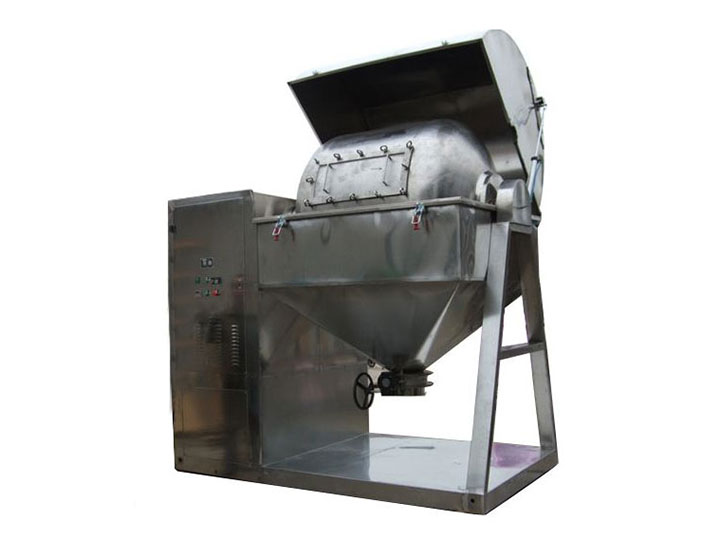
Wet grinding and
dry grinding are complementary process strategies. Wet grinding is preferred for fine and ultrafine products, contamination-sensitive applications, and hazardous dust mitigation. Dry grinding is preferred for coarse products, water-sensitive materials, and downstream dry processing. The selection depends on the target particle size, the material properties, the downstream process, the cost, and the safety. Xinyang's ball mill, sand mill, jet mill, and dry nano grinder product lines cover both wet and dry grinding.
Frequently Asked Questions
What is the difference between wet and dry grinding?
Wet grinding uses a liquid carrier; dry grinding does not. Wet grinding is preferred for fine products and contamination-sensitive applications; dry grinding is preferred for coarse products and water-sensitive materials.
What is the fineness limit for wet grinding?
Wet grinding can achieve sub-micron products (d50 < 1 µm) with stirred bead mills. The fineness limit depends on the material and the media size.
What is the fineness limit for dry grinding?
Dry grinding can achieve sub-micron products (d50 < 1 µm) with steam jet mills or specialized jet mills. The fineness limit depends on the material and the gas supply.
What is the energy efficiency of wet vs dry grinding?
Wet grinding is generally more energy-efficient for fine products; dry grinding is generally more energy-efficient for coarse products. The exact comparison depends on the specific application.
What is the contamination level for wet vs dry grinding?
Wet grinding with ceramic media typically produces lower contamination than dry grinding. The exact level depends on the media, the chamber, and the process.
What is the dust explosion risk for dry grinding?
Dry grinding of organic materials carries a significant dust explosion risk. The mill must be designed for dust explosion protection (e.g., nitrogen inerting, explosion venting).
Can wet grinding be used for water-sensitive materials?
No, wet grinding requires a liquid carrier. For water-sensitive materials, dry grinding or wet grinding with a non-aqueous liquid (e.g., alcohol, oil) is used.
Can dry grinding be used for hazardous materials?
Dry grinding can be used for hazardous materials with proper dust collection and PPE. For very hazardous materials, wet grinding may be safer.
How is the product separated from the liquid in wet grinding?
The product is typically used as a slurry and is not separated from the liquid. If dry product is needed, the slurry is dried by spray drying, tray drying, or other methods.
What is the cost difference between wet and dry grinding?
The cost difference depends on the specific application. For fine products with downstream wet formulation, wet grinding is typically cheaper. For coarse products with downstream dry packaging, dry grinding is typically cheaper.
How is the grinding process optimized?
The grinding process is optimized by screening experiments, energy analysis, PSD analysis, surface area analysis, and cost analysis. The optimized process is documented in a standard operating procedure (SOP).
What is the future of wet and dry grinding?
The future is toward more efficient mills with better control, lower energy consumption, and AI-based optimization. Hybrid processes (combined wet and dry grinding) are emerging.



 +86 18051935350